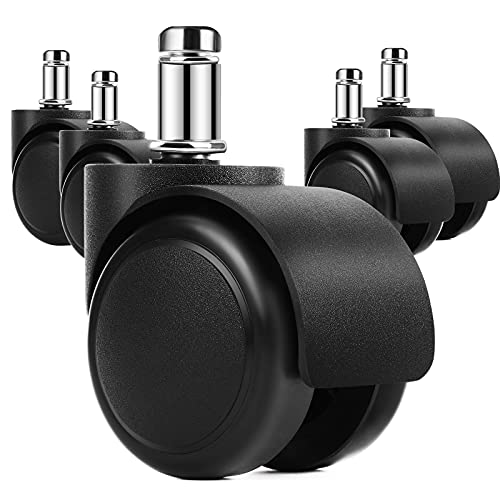
Desk Chair Replacement Wheels: The Ultimate Guide
From noisy, stuck casters to smooth, floor-friendly gliding – find the perfect replacement wheels to revitalize your desk chair and protect your floors.
Shop Top-Rated Replacement WheelsWhy replace your desk chair wheels? Whether your existing casters are worn out, scratching your hardwood, or struggling on thick carpet, upgrading to the right replacement wheels can transform your sitting experience and protect your flooring. This guide covers everything you need to know – caster types, materials, floor compatibility, and weight capacity.
Key Considerations for New Wheels
🔘 Caster Type
Choosing between stem, grip-ring, and threaded stem casters for a perfect fit.
🛡️ Floor Protection
Soft rubber or polyurethane wheels for hardwood; larger wheels for carpet.
⚙️ Weight Capacity
Ensure your new wheels can handle your chair's total load (usually 200–400 lbs).
🔩 Installation
Most replacement wheels are easy to install with no tools required.
Choosing the Right Replacement Wheels
Desk chair wheels, also known as casters, are not one-size-fits-all. The best choice depends on your floor type, chair weight, and how you use your chair. Here's a detailed breakdown:
1. Types of Caster Mounts
- Stem Casters: Most common for office chairs. The stem (metal pin) inserts directly into the chair base. Measure the diameter and length to ensure a proper fit.
- Grip-Ring Casters: Similar to stem casters but with a serrated ring that grips the inside of the socket. Often found on higher-end chairs.
- Threaded Stem Casters: Less common, these screw into the chair base. They are typical for older or specialized chairs.
2. Wheel Materials
| Material | Best For | Pros | Cons |
|---|---|---|---|
| Polyurethane (PU) | Hardwood, tile, laminate | Quiet, non-marking, floor-friendly | May not roll well on thick carpet |
| Rubber | Hardwood, carpet | Soft, quiet, good grip | Can leave marks on some surfaces |
| Nylon/Plastic | Carpet only | Durable, budget-friendly | Can scratch hard floors |
| Stainless Steel/Ball | Industrial or commercial | Extremely durable, heavy-duty | Expensive, can damage delicate floors |
3. Wheel Size Matters
Standard desk chair wheels are usually 2–3 inches in diameter. For thicker carpet, consider larger wheels (3–4 inches) to prevent sinking. Smaller wheels (under 2 inches) are better for hard surfaces but may struggle with uneven floors.
If you're using a chair mat for hardwood, a soft rubber caster is ideal. For carpet, you might need a chair mat for thick carpet in combination with larger wheels.
4. Weight Capacity
Each caster has a weight rating. Calculate your total chair weight (user + chair weight) and divide by the number of casters (usually 5). Ensure each caster can handle at least that load. Most standard casters support 75–100 lbs per wheel, while heavy-duty options can support 150+ lbs per wheel.
How to Install Replacement Wheels
- Remove Old Casters: Tilt your chair to one side and firmly pull the old caster out of the socket. If it's stuck, use a flathead screwdriver to gently pry it loose.
- Check the Socket: Inspect the socket for debris. Clean it with a cloth.
- Insert New Casters: Align the stem with the socket and press down firmly until you hear a click (for grip-ring) or it's fully seated.
- Test: Roll the chair on your floor to ensure smooth movement.
For those with desk chairs with wheels that are still functional but need better performance, replacement casters are a cost-effective upgrade compared to buying a new desk and chair set.
Ready to Upgrade Your Chair?
Browse the top-rated desk chair replacement wheels that match your floor type and chair style. Roll in comfort and protect your floors today.
Shop Replacement Wheels Now