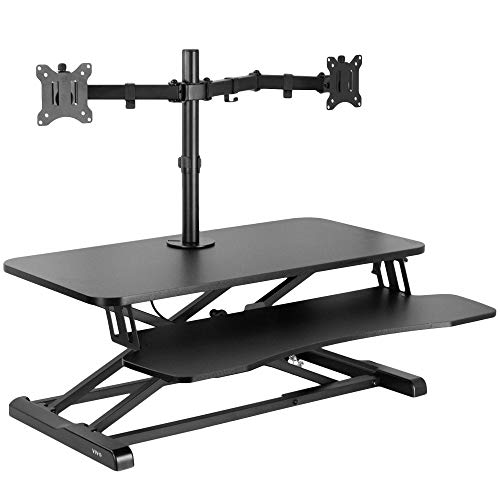
Sit to Stand Desk Converter for Dual Monitors
Boost your productivity and health with a sit-to-stand desk converter designed for dual monitors. Discover the best models, compatibility tips, and ergonomic insights to transform your workspace.
Explore Top Converters ↓Why Choose a Sit to Stand Desk Converter for Dual Monitors?
A sit to stand desk converter dual monitor setup offers the perfect balance between flexibility and productivity. Unlike fixed standing desks, converters sit on your existing desk surface, allowing you to alternate between sitting and standing without a complete overhaul. For dual-monitor users, the right converter ensures both screens remain stable, aligned, and at the correct ergonomic height. Whether you’re a programmer, designer, trader, or office worker, this solution adapts to your workflow while promoting better posture and circulation.
⚡ Instant Height Adjustment
Switch between sitting and standing in seconds with gas-spring or manual lift mechanisms. No need to move your monitors separately.
🖥️ Dual Monitor Stability
Engineered to support heavy monitors (up to 44 lbs per screen) with wide platforms and reinforced steel frames to prevent wobble.
📐 Ergonomic Alignment
Keep your screens at eye level and at the correct distance. Reduces neck strain and helps maintain a neutral spine position.
💼 Space-Saving Design
Fits on most desks (including compact and L-shaped) and allows you to keep your existing furniture. Perfect for home offices and shared workspaces.
What to Look For in a Dual-Monitor Converter
When shopping for a sit-to-stand desk converter tailored for dual monitors, consider the following factors to ensure compatibility and comfort:
- Weight Capacity: Check that the converter can handle the combined weight of your monitors (typically 30–60 lbs). Most quality models support up to 44 lbs per screen.
- Width & Depth: Ensure the platform is wide enough to accommodate both monitors side-by-side. Standard widths range from 30 to 40 inches.
- Height Range: Look for a wide adjustment range (e.g., 5″ to 20″) to suit users of different heights, especially if you share the desk.
- Mechanism: Gas-spring systems offer smoother, quieter transitions, while manual crank versions are more budget-friendly but require more effort.
- Stability: A sturdy base with non-slip pads and a reinforced frame prevents monitor wobble, crucial for focus and eye comfort.
💡 Pro Tip: If you have a small computer desk with monitor shelf, measure the available depth before purchasing. Many converters are designed to sit flush against the back edge, so ensure your desk has at least 24″ of depth to accommodate the converter base and allow for comfortable keyboard placement.
Best Sit to Stand Desk Converters for Dual Monitors
Below is a comparison of popular models that excel in dual-monitor support, build quality, and ease of use. Prices reflect current market averages.
| Model | Weight Capacity | Height Range | Mechanism | Price (USD) |
|---|---|---|---|---|
| FlexiSpot Dual-Monitor Riser | 44 lbs per screen | 6″ – 19″ | Gas spring | $350 |
| VIVO Dual Monitor Standing Desk | 33 lbs per screen | 4″ – 18″ | Manual crank | $210 |
| Ergotron WorkFit-T Dual | 40 lbs total | 5″ – 20″ | Gas spring | $495 |
| HUANUO Dual Monitor Stand | 30 lbs per screen | 4″ – 17″ | Gas spring | $280 |
| Mount-It! Dual Monitor Converter | 35 lbs per screen | 5″ – 18″ | Gas spring | $320 |
Prices are approximate and may vary. Check product pages for current deals.
Ergonomic Benefits of a Sit-Stand Converter
Using a sit to stand desk converter dual monitor isn’t just about convenience — it’s a health investment. Studies show that alternating between sitting and standing every 30–60 minutes reduces back pain, boosts energy levels, and improves focus. With dual monitors, proper positioning becomes even more critical: the top of your screens should be at or slightly below eye level, and you should sit at arm’s length from the displays. A quality converter helps you achieve this alignment effortlessly, reducing the risk of "tech neck" and eye fatigue.
For those using a small standing desk with keyboard tray, a dual-monitor converter can still be integrated if the tray is adjustable. However, most users find that a dedicated converter with a wide platform eliminates the need for a separate tray, as the keyboard and mouse can rest directly on the converter’s lower tier.
Setting Up Your Dual Monitor Converter
- Position the converter: Place it centrally on your desk, leaving enough room for your keyboard and mouse in front.
- Adjust monitor arms: If your converter has built-in VESA mounts, attach your monitors securely. Otherwise, use the included stand or place your monitors directly on the platform.
- Set the height: Stand upright and adjust the converter so that your eyes are level with the top of the screens. Your elbows should be at a 90° angle when typing.
- Test stability: Gently tap the monitors to ensure there’s no wobble. If needed, tighten any adjustment knobs.
- Transition smoothly: Switch between sitting and standing positions using the gas-spring or crank mechanism. Allow your body to adapt gradually over the first week.
If you’re considering a full sit-stand desk setup, explore our guide to sit-to-stand desks for home office. For smaller spaces, a compact sit-to-stand desk for home office might be a better fit. And if you already own a standing desk, a sit-stand desk on top of desk can add extra surface space.