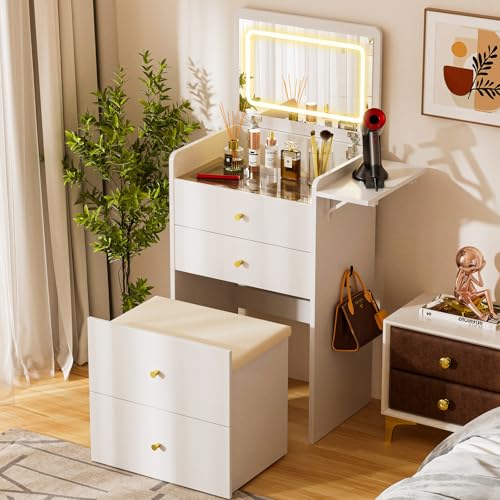
Vanity Desk with Flip Top Mirror: Space-Saving Elegance
Transform your bedroom or dressing area with a vanity desk that hides its mirror in plain sight. When closed, it serves as a sleek writing surface or display table; when opened, the flip top reveals a full grooming station with mirror and storage. Discover how this dual-purpose design brings order and beauty to compact spaces.
Explore the Buying Guide ↓Why a flip top vanity desk? Unlike traditional vanities that dominate a room with a permanent upright mirror, the flip top design lets you reclaim your surface the moment your grooming routine ends. It is a smart solution for studio apartments, small bedrooms, and multi-use spaces where every square inch matters. This guide breaks down the mechanisms, materials, storage layouts, and styling choices so you can choose with confidence.
What Exactly Is a Flip Top Vanity Desk?
A vanity desk with a flip top mirror is a furniture piece built around a hinged mirror panel. In its closed position, the mirror lies flat and flush with the desktop, converting the unit into a clean, flat workspace — suitable for writing, laptop work, or simply displaying decor. Lift the hinge, and the mirror swings upright to a fixed angle, revealing a recessed storage compartment underneath. That compartment typically holds jewelry, cosmetics, brushes, and small accessories, keeping them dust-free and out of sight.
The mechanism itself is the defining feature. High-quality models use a spring-loaded or friction hinge that holds the mirror at multiple angles without wobbling. Entry-level versions may rely on a simple piano hinge with a support arm. The storage depth beneath the mirror ranges from shallow trays for jewelry to deeper wells that accommodate bottles and palettes. This combination of concealment and function is what separates a flip top vanity from a standard vanity desk with mirror, which keeps its mirror exposed at all times.
Key Benefits of Choosing a Flip Top Design
Space Efficiency
The closed position frees up wall space and reduces visual clutter. In a small bedroom, the desk can double as a study or writing station without a mirror dominating the room's aesthetic.
Dust Protection
When the mirror is closed, the storage compartment is sealed from dust and light. Cosmetics and jewelry stay cleaner and are less exposed to humidity and sunlight degradation.
Dual-Purpose Function
Use it as a grooming station in the morning and a laptop desk in the afternoon. The flip mechanism makes the transition instant, with no need to relocate items or clear the surface.
Clean Aesthetic
A flat, uncluttered surface reads as intentional design. The flip top vanity blends into modern, minimalist, and traditional interiors alike, especially when finished in wood tones that match surrounding furniture.
Built-In Organization
Most flip top models include divided trays, ring rolls, or removable organizers under the mirror. This eliminates the need for separate cosmetic bags and keeps daily essentials within arm's reach.
Safety and Stability
Because the mirror does not protrude when closed, there is no risk of knocking into an upright panel in tight quarters. The flat surface also reduces the chance of accidental tip-over compared to tall, top-heavy vanities.
Understanding the Flip Mechanism and Hinge Quality
The hinge is the heart of any flip top vanity desk. A well-engineered hinge should hold the mirror firmly at its upright angle, resist loosening over thousands of open-close cycles, and close softly without slamming. Premium-tier models often use gas-strut or friction-damped hinges that feel smooth and controlled. Mid-range options typically use heavy-duty steel piano hinges with a locking support arm, while entry-level pieces may use simpler butt hinges that require more careful handling.
When evaluating a hinge, check for reinforced mounting plates — these distribute stress across a wider area of the wood and prevent screw pull-out over time. Also look for a safety latch or magnetic catch that keeps the mirror secured in the closed position during movement or cleaning. If the desk is placed in a humid bathroom-adjacent area, choose stainless-steel or coated hinges to resist corrosion. A quality hinge is a long-term investment that preserves the desk's function and safety.
Materials and Finishes: What to Look For
The desk body and the mirror frame should be considered separately. For the body, solid wood — particularly oak, walnut, or birch — offers the most durable and repairable surface. Engineered wood with a thick veneer is a solid mid-range choice, provided the edges are well-sealed against moisture. Entry-level models frequently use MDF with a laminate finish; these are stable and easy to clean but less resistant to dents and water damage at seams.
The mirror frame deserves equal attention. A solid wood frame will hold its shape better than a plastic or thin composite frame, especially around the hinge area. If the frame is painted, check that the finish is applied evenly around the hinge cutouts — bare or thinly finished wood there is prone to swelling. For a cohesive bedroom look, consider matching the finish to a vintage vanity desk or a modern vanity desk with drawers in the same wood tone.
Storage Layouts Under the Flip Top
The compartment beneath the mirror varies widely in depth and configuration. The most common layouts include:
- Shallow jewelry trays: Felt-lined sections with ring rolls and small dividers, ideal for daily-wear pieces.
- Deep cosmetic wells: Open rectangular bays that fit bottles, palettes, and brush cups upright.
- Mixed configurations: A combination of shallow and deep sections with removable dividers for flexibility.
- Drawer-integrated designs: Some models place the storage in a pull-out drawer below the flip top rather than directly beneath the mirror.
- Side compartments: A few designs add small cubbies on either side of the mirror for taller items like hair tools.
Measure your tallest cosmetic bottle and your largest palette before choosing a layout. A deep well that fits everything upright is more practical for daily use than a shallow tray that forces you to lay bottles on their sides. If you prefer a more traditional storage approach, a vanity desk with drawers and a lighted mirror may offer more total volume, though it sacrifices the concealed-mirror benefit.
Comparing Vanity Desk Tiers
Flip top vanities fall into distinct quality tiers. Use this table to align your expectations with the build quality and features you can expect at each level. No matter which tier you choose, prioritize the hinge and the frame construction — these determine how long the flip mechanism remains reliable.
| Tier | Best For | Typical Construction | Hinge Quality | Storage Depth |
|---|---|---|---|---|
| Entry-Level | First vanity, occasional use, tight floor plans | MDF with laminate; thin mirror frame | Basic piano hinge with support arm | Shallow trays, limited depth |
| Mid-Range | Daily grooming routines, shared bedrooms | Engineered wood with veneer; solid wood trim | Heavy-duty steel hinge with friction hold | Mixed shallow and deep wells |
| Premium | Design-focused spaces, long-term use | Solid hardwood body; reinforced mirror frame | Damped or gas-strut hinge | Deep divided compartments |
| Luxury / Professional-Grade | Boutique dressing rooms, high-frequency use | Hardwood with hand-finished joinery; beveled glass | Precision-engineered multi-angle hinge | Customizable modular inserts |
Note: A higher tier does not always mean a better fit for your room. A mid-range model with a well-aligned hinge and adequate storage often outperforms a premium piece with a poorly fitted mirror panel.
Buying Guide: Seven Checks Before You Commit
- Hinge alignment: Open and close the mirror several times. It should move smoothly and lock upright without sagging on one side.
- Closed-surface flushness: The mirror should sit level with the desktop when closed, with no raised edges that catch on sleeves or papers.
- Storage clearance: Confirm the compartment depth fits your tallest bottles and that the dividers are removable or adjustable.
- Frame joinery: Look for reinforced corners and tight seams around the hinge cutouts. Gaps invite moisture and weaken the frame.
- Stability: The base should sit flat without wobble. A flip top desk carries more weight in the mirror panel, so leg splay and cross-bracing matter.
- Finish durability: Run a finger along the edges. A well-sealed finish feels smooth and slightly rounded; a thin finish feels sharp and dry.
- Safety catch: Ensure a latch or magnet secures the mirror in the closed position so it cannot swing open if the desk is bumped.
If you are comparing this design against a model with exposed lighting, a vanity desk with light-up mirror offers built-in illumination but does not conceal the mirror. The flip top design prioritizes concealment and surface versatility, which is a different value proposition. Consider which benefit matters more in your daily routine.
Ready to Compare Flip Top Vanity Options?
Browse curated models with verified hinge quality, storage layouts, and finish options.
View Recommended Models ↓Styling Your Flip Top Vanity Desk
The flip top vanity is inherently minimalist because its storage is hidden. Lean into that quality by keeping the closed surface uncluttered. A single small vase, a slim lamp, or a framed print can sit on top without interfering with the flip mechanism. When the mirror is open, the exposed compartment becomes the focal point — use matching trays or a felt insert to keep contents visually calm.
Lighting matters for any vanity, and a flip top design benefits from a dedicated task light placed at eye level rather than directly above. A wall-mounted sconce on either side of the desk, or a floor lamp angled toward the mirror, reduces shadows on the face. If you prefer a more traditional setup with integrated lighting and a chair, a vanity desk with mirror and chair is worth considering as an alternative. For a vintage-inspired room, pair the flip top with a vintage vanity desk in the same wood family to create a cohesive narrative.
Placement and Room Integration
Position the desk so that the mirror, when open, faces a window or a neutral wall — this provides natural light on the face and a distraction-free background. Avoid placing it directly opposite a doorway, where the mirror can create an uncomfortable sightline. In a small bedroom, the desk can sit perpendicular to the bed, acting as a subtle room divider while keeping the closed surface available as a nightstand or writing spot.
Allow at least 30 inches of clearance in front of the desk for a stool or chair, and 18 inches on the hinge side so the mirror panel can swing fully open without hitting a wall. If the room has wall-to-wall carpet, place a small area rug under the desk to define the zone and make the stool easier to move. For a complete bedroom furniture set that includes a desk, explore teenage bedroom furniture with desks to coordinate finishes and scale.
Care and Maintenance for Long-Term Use
- Hinge lubrication: Apply silicone spray or light machine oil to the hinge every six months. Wipe away excess to avoid dust buildup.
- Screw checks: Tighten hinge and leg screws quarterly. Loose screws stress the wood and cause misalignment over time.
- Mirror cleaning: Use a microfiber cloth and ammonia-free glass cleaner. Spray onto the cloth, not directly onto the mirror, to prevent liquid seeping behind the frame.
- Moisture control: Keep the storage compartment dry. If you store damp items, wipe them first; prolonged moisture can warp the wood and cloud the mirror's backing.
- Weight limits: Do not exceed the manufacturer's recommended weight on the closed surface. The mirror panel is designed for grooming use, not as a load-bearing shelf.
- Sun exposure: Position the desk away from direct, prolonged sunlight to prevent finish fading and heat stress on the hinge mechanism.
Frequently Asked Questions
A Smart Investment for Compact, Stylish Rooms
A vanity desk with a flip top mirror solves a specific spatial problem without sacrificing style. It gives you a grooming station when you need one and a clean, flat surface when you do not. By prioritizing hinge quality, storage depth, and frame construction, you can select a model that remains stable and elegant through years of daily use. Whether your room leans minimalist, vintage, or modern, the concealed-mirror design integrates smoothly and keeps your space feeling open.
If you are still weighing options, compare the flip top design against a vanity desk with mirror and drawers for additional storage volume, or explore a vanity desk guide for a broader overview of styles and configurations. The right choice depends on how you balance concealment, storage, and surface flexibility in your daily routine.