Wall Mounted Folding Desk for Small Spaces: The Complete Guide
Discover how a wall mounted folding desk turns unused vertical space into a fully functional workspace — and folds away in seconds when you need the room back.
EXPLORE THE GUIDEWhy this guide matters: If you live in a studio apartment, a compact bedroom, or a shared home office corner, floor space is the constraint that shapes every furniture decision. A wall mounted folding desk solves that constraint by attaching directly to the wall and collapsing flat when idle. This guide explains how these desks work, which folding mechanisms and materials matter, how to anchor them safely, and how to choose the right size and configuration for a genuinely small space.
What Is a Wall Mounted Folding Desk?
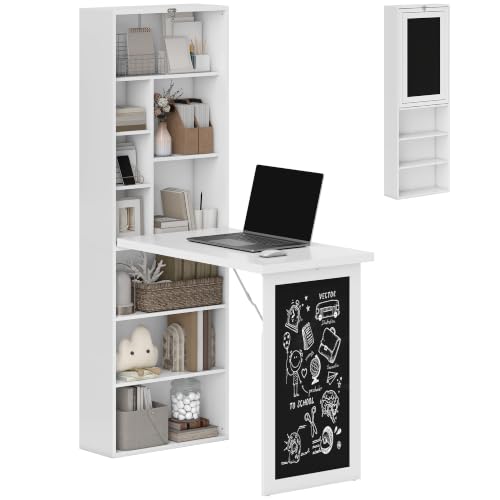
A wall mounted folding desk is a workspace surface hinged or bracketed directly to a wall so that the desktop can be lowered into a horizontal working position and raised or folded flat when not in use. Unlike a conventional desk, it has no floor-standing legs occupying footprint space. The wall itself becomes the structural support, and the desk becomes an extension of the room's vertical surface.
These desks are sometimes called fold-down desks, wall desks, or drop-leaf wall desks. They are closely related to other space-conscious designs such as a pull-out writing surface and the broader family of compact workspace solutions. The defining feature is the fold: the transition between "desk mode" and "stored mode" takes seconds, and stored mode adds almost nothing to the floor plan.
The concept is especially useful in rooms that serve multiple purposes. A bedroom that doubles as a study, a living area that becomes a remote-work station during the day, or a hallway nook that needs to stay walkable can all host a folding wall desk without permanently surrendering floor area.
How the Folding Mechanism Works
Most wall mounted folding desks use one of a few mechanical approaches. Understanding the mechanism helps you judge stability, safety, and long-term durability before you commit.
Hinged Desktop with Support Brackets
The desktop is attached to a wall-mounted cleat or frame with a continuous hinge. When deployed, folding brackets or diagonal struts lock underneath to bear the load. When stowed, the brackets fold flat and the desktop rotates down against the wall. This is the most common design and the easiest to operate with one hand.
Drop-Leaf with Piano Hinge
A full-width piano hinge runs along the back edge, distributing stress more evenly than two smaller hinges. Drop-leaf designs often pair with side supports or a fold-out leg for additional rigidity. They tend to feel more solid under typing and writing pressure.
Slide-and-Fold Systems
A smaller category uses a sliding carriage: the desktop slides forward on rails and then folds down. These systems can feel more rigid because the rails carry load directly into the wall frame, but they require more clearance behind the desk and are less forgiving of uneven walls.
Benefits of a Wall Mounted Folding Desk in Small Spaces
The appeal of these desks goes beyond saving floor area. Here is what they actually deliver in a compact home.
- Zero permanent footprint. When folded, the desk projects only a few centimetres from the wall. Floor space returns to circulation, exercise, or storage.
- Vertical space utilization. Small rooms have abundant wall area and scarce floor area. A folding wall desk exploits the resource that is actually available.
- Multi-purpose room compatibility. A bedroom can function as a study during the day and a bedroom at night without a desk dominating the layout.
- Simple cleaning. With no legs and no under-desk clutter zone, floors are easier to sweep and vacuum.
- Clear visual signal. Folding the desk away creates a psychological boundary between work and rest — a genuine benefit for people who work from home.
- Flexible placement. Because the desk is not tied to a floor position, it can go in a hallway, alcove, or under a window where a conventional desk would not fit.
For a broader look at compact workspace design, see the related guidance on small corner desks for home office setups, which covers complementary layouts when a folding desk is paired with corner space.
Types of Wall Mounted Folding Desks
Folding wall desks vary in structure, and the right type depends on how often you deploy the desk and what you plan to put on it.
Single-Flap Desks
The simplest form: one hinged surface with two folding brackets. Best for light use — a laptop, a notebook, a tablet. Single-flap desks are the most space-efficient when stowed and the easiest to install.
Drop-Leaf Desks with Side Supports
These add fold-out side panels or a fold-down leg for extra rigidity. They handle a monitor and keyboard more comfortably and feel more stable during sustained typing. The trade-off is a slightly more involved deployment routine.
Wall Desks with Integrated Storage
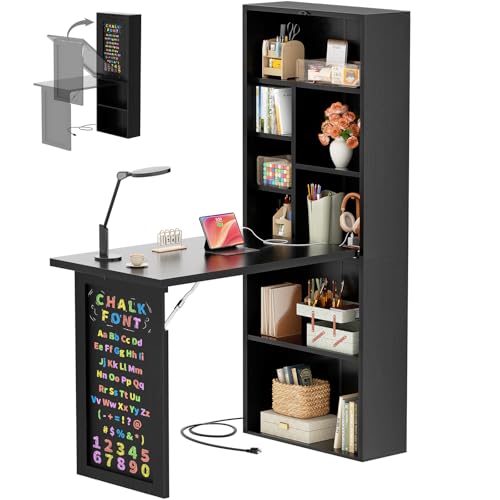
Some designs combine a folding surface with a shallow wall cabinet, cubby, or shelf above. These suit users who want pen storage, a charging point, or a place to park a laptop when the desk is closed. If storage is your priority, compare with the storage-focused approach in office desk with storage solutions.
Corner Folding Desks
Corner-mounted versions use two walls for support, which can increase rigidity and free up a central wall for art or shelving. They are a good match for alcoves and awkward room geometry.
| Type | Best For | Stability Feel | Deployment Effort |
|---|---|---|---|
| Single-flap desk | Laptop-only, occasional use | Moderate | Very low |
| Drop-leaf with side supports | Daily monitor and keyboard work | High | Low |
| Wall desk with integrated storage | Stationery, charging, laptop parking | Moderate to high | Low |
| Corner folding desk | Alcoves and awkward room shapes | High | Low |
Wall Anchoring and Load Capacity
This is the single most important factor in the safety and satisfaction of a wall mounted folding desk. The desk is only as strong as its connection to the wall.
Wall Types and Fasteners
- Wood studs: the most forgiving option. Fix the mounting cleat into at least two studs with heavy-duty wood screws or lag bolts.
- Brick and concrete: reliable when using appropriate masonry anchors or chemical anchors. A professional installer is advisable for heavy setups.
- Drywall without studs: generally unsuitable for a load-bearing desk. Toggle bolts can hold light shelves, but a desk under working pressure should not rely on drywall alone.
- Metal studs: require specialized fasteners and often a plywood backing plate to spread the load.
Matching Capacity to Use
Entry-level folding desks typically support a laptop, a lamp, and a notebook. Mid-range models with reinforced brackets and wider mounting plates comfortably handle a monitor, keyboard, and accessories. Top-tier and commercial-grade wall desks are engineered for heavier loads and frequent deployment, with thicker steel brackets and more substantial wall plates.
Choosing the Right Size
Size decisions for a folding wall desk are driven by three dimensions: width, depth, and clearance.
Width
Width determines how much you can place side by side. A laptop-only desk can be quite narrow. A desk intended for a monitor plus keyboard and a notebook needs more width so the mouse has room to move. Measure your equipment before choosing.
Depth
Depth affects comfort. Too shallow and your forearms hang off the edge; too deep and the desk projects uncomfortably into the room even when open. A depth that supports your keyboard and a monitor at a comfortable viewing distance is the practical target. Compare with the depth guidance for a pull-out keyboard tray if you are layering ergonomic adjustments.
Clearance
Check the space needed for your chair, your knees, and the folding action itself. Some mechanisms require the desk to swing down in an arc, which means the floor beneath must be clear during deployment. Also check that a nearby door, drawer, or wardrobe does not collide with the open desk.
Materials and Surface Choices
The desktop material affects weight, durability, and how the desk feels under your hands.
- Engineered wood with laminate finish: common in mid-range folding desks. Light, stable, and easy to clean. Watch for edge sealing quality.
- Solid wood: heavier and more substantial. A solid wood folding desk feels more like a traditional desk but demands stronger anchoring. Explore wooden desk top options if you plan to pair a folding frame with a wood surface.
- Bamboo: a durable, dimensionally stable material that works well for wall-mounted surfaces.
- Metal or steel surfaces: less common for folding desks but durable. Usually paired with industrial aesthetics.
Consider the finish as well: matte surfaces hide fingerprints and reflections, while glossy finishes show smudges and glare under task lighting. If glare is a concern, the lighting guidance in modern desk light reviews is a useful companion read.
Setup and Ergonomics
A folding wall desk solves a space problem, but it does not automatically solve an ergonomic one. Height and posture still matter.
Height
Most folding wall desks are fixed-height. Measure your seated elbow height and check that the specified desk height supports relaxed shoulders and forearms roughly parallel to the floor. If height is adjustable, verify the range covers your needs. A standing-height folding desk is a different product category — check the height specification carefully before assuming standing use.
Chair and Legroom
Because there are no legs under the desk, legroom is usually generous — but the wall and the folding brackets can interfere with knees. Test the seated position with the desk deployed. If you need extra comfort for long sessions, consider a memory foam cushion for desk chair to improve seated support.
Monitor Placement
On a narrow folding desk, monitor placement becomes critical. A monitor arm clamped to the back edge can free desktop space and improve viewing height, but the arm's clamp and the monitor's weight must be within the desk's capacity. For heavier multi-monitor needs, a dedicated standing desk with monitor mount or a monitor-mount-ready configuration may be a better fit than a folding desk.
Lighting and Cable Routing
Wall-mounted desks often sit in spots where overhead lighting is weak. A clamp lamp or a wall-mounted task light helps. Cable routing is easier than on a floor desk because cables can drop straight down the wall — but you need a way to keep them tidy when the desk is folded. Adhesive clips and a short cable sleeve work well.
For a wider view of compact workspace ergonomics, the guidance on small desk accessories covers space-efficient tools that pair naturally with a folding desk.
Market Tiers at a Glance
Wall mounted folding desks are available across several market tiers. The table below describes what each tier typically delivers, using relative positioning rather than absolute figures.
| Tier | Typical Construction | Best For |
|---|---|---|
| Entry-level | Light steel brackets, thin engineered desktop, basic hinge | Occasional laptop use, renters, very tight spaces |
| Mid-range | Reinforced brackets with positive lock, thicker desktop, better edge sealing | Daily remote work with a monitor and keyboard |
| Premium | Heavy-duty steel frame, solid wood or high-grade engineered surface, smooth hinge action | Frequent deployment, heavier equipment, long-term investment |
| Commercial-grade | Professional-grade mounting plates, commercial hardware, rated for repeated cycling | Shared workspaces, heavy loads, institutional settings |
Mid-range models usually offer the most balanced combination of stability, surface quality, and ease of installation for a home setting. Entry-level models are a reasonable starter tier if the desk will only hold a laptop. Premium and commercial-grade tiers make sense when the desk is deployed daily and carries substantial equipment.
Common Mistakes to Avoid
- Mounting into drywall alone. The most common and most dangerous error. Always anchor into studs, masonry, or a properly installed backing plate.
- Ignoring the folding arc. Measure the space the desk sweeps through during deployment, not just its open footprint.
- Overloading a single-flap desk. A laptop desk is not a monitor desk. Respect the load rating.
- Choosing depth by looks rather than use. A shallow desk looks tidy but can be uncomfortable for typing. Match depth to your equipment and posture.
- Forgetting cable management. Cables hanging loose behind a folded desk look untidy and can catch on the mechanism. Plan routing before installation.
- Skipping the level check. An unlevel wall desk is annoying to use and stresses the hinge unevenly. Use a spirit level during installation.
- Assuming fixed height suits everyone. Check the height specification against your seated elbow height before purchase.
Final Verdict: Is a Wall Mounted Folding Desk Right for You?
A wall mounted folding desk is an excellent solution when floor space is the primary constraint and the wall can take the load. It delivers a genuine workspace in rooms that could not otherwise host a conventional desk, and it restores floor area the moment you fold it away.
Choose one if you work primarily with a laptop, need a workspace that disappears at the end of the day, or live in a studio, bedroom, or compact apartment. Choose a different solution if you need heavy multi-monitor equipment, an adjustable standing height, or extensive under-desk storage — in those cases a dedicated compact desk or an adjustable standing model is the more practical long-term investment.
Before you commit, confirm three things: your wall type and anchoring plan, the desk's stated load capacity, and the depth and height that suit your posture. Get those right, and a folding wall desk becomes one of the most efficient pieces of furniture in a small home.
For related space-saving layouts, explore the broader collection of compact workspace solutions and compare configurations before deciding.
Frequently Asked Questions
How much weight can a wall mounted folding desk hold?
Capacity depends on the anchoring hardware and wall type. Entry-level folding desks typically support a laptop and light accessories. Reinforced mid-range and premium brackets anchored into wall studs can support a monitor, keyboard, and additional equipment. Always follow the manufacturer's stated load limit and install into studs or suitable masonry anchors — never drywall alone.
Is a wall mounted folding desk suitable for a small apartment?
Yes. It folds flat against the wall when idle, freeing floor space for other activities. It works well in studios, bedrooms, and narrow hallways, provided the wall can support the anchoring hardware and there is enough clearance for the chair, your legs, and the folding arc.
What wall type do I need for a folding wall desk?
Solid walls, wood studs, and brick or concrete with appropriate masonry anchors are the most reliable. Drywall without studs is generally not sufficient for a load-bearing desk. When in doubt, consult a qualified installer before mounting.
Can a wall mounted folding desk be used as a standing desk?
Some models are designed at standing height or offer adjustable brackets, but most folding wall desks are fixed-height sitting desks. If standing use matters to you, verify the specified height range before choosing a model. For dedicated standing options, a purpose-built adjustable standing desk is the more reliable route.
How do I keep cables tidy on a folding wall desk?
Route cables straight down the wall with adhesive clips or a short cable sleeve, and leave enough slack for the fold action. Avoid loose loops that can catch on hinges or brackets when the desk is raised.