Black Desk With Drawers On Both Sides: The Complete Workspace Guide
Looking for a black desk with drawers on both sides? This guide covers storage layout, materials, sizing, cable management, and ergonomic placement so you can choose a balanced, long-lasting workspace with total confidence.
Jump to Buying GuideWhy Choose a Black Desk With Drawers on Both Sides?
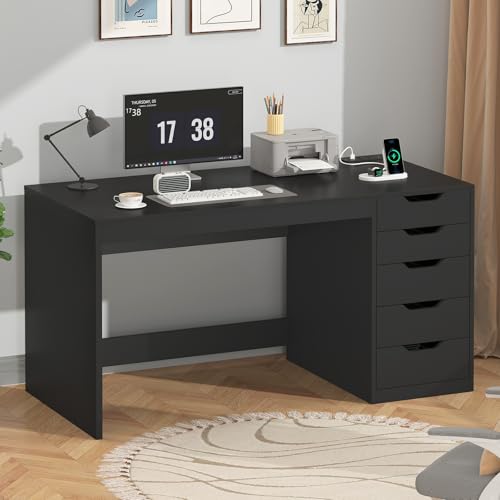
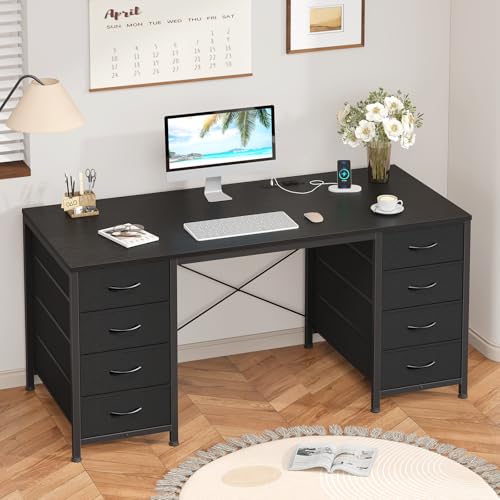
A black desk with drawers on both sides is one of the most balanced workspace designs available. The symmetric drawer layout puts storage within reach of either hand, while the black finish gives the desk a clean, modern, and professional look that fits almost any room style. Whether you work from home, study, game, or manage a small business, a double-drawer black desk keeps supplies and documents organized without cluttering the surface.
The design also solves a common problem: single-sided drawer desks often force you to twist or reach across your body. With drawers on both sides, everyday items stay accessible, and the visual weight of the desk feels even. This is why double-drawer black desks are common in home offices, executive suites, and compact apartments where the desk doubles as a storage station.
Storage and Layout Benefits of Double-Sided Drawers
The biggest advantage of a black desk with drawers on both sides is dedicated storage that does not invade your working area. The knee space stays clear, which matters for posture and legroom. Drawers on both sides also let you separate categories of items — for example, office supplies on one side and personal or tech accessories on the other.
What each drawer side can hold
- Left side: notebooks, pens, sticky notes, and printer paper.
- Right side: chargers, cables, small devices, and personal items.
- Deeper drawers: files, folders, and binders for a paper-light workflow.
- Shallow drawers: quick-grab tools, scissors, and stationery.
If your workflow involves a lot of documents, a model with file-capable bottom drawers is a smart choice. If you mostly work on a laptop, shallow drawers plus a center knee space are usually enough. Either way, the double-drawer layout supports a desk for small spaces without adding extra furniture.
For buyers who want extra surface storage, a black desk with a hutch or upper shelf can complement the drawer base. Compare options on our desk with shelves guide to see how much vertical storage your room can support.
Materials and Finish Guide for Black Desks
The material determines how durable, heavy, and long-lasting your black desk will be. Most black desks with drawers on both sides fall into three broad construction categories: engineered wood with a black finish, solid wood with a black stain or paint, and steel-framed designs with a black top. Each has trade-offs in weight, maintenance, and longevity.
Engineered Wood + Laminate
Mid-tier construction that is stable, uniform, and resistant to everyday wear. A matte black laminate hides fingerprints well. Good value for its tier.
Solid Wood (Black Stain)
Premium materials and a solid build. Heavier and more durable over decades. Works well with a dark wood desk aesthetic.
Steel Frame + Black Top
Heavy-duty and industrial in feel. Reinforced steel legs support larger surfaces and heavier drawer loads. Rust-proof finish keeps the frame clean.
Veneer + MDF Core
Entry-level to mid-range construction with a smooth black veneer. Lightweight and easy to move, but less resistant to deep scratches.
Whichever material you choose, check the drawer runners — ball-bearing slides feel smoother and last longer than basic roller slides. Soft-close hinges are a small detail that makes daily use more pleasant. If you prefer a wood-grain look rather than solid black, explore black desk variants with visible grain patterns for a warmer finish.
Sizing: How Much Room Does a Double-Drawer Desk Need?
Most black desks with drawers on both sides measure between 47 and 63 inches wide. The drawer boxes usually add depth, so plan for at least 24 to 30 inches of clearance behind the desk for a chair and legroom. If the drawers open outward, leave a few inches of side clearance as well.
| Desk Width | Best For | Drawer Layout Notes |
|---|---|---|
| 47–50 inches | Small home office, student room | Narrow drawers on both sides; center knee space is compact |
| 55–60 inches | Standard home office, dual monitor use | Balanced drawer-to-work-surface ratio; comfortable legroom |
| 63 inches and up | Executive or shared workspace | Deeper drawers, more surface area, heavier build |
Measure your room before you buy. A wide desk with double drawers can dominate a narrow room, while a compact model in a large room may feel undersized. For tight rooms, a compact desk solution or a corner-friendly layout often works better than a full-width double-drawer unit.
Cable Management for a Black Double-Drawer Desk
A black desk hides cables better than light surfaces, but clutter still shows. The drawer structure actually helps: route cables along the back edge behind the drawer boxes, then use adhesive clips or a cable tray to keep them fixed. This keeps the working surface clean and prevents cables from snagging on drawer slides.
- Use an under-desk cable tray to hold power strips and adapters.
- Route monitor and charger cables through a grommet if the desk has one.
- Label power bricks so you can identify them without pulling everything out.
- Add a wireless charging pad to reduce cable count on the desktop.
If you are building a serious workstation, a KVM switch desk setup can consolidate multiple computers into one cable run, which pairs well with the clean look of a black desk. A desk frame guide can also help if you plan to build a custom drawer base.
Ergonomics and Placement
A black desk with drawers on both sides should fit your body as well as your room. The desk height should let your elbows rest near 90 degrees, and the knee space must be free of drawer boxes that block your legs. Because double-drawer desks often have a narrower center opening, check that the knee space is wide enough for your chair.
Place the desk so the monitor sits at eye level and about an arm's length away. Keep frequently used drawers on your dominant side, and use the opposite side for less frequent items. If you sit for long hours, pair the desk with a comfortable desk chair for long hours and a foot stool for desk support.
Quality Tiers Explained
To compare black desks with drawers on both sides without focusing on figures, use universal quality tiers. The descriptors below reflect relative market position, not absolute numbers.
| Tier | Typical Construction | Best For |
|---|---|---|
| Entry-level | Particle board with laminate, basic roller slides | Light use, student rooms, temporary setups |
| Mid-range | MDF or engineered wood, ball-bearing slides, matte finish | Daily home office work, balanced storage |
| Premium | Solid wood or heavy-duty steel frame, soft-close drawers | Long-term home office, heavy daily use |
| Professional-grade | Reinforced frame, commercial hardware, durable coating | Shared workspaces, high-frequency use |
Mid-range models usually offer the best balance of durability and drawer quality. Entry-level options are fine for light use, while premium and professional-grade tiers are long-term investments for people who use their desk every day.
Buying Checklist for a Black Desk With Drawers on Both Sides
Before you choose a model, run through this checklist. It covers the details that matter most after the desk is assembled and in daily use.
- Measure the room and the knee space: confirm the drawer boxes will not block your chair or legs.
- Check drawer slide quality: ball-bearing or soft-close slides last longer than basic roller slides.
- Confirm the finish: matte black hides fingerprints better than gloss.
- Review the frame: steel frames support heavier loads; solid wood offers long-term stability.
- Plan cable routes: look for grommets, back panels, or space behind the drawers.
- Match your workflow: file drawers for paperwork, shallow drawers for supplies.
- Consider assembly: double-drawer desks are heavier and may need two people.
If you want a matching chair, browse executive desk chairs or a comfort desk chair to complete the setup. For an executive look, pair the double-drawer base with a black executive desk style or a black gaming desk for a tech-focused room.
For L-shaped or corner rooms, an industrial L-shaped desk with drawers offers a similar storage approach in a different footprint. If you prefer an adjustable surface, consider an adjustable height desk with drawers to add sit-stand flexibility.
Frequently Asked Questions
What are the benefits of a black desk with drawers on both sides?
Symmetrical storage, a balanced look, and clear knee space are the main advantages. You get dedicated space for supplies and documents on each side while keeping the working surface free.
What materials are common for black desks with drawers on both sides?
Engineered wood with a black laminate, solid wood with black stain, and steel-framed designs are the most common. Premium tiers often use solid hardwood or reinforced steel for durability.
How much space do I need?
Allow for a desk width between 47 and 63 inches, plus 24 to 30 inches of clearance behind the desk. Leave a few inches on each side if the drawers open outward.
Can a double-drawer black desk fit a small home office?
Yes. Compact models with narrow drawers and a centered knee space work well in small rooms. Add wall-mounted storage above the desk to compensate for the drawer footprint.
How do I manage cables on a black desk with drawers on both sides?
Use an under-desk cable tray, route cables behind the drawer boxes, and add adhesive clips or a grommet. A wireless charging pad reduces cable count on the desktop.