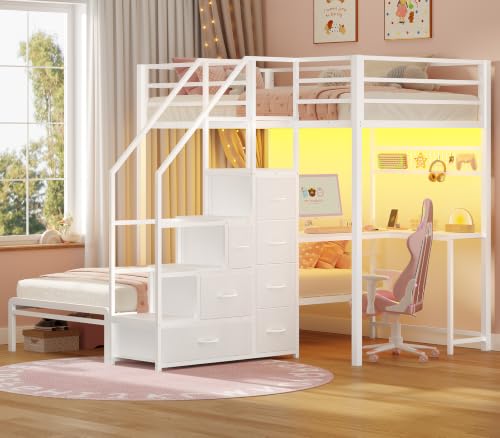
Bunk Bed with Stairs and Desk: The Complete Space-Saving Guide
One piece of furniture that sleeps, stores, and studies — discover how a bunk bed with stairs and desk turns a cramped room into a fully functional bedroom and workspace, and learn exactly what to check before you choose one.
Explore the Buying GuideWhy this guide matters: A bunk bed with stairs and desk is one of the most space-efficient furniture investments you can make for a child's room, a teen bedroom, a dorm, or a small apartment. But the combination of sleeping, climbing, and studying in one footprint creates specific safety, ergonomic, and layout questions. This guide walks you through every consideration so you can choose a model that fits your room and the people who will use it.
What Is a Bunk Bed with Stairs and Desk?
A bunk bed with stairs and desk is a multi-level furniture system that combines three functions in a single vertical footprint: an elevated sleeping platform, a staircase that provides access to that platform, and a dedicated desk area built into the lower section or integrated into the stair structure. Instead of buying a separate bed, desk, and storage unit, you get all three in one coordinated piece.
The staircase is the defining feature that separates this configuration from a classic ladder bunk. Stairs are wider, more stable, and easier to climb, and in most designs the stairwell doubles as built-in storage — drawers, cubbies, or open shelves tucked into each step. That extra storage is often the reason families choose this layout over a simple loft bed.
The desk portion typically sits underneath the raised bed, along one side of the frame, or at the base of the stairs. Some models include a full study nook with a hutch, while others offer a simple flat surface for a laptop and books. The best choice depends on how much floor space you have and how the room will be used day to day.
Who Is This Furniture Designed For?
A bunk bed with stairs and desk works best when you need to fit multiple functions into a small room without sacrificing usability. The most common use cases include:
- Children sharing a bedroom — one child sleeps on the top bunk while the lower level provides a shared or individual study area.
- Teen bedrooms — a full desk surface supports homework, gaming, or creative projects while the raised bed frees up floor space for movement.
- Small apartments and studios — a single unit replaces a bed, desk, and dresser, which is invaluable when square footage is limited.
- Guest rooms with a dual purpose — the bed sleeps visitors while the desk serves as a home office the rest of the time.
- Dorm rooms and shared housing — compact, self-contained layouts that make the most of a single wall.
Adult-rated models exist as well, typically with higher weight capacities and larger desk surfaces. If the primary user is an adult, check the manufacturer's weight limit and mattress size specifications before committing.
Key Features to Evaluate Before You Choose
Stair Design and Guardrails
Look for stairs with non-slip treads, a continuous handrail, and a minimum of two guardrails on the top bunk. Stair treads should be deep enough for a full foot and spaced evenly to prevent missteps.
Frame Material and Weight Capacity
Solid wood and high-grade steel frames offer the most durable construction. Check the stated weight capacity for both the top bunk and the desk surface, and confirm it matches the intended users.
Desk Surface Size and Height
A usable desk should provide enough depth for a laptop plus a notebook. Confirm the desk height suits the user's seated posture — a surface that is too high or too low undermines the entire study area.
Stair Drawers and Cubbies
Storage stairs are one of the biggest advantages of this layout. Check whether the drawers have smooth glides, whether the cubbies are deep enough for books, and whether the storage is accessible from the room side.
Reversible or Fixed Assembly
Some models allow you to install the stairs and desk on either side, which matters enormously in narrow rooms. A reversible design gives you flexibility if the room layout changes.
Mattress Support and Ventilation
Slat supports improve airflow under the mattress and extend its life. Confirm the recommended mattress thickness — a mattress that is too thick can compromise guardrail height on the top bunk.
Comparing Configurations: Which Layout Fits Your Room?
Not every bunk bed with stairs and desk is laid out the same way. The three most common configurations serve different room shapes and usage patterns. The table below compares them by category, best use, and tier positioning so you can match the layout to your situation.
| Configuration | Best For | Desk Position | Tier Positioning |
|---|---|---|---|
| Desk under the loft | Narrow rooms, single-user bedrooms | Directly beneath the raised bed | Entry-level to mid-range |
| Desk beside the stairs | Wider rooms, shared bedrooms | Adjacent to the staircase, often L-shaped | Mid-tier to premium |
| Stairs-integrated desk | Maximum storage, compact footprints | Built into the stair structure | High-end tier to flagship |
The desk-under-loft layout is the most common and the most space-efficient. It places the study surface in the shaded area beneath the bed, which keeps the open floor clear. This configuration suits rooms where the bed sits against a single wall and the desk faces into the room.
The desk-beside-stairs layout works well when the room is wider and you want the study area to receive natural light from a window. In this arrangement, the desk often extends along the wall next to the staircase, creating an L-shaped work zone that separates sleeping and studying more clearly.
The stairs-integrated desk is the most compact option and the most storage-heavy. The staircase itself becomes the structural anchor, with the desk folded into its base. These models tend to be premium or flagship tier because of the engineering required to combine load-bearing stairs with a stable work surface.
Entry-Level, Mid-Range, and Premium: What Changes Across Tiers
Understanding tier positioning helps you set realistic expectations. Entry-level models typically use engineered wood with a laminate finish and offer a straightforward desk surface with basic stair storage. They are a solid choice for a first bunk bed or a temporary setup.
Mid-range models usually upgrade to solid wood or reinforced steel frames, add smoother drawer glides, and provide a larger desk surface with a built-in shelf or hutch. These are competitive within their class and often represent good value for a long-term bedroom setup.
Premium and flagship-tier models focus on heavy-duty construction, reversible assembly, deeper stair storage, and integrated cable management or shelving for the desk. They are a long-term investment intended to serve through childhood and into the teen years.
If you are also furnishing the desk itself, our guides on bunk beds with desk underneath and stairs and bunk beds with storage stairs and desk break down the storage-focused variants in more detail.
Safety and Ergonomics: What Parents and Users Must Check
Because this furniture combines climbing, sleeping, and studying, safety deserves its own checklist. Run through each point before you finalize a choice.
- Guardrail height: The top bunk should have guardrails on all open sides, with a gap no larger than a few inches between the rail and the mattress.
- Stair handrail: A continuous handrail along the full length of the stairs reduces fall risk, especially at night.
- Non-slip treads: Look for textured or rubberized treads on each step.
- Weight limits: Confirm both the top bunk and the desk surface limits, and never exceed them.
- Desk height: The desk surface should allow the user to sit with feet flat on the floor and elbows near a 90-degree angle.
- Wall anchoring: Most manufacturers include an anti-tip kit. Use it — anchoring the frame to the wall is essential for stability.
- Ceiling clearance: Measure the room's ceiling height and leave adequate headroom above the top bunk.
For younger children, the stairs area is often the safest access point, and many families use the desk zone as a supervised study nook before the child is old enough for the top bunk. If you are setting up a first study space, our bunk bed with desk for small rooms guide covers additional space-planning considerations.
How to Plan the Layout in a Small Room
Measure first, place second. Before ordering, sketch the room and mark the position of windows, doors, radiators, and electrical outlets. A bunk bed with stairs and desk needs clearance on the stair side — typically a couple of feet — so the user can climb safely and the desk chair can pull out.
Place the desk where it receives the best natural light without glare on a screen. If the room has a single window, orient the desk perpendicular to it so light falls across the surface rather than directly into the user's eyes. Keep the stair side away from the door swing so the entry remains unobstructed.
Use the vertical space above the desk for a shelf or pegboard, and keep the floor beneath the loft clear for a chair or a small storage bin. If the room is particularly tight, consider a model with the desk built into the stair base, which frees up the floor under the loft entirely. Our article on a bunk bed with desk under it explores this arrangement in depth.
Assembly, Maintenance, and Long-Term Use
Most bunk beds with stairs and desk ship flat-packed and require two people for assembly. Set aside a few hours, sort the hardware, and follow the manufacturer's sequence — assembling the stairs out of order can leave the frame misaligned. Tighten all bolts after the first week of use, since wood and metal settle slightly under load.
For maintenance, wipe laminate and painted surfaces with a damp cloth, check stair treads for wear, and re-tighten guardrail hardware every few months. If the model has drawers in the stairs, clear the tracks of dust so the glides stay smooth. Solid wood frames benefit from an occasional polish, while steel frames should be checked for scratches that could lead to rust over time.
As the user grows, the desk area often becomes the most-used part of the unit. Consider a model with an adjustable or removable hutch so the workspace can evolve from a child's study nook into a teen's full desk setup.
Frequently Asked Questions
What age is a bunk bed with stairs and desk suitable for?
Most manufacturers recommend the top bunk for children aged six and older. The desk and stairs area can be used by younger children under supervision. Always check the specific product's age rating and weight limits.
Are stairs safer than a ladder on a bunk bed?
Yes, stairs with handrails and non-slip treads are generally considered safer and easier to climb than vertical ladders, especially for younger children and during nighttime use.
How much floor space does a bunk bed with stairs and desk save?
A bunk bed with stairs and desk consolidates sleeping, studying, and storage into one vertical footprint. It typically frees up the floor area that a separate bed, desk, and dresser would otherwise occupy.
Can adults use a bunk bed with stairs and desk?
Yes, adult-rated models exist with higher weight capacities and larger desk surfaces. Check the manufacturer's weight limit and mattress size specifications before choosing a model for adult use.
Ready to Compare Bunk Bed Options?
Browse our curated selection of bunk beds with stairs and desk below, hand-picked for small-room layouts, storage capacity, and study-friendly design. Each listing links directly to current availability so you can compare features side by side.
View Recommended Models