
Bunk Bed with Desk for Small Rooms: The Complete Space-Saving Guide
Turn a cramped bedroom into a functional sleep-and-study zone. Learn how a bunk bed with desk combines two essential rooms into one smart footprint — and what to check before you choose.
Explore Buying GuideSmall rooms force hard choices. A bed takes up the largest share of floor space, and a desk — if you study, work, or game — demands a second large share. The result is often a room that feels crowded and a workspace that never quite fits. A bunk bed with desk for small rooms solves this by stacking the two functions vertically, freeing the floor for movement, storage, and a genuinely usable study area.
This guide walks you through the real-world considerations that matter when you are researching this category: how the layouts differ, which configurations suit different room shapes, what safety features to verify, and how to plan the space so the combination feels intentional rather than improvised. If you are still comparing broader options, our collection of bunk beds with desk underneath and bunk beds with desk and storage covers additional configurations worth reviewing.
Who this guide is for: Parents furnishing a child's or teenager's bedroom, students in dorms or shared apartments, remote workers in studio flats, and anyone managing a guest room that doubles as a home office. The common thread is a room where every square foot has to earn its place.
What Exactly Is a Bunk Bed with Desk?
The term covers several related furniture formats, and understanding the distinction prevents a frustrating purchase. In essence, a bunk bed with desk integrates a sleeping platform with a work surface in a single structure. The two most common families are:
Bunk Bed with Desk Underneath
This design keeps two sleeping levels — an upper bunk and a lower bunk — while carving out a desk area at one end or along the side of the lower level. It is the right choice when the room must sleep two people and still provide a study zone. Variants include models where the desk sits beneath the upper bunk while the lower bunk occupies the remaining space, and models where the lower bunk is replaced by a futon or sofa. Explore the range of bunk beds with desk under it if sleeping capacity is your priority.
Loft Bed with Desk
A loft bed raises a single sleeping platform high enough that the entire floor beneath becomes usable. The desk, shelving, and storage all live in that lower zone. This is the more spacious option for a single occupant, and it is often the better fit for teenagers and adults who need a full-width workspace. Designs such as the black full-size loft bed with desk show how much surface area this format can deliver.
A third, less common format is the bunk bed on top with desk on bottom, where the upper sleeping level is paired with a dedicated lower workspace rather than a second bed. This hybrid suits rooms that need to sleep one person comfortably while maximizing desk real estate.
Comparing the Main Layouts
Use the table below to match the format to your room and household. Each row describes the position the design occupies in the market rather than a specific figure, so the comparison stays useful regardless of when you read it.
| Layout | Tier Positioning | Sleeps | Best For |
|---|---|---|---|
| Bunk bed with desk underneath | Entry-level to mid-range | Two | Siblings sharing a small bedroom who both need a study spot |
| Loft bed with desk and storage | Mid-range to premium | One | Teenagers, students, and adults in studio or compact rooms |
| Bunk bed with desk and stairs | Premium to top-tier | Two | Younger children who need safer access than a vertical ladder |
| Bunk bed with desk and futon or sofa | Mid-range to high-end tier | Two plus seating | Guest rooms and multi-purpose rooms that host visitors |
| Bunk bed on top, desk on bottom | Premium to professional-grade | One | Remote workers who want a generous desk beneath a full sleeping platform |
Buying Guide: What to Check Before You Decide
Research-stage buyers usually have a shortlist in mind. The value of this section is in the details that separate a satisfactory purchase from a regretful one. Work through each point against the specific model you are considering.
1. Measure the Room, Not Just the Bed
Confirm the footprint of the assembled unit, then add clearance for the ladder, stairs, or drawer pull-out. A bed that fits the wall but blocks the door swing or the wardrobe is a daily annoyance. Pay particular attention to the ceiling height: the sleeper on the upper level needs comfortable headroom, and the person at the desk below needs enough vertical clearance to sit upright without ducking. Most manufacturers publish both figures — treat them as non-negotiable.
2. Match the Desk Depth to the Actual Use
A desk used for a laptop and a notebook needs less depth than one used for a full desktop setup, dual monitors, or art supplies. If the intended user is a gamer or a creative professional, prioritize models with deeper surfaces and cable-routing provisions. Our guide to bed desks for laptops explains how shallow surfaces can still work for lightweight tasks.
3. Check Frame Construction and Weight Ratings
Look for high-grade steel frames, reinforced corner joints, and solid wood or high-quality engineered panels rather than thin particle board. Heavy-duty construction matters more in this category than in a standalone desk, because the structure carries a sleeping load above a workspace. Verify the weight limit for the upper bunk separately from the desk surface — they are usually different figures.
4. Prioritize Safety Hardware
Full-length guardrails on the upper bunk, a secure ladder that hooks over the frame rather than resting against it, and a wall-anchoring kit are baseline requirements. Models with built-in stairs, such as the bunk bed with desk underneath and stairs, are a sensible upgrade for younger children because they reduce the risk of slips during night-time trips.
5. Plan Storage Before You Buy
Small rooms punish clutter. Integrated drawers, shelving, and cubbies turn the structure into a complete storage solution. If the room also lacks a wardrobe, consider a bunk bed with desk and dresser underneath so clothing storage does not consume separate floor space. For rooms where the bed must also serve as seating during the day, a bunk bed with futon and desk adds a flexible third function.
6. Consider the Access Route
Stairs are easier and safer than ladders but consume more floor area and add to the structure's overall footprint. Ladders preserve space but require confident users. If the room is narrow, measure the ladder's projection before committing. If safety is the priority, compare models with stairs and desk combinations to see how much additional floor area the stair design demands.
7. Think About the Room's Long-Term Use
A child's bedroom may become a teenager's study, then a guest room. Configurations that adapt — a loft bed that can later stand alone as a single bed with a separate desk, or a model with a removable lower section — tend to be the more efficient long-term investment. Our overview of beds with desk underneath covers several adaptable formats.
Space Planning for Small Rooms
A bunk bed with desk frees floor area, but the room still needs a sensible layout to feel calm. These principles apply regardless of which model you choose.
- Keep the desk near natural light. Position the structure so the workspace faces or sits beside a window. This reduces eye strain and makes the study zone feel less enclosed.
- Leave a clear walking path. Aim for at least a comfortable stride's width between the bed frame and any other furniture. If the room is genuinely tight, a desk designed for small spaces alongside a compact bed may outperform an all-in-one unit.
- Use vertical storage above the desk. Wall-mounted shelves or a pegboard keep the desk surface clear without adding floor furniture.
- Choose a light-toned finish for narrow rooms. Pale wood, white, and soft neutrals make the structure recede visually, while dark finishes can make a small room feel heavier.
- Anchor everything to the wall. This is a safety requirement, not an aesthetic preference. It also stabilises the structure so the desk below does not wobble during writing or typing.
If the room is a shared bedroom rather than a single-occupant space, our guide to a bed and desk in a small room explores the trade-offs between all-in-one structures and separate furniture in more depth. For rooms where the bed and desk must sit side by side rather than stacked, a bunk bed with desk and couch underneath can preserve seating while keeping the study surface separate.
Safety Considerations You Should Not Skip
Bunk beds carry inherent height-related risks, and combining them with a desk adds a workspace directly beneath a sleeping platform. The following checks are essential:
- Guardrail height and coverage: The upper bunk should have guardrails on all open sides, with a gap no larger than the recommended limit to prevent entrapment.
- Ladder or stair attachment: The access route must be firmly fixed to the frame, not leaning loosely against it.
- Wall anchoring: Use the supplied anti-tip kit. This is especially important in rooms with carpet, where the frame can shift.
- Desk clearance: Confirm that a seated person has adequate headroom and that the underside of the upper bunk does not obstruct monitor placement or arm movement.
- Age suitability: Most manufacturers specify a minimum age for the upper bunk. Respect it, and supervise younger children until they can use the structure confidently.
For families furnishing a first bedroom, the principles in our first desk setup guide translate well: establish a stable, well-lit workspace with ergonomic seating before adding decorative elements. The same discipline applies to a combined bed-and-desk unit.
Which Configuration Suits Which Household?
The right choice depends less on trends and more on the specific people who will use the room.
For Younger Children Sharing a Room
A bunk bed with desk underneath and built-in stairs is the safest and most practical option. The lower bunk sleeps one child, the upper bunk sleeps the other, and the desk gives both a shared study spot. Storage drawers under the stairs absorb toys and clothing.
For Teenagers
A loft bed with a full-width desk is usually the better fit. Teenagers need more desk surface for schoolwork, laptops, and hobbies, and they value the sense of a private study zone beneath their sleeping area. Models with shelving and cable management are worth prioritising.
For Students and Young Adults in Small Apartments
A loft bed with desk and storage turns a studio into a one-bedroom-equivalent layout. The desk becomes a genuine workstation, and the space beneath the bed accommodates a wardrobe or a small seating area.
For Guest Rooms and Multi-Purpose Rooms
A bunk bed with desk and futon gives the room three modes: sleeping for two, seating for guests, and a workspace during the day. It is the most flexible format for rooms that change function throughout the year.
Adults who need a robust workspace should look at models positioned as professional-grade or commercial-grade, which typically use heavier frames and higher weight ratings than entry-level designs. The bunk bed with desk underneath for adults category is a useful starting point.
Feature Checklist: What Separates a Good Model from a Great One
Use this checklist when comparing shortlisted models. Each item reflects a real functional difference rather than a cosmetic preference.
| Feature | Why It Matters | Priority Level |
|---|---|---|
| Full-length guardrails | Prevents falls from the upper bunk during sleep | Essential |
| Wall-anchoring kit included | Stabilises the frame and prevents tipping | Essential |
| Cable management cutouts | Keeps the desk area tidy and reduces trip hazards | High |
| Built-in shelving or cubbies | Reduces the need for separate storage furniture | High |
| Stairs instead of a ladder | Safer access, especially for children and at night | High for families with young children |
| Desk surface depth of full workstation size | Accommodates monitors, keyboards, and study materials | High for adults and teenagers |
| Reversible or modular assembly | Allows the layout to adapt as the room's use changes | Medium |
| Scratch-resistant finish | Maintains appearance through daily desk use | Medium |
Recommended Bunk Beds with Desks for Small Rooms
⚠️ AFFILIATE DISCLOSURE: This website contains affiliate links. As an Amazon Associate, we earn from qualifying purchases. If you make a purchase through these links, we may receive a small commission at no additional cost to you. Read our full affiliate policy.

Jocoevol Twin Loft Bed with Desk and Mattress, Metal Bunk Bed Frame, Black | Heavy Duty Metal Loft Bed with Power Outlet, Convertible Folding Bed, Adjustable Storage Shelves, Safety Guardrail & Ladders
Check price on Amazon
Dnxao Loft Bed Twin Size with L-Shaped Desk and 5 Drawers, Rustic Brown | LED Metal Twin Loft Bed for Teens & Adults, Space-Saving Workstation with Charging Station for Small Bedroom & Dorm
Check price on Amazon
BTHFST Full Size Bunk Bed with Desk,5 Drawers,Charging Station,Rustic Brown | Full Over Full Bunk Beds with LED Lights, Storage Pockets, Safety Guardrails, Metal Bunk Beds for Kids/Teens, Space-Saving
Check price on Amazon
ADORNEVE Twin Size Loft Bed with Gaming Desk, RGB Hutch, Black | Expanded Safety Power Outlet, 3 Drawers, Shelves & Pegboard, Metal Loft Bed Frame with RGB Light, Space Saving for Teens
Check price on Amazon
Itaar Stairway Twin Size Loft Bed with L Shaped Desk and Wardrobe, Metal Loft Bed Frame with Storage Stairs, 3 Fabric Drawers, LED Lights & Charging Sation (Rustic Brown, Twin)
Check price on Amazon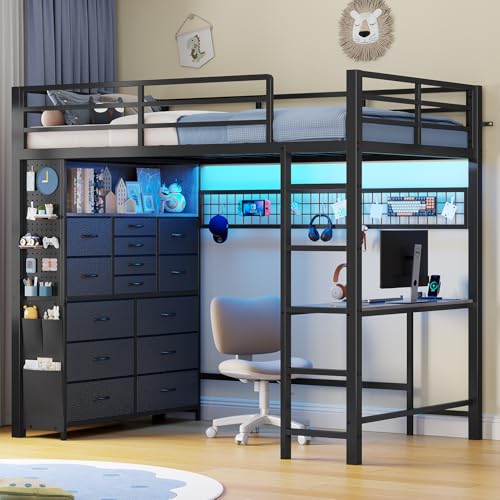
ADORNEVE Twin Loft Bed with Desk,14 Storage Drawers & Power Outlet, Black | Metal Kids Loft Bed Twin Size with LED Lights, Pegboard, Safety Guardrail & Ladder, Space Saving for Teens, Small Rooms
Check price on Amazon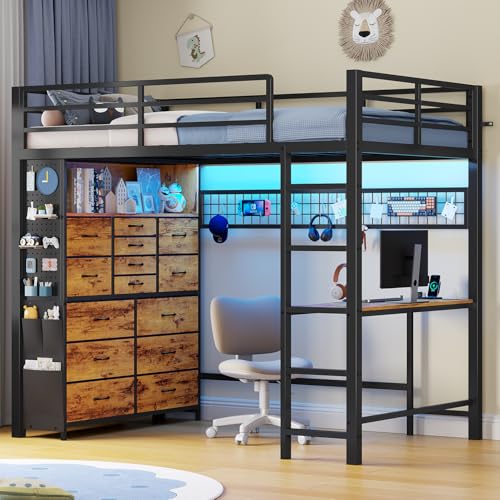
ADORNEVE Twin Loft Bed with Desk,14 Storage Drawers, Rustic Brown | LED Metal Loft Beds with Pegboard, Safety Guardrail & Ladder, Space Saving for Teens, Small Rooms
Check price on AmazonReady to Plan Your Space?
Compare the configurations above against your room's dimensions, then review the recommended options to find a structure that fits both the floor plan and the people who will use it.
Explore OptionsFrequently Asked Questions
What is a bunk bed with a desk for small rooms?
It is a multi-functional furniture piece that combines an elevated sleeping area with a built-in workspace underneath or alongside it. It maximizes vertical space, allowing a bedroom and study zone to coexist in a compact footprint.
Is a bunk bed with desk safe for children and teenagers?
Yes, when properly constructed and installed. Look for models with full-length guardrails, sturdy ladders or stairs, reinforced frames, and adherence to safety standards. Adult supervision and correct assembly are essential for younger children.
What ceiling height is needed for a bunk bed with desk?
Most designs require a ceiling height of at least 8 feet (about 244 cm) to allow comfortable headroom for the person using the desk below. Loft-style variants may need slightly more, so always check the manufacturer's clearance specifications.
Can a bunk bed with desk support an adult?
Yes, many models are engineered for adult use with high weight capacities. Choose commercial-grade or professional-grade frames rated for adults, and verify the weight limit for both the sleeping platform and the desk surface.
How do I choose between a bunk bed with desk underneath and a loft bed with desk?
A bunk bed with desk underneath typically sleeps two and includes a lower sleeping level, while a loft bed with desk sleeps one and frees the entire lower area for workspace and storage. Choose based on how many sleepers the room must accommodate and how much desk surface you need.
Do I need to anchor the structure to the wall?
Yes. Wall anchoring is a safety requirement for this category, not an optional extra. It stabilises the frame, prevents tipping, and keeps the desk surface steady during daily use.