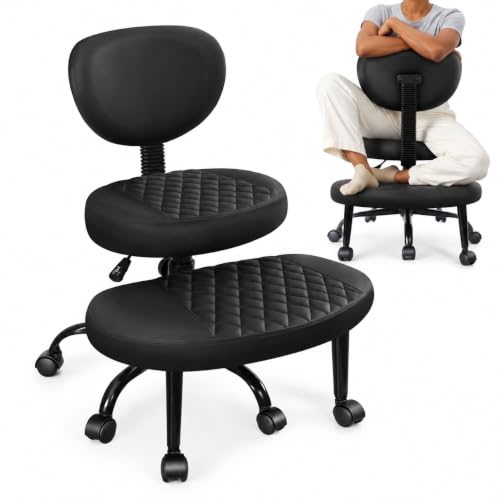
Desk Chair for People Who Sit Cross Legged
If you naturally fold your legs onto your seat, a standard office chair will fight you. Learn which seat shapes, cushions, and frame designs actually support cross-legged sitting — and how to choose one that keeps your back comfortable all day.
Jump to Buying GuideWhy cross-legged sitting needs a different chair: Most ergonomic chairs are engineered for feet flat on the floor. When you cross your legs, you raise your knees and shift your hips, which changes the pressure map across the seat. A chair with a narrow seat, aggressive side bolsters, or fixed armrests will push your knees together, cut circulation, and force you to slouch. The right chair simply gives your legs room to fold and keeps your lower back supported in that position.
Who This Guide Is For
This page is written for people who have already decided they want to sit cross-legged at their desk — whether that is for comfort, focus, cultural habit, or because it helps with restlessness. You are likely comparing chairs and want to know which specifications matter before you commit. The sections below cover the seat geometry, back support, arm configuration, and adjustment features that make cross-legged sitting sustainable, plus practical tips for desk height and movement.
The Core Features That Make a Chair Cross-Legged Friendly
Wide, Flat Seat Pan
A seat at least 20–22 inches wide and reasonably deep gives your ankles and knees space to rest without hanging over the edge. A flat, firm cushion distributes pressure better than a deeply contoured bucket seat.
Armless or Flared Arms
Fixed armrests block your knees from rising. Armless models, flip-up arms, or arms that flare outward allow your legs to fold naturally without pinching your hips.
Supportive Backrest
Because cross-legged sitting tilts your pelvis slightly backward, a backrest with adjustable lumbar support helps you stay upright without over-arching your spine.
Adjustable Seat Height
You need to lower the seat enough that your folded knees sit close to hip level. A height range that goes lower than a standard task chair is a real advantage here.
Firm, Breathable Cushion
A medium-firm foam that does not collapse under your ankles prevents pressure points. Breathable upholstery helps because cross-legged sitting traps heat around the seat.
Stable Base
Shifting your legs changes your center of gravity. A five-star base with a smooth-rolling caster set keeps the chair stable as you reposition throughout the day.
Buying Guide: Matching Chair Tiers to Your Needs
Cross-legged-friendly chairs are not a single category. They range from simple armless task stools to fully adjustable ergonomic chairs with seat-depth sliders. The table below groups them by market tier so you can match features to how often you sit cross-legged and how much adjustability you want.
| Tier | Typical Features | Best For |
|---|---|---|
| Entry-level / starter tier | Fixed armless or simple swivel seat, basic foam, limited height range | Occasional cross-legged sitting, short sessions, secondary desks |
| Mid-range / balanced tier | Wider seat pan, adjustable height, flip-up arms, basic lumbar curve | Daily work-from-home use with frequent position changes |
| Premium / high-end tier | Seat-depth slider, adjustable lumbar, breathable mesh or high-grade foam, smooth casters | Full-day cross-legged sitting, users with back sensitivity |
| Professional-grade / commercial-grade | Reinforced frame, multi-point adjustment, long warranty, durable upholstery | Shared workspaces, heavy daily use, long-term investment |
As a rule, moving up a tier adds smoother adjustment mechanisms and more durable cushions rather than changing the basic shape. If you sit cross-legged for hours at a time, the mid-range and premium tiers are usually the sweet spot because they combine a wide seat with real lumbar adjustment.
How to Set Up Your Chair and Desk for Cross-Legged Sitting
Chair choice is only half the equation. Your desk height and monitor position need to accommodate the slightly higher knee position that comes with folded legs. A few practical adjustments make a large difference:
- Lower the seat: Aim for a height where your folded knees are near or slightly below hip level. This reduces hip flexor strain.
- Raise the monitor slightly: When you sit cross-legged, your torso often tilts back a few degrees. Keep the top of the screen at or just below eye level to avoid neck strain.
- Use a footrest or cushion: A small cushion under your folded legs can reduce pressure on the ankles and keep the seat cushion from compressing.
- Change position every 30–45 minutes: Alternate between cross-legged, feet flat, and standing if you have a height-adjustable desk. Static posture in any position is the real risk.
- Check your desk clearance: Make sure your knees do not hit the underside of the desk when folded. A desk with a modesty panel or deep drawer can limit legroom.
If you are still deciding between a full desk-and-chair combination, our guide to desk and chair pairings explains how to coordinate heights and depths. For small rooms, the small-space desk and chair set options are worth reviewing before you finalize a chair.
Common Mistakes to Avoid
- Choosing a heavily contoured racing-style seat: Deep side bolsters push your knees inward and make folding your legs uncomfortable.
- Ignoring seat depth: A seat that is too deep forces you to slide forward, which removes back support exactly when you need it.
- Fixed armrests at the wrong height: Arms that sit below your elbows encourage slouching; arms that block your knees defeat the purpose entirely.
- Overly soft foam: Plush cushions feel good for a minute but collapse under concentrated pressure from ankles and knees.
- Treating cross-legged sitting as a full-time posture: Use it as one position among several, not as the only way you sit.
If you are also dealing with existing discomfort, our resources on a desk chair for back pain and a chair with lumbar support explain how back support interacts with non-standard sitting positions.
Compare Cross-Legged-Friendly Chairs
Browse curated options with wide seats, armless designs, and adjustable lumbar support — selected for people who sit cross-legged.
View Recommended ChairsFrequently Asked Questions
What is the best desk chair for people who sit cross legged?
The best chair has a wide, flat seat pan (20–22 inches or more), a supportive backrest with adjustable lumbar support, and armless or flared arms. Mid-range and premium models with adjustable seat depth and firm foam tend to work best because they keep your hips supported while your legs are folded.
Is sitting cross legged bad for your back?
Cross-legged sitting is not inherently harmful, but holding any static posture for hours can cause stiffness. A chair with good lumbar support, combined with regular movement breaks and alternating positions, helps reduce strain on your lower back and hips.
Do I need an armless chair to sit cross legged?
Not strictly, but armless chairs or chairs with flip-up/flared arms give your knees room to rise. Fixed armrests often block the natural folding motion, so armless or adjustable-arm models are generally more comfortable.
How wide should a cross-legged desk chair seat be?
Aim for at least 20–22 inches of seat width and enough depth to support your thighs without pressing behind the knees. A wider, flatter seat pan lets your ankles and knees rest comfortably without hanging over the edge.
Can I sit cross legged in a mesh office chair?
Yes, if the seat frame is wide and the mesh seat has a firm edge. Mesh backrests are fine and often help with airflow, but check that the seat pan itself is flat and not deeply contoured, since a curved mesh seat can push your legs together.
For readers comparing broader workspace setups, our overview of desk chairs and the collection of desk chairs for sitting cross legged provide additional context. If you want a chair that doubles as a lounge seat for reading, the desk chair with footrest guide covers recline and leg-rest features that pair well with folded-leg sitting.