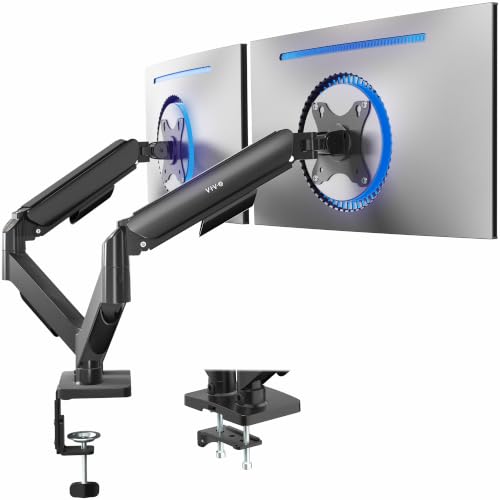
Dual Monitor Stand for Desk: The Ultimate Setup Guide
Transform your workspace with the perfect dual monitor stand. Discover expert tips, key features, and top recommendations to enhance ergonomics, productivity, and desk space.
All About Desks brings you the most comprehensive guide to choosing and setting up a dual monitor stand for your desk. Whether you're a remote worker, gamer, or creative professional, the right monitor mount can revolutionize your workflow, improve posture, and free up valuable surface space. Let's dive into everything you need to know.
Why You Need a Dual Monitor Stand
📐 Ergonomic Comfort
Adjust monitors to eye level, reducing neck and eye strain. Achieve the perfect viewing angle for all-day comfort.
📦 Desk Space Freedom
Lift monitors off the desk surface, reclaiming up to 30% of your workspace for documents, peripherals, or a cleaner look.
🔄 Flexible Viewing
Easily switch between landscape and portrait orientations, ideal for coding, design, and reading long documents.
🔧 Cable Management
Most stands feature integrated cable routing, keeping your desk surface tidy and organized for maximum productivity.
Types of Dual Monitor Stands
Key Features to Consider
Weight Capacity
Ensure the stand supports the weight of your monitors. Most quality stands handle 8-22 lbs per monitor. Heavier ultrawide screens require heavier-duty arms.
VESA Compatibility
Check if your monitors support VESA mounting (75x75mm or 100x100mm). Most modern monitors do. Adapters are available for non-VESA monitors.
Adjustability Range
Look for gas spring arms for smooth height, tilt, and swivel adjustments. This is crucial for achieving an ergonomic desk set up.
Build Quality & Material
Opt for steel or aluminum construction for durability. Alloy materials offer strength without excessive weight, essential for adjustable desk setups.
Cable Management
Built-in cable channels keep wires organized. This prevents clutter and makes your desk setup look professional and clean.
Desk Thickness Compatibility
For clamp mounts, measure your desk thickness. Most clamps fit desks up to 3 inches thick. Thin desks may require a reinforcement plate.
Comparison: C-Clamp vs Grommet vs Freestanding
| Feature | C-Clamp Mount | Grommet Mount | Freestanding Stand |
|---|---|---|---|
| Installation | Easy, clamps to desk edge | Requires pre-drilled hole | No installation, place on desk |
| Desk Compatibility | Most desks (1-3" thick) | Desks with grommet holes | All flat surfaces |
| Stability | ⭐⭐⭐⭐⭐ Excellent | ⭐⭐⭐⭐⭐ Excellent | ⭐⭐⭐ Good |
| Space Savings | ⭐⭐⭐⭐⭐ Maximum | ⭐⭐⭐⭐⭐ Maximum | ⭐⭐⭐ Moderate |
| Adjustability | ⭐⭐⭐⭐⭐ Full articulation | ⭐⭐⭐⭐⭐ Full articulation | ⭐⭐⭐⭐ Limited |
| Best For | Home office desks, gaming | Executive desks | Glass desks, rentals |
Installation & Setup Tips
- Plan Your Layout: Before drilling or clamping, position your desk and monitors. Consider your primary monitor for dual monitor setup productivity.
- Check VESA Mounting: Ensure your monitors have VESA holes. If not, get a VESA adapter plate.
- Assemble on Soft Surface: Assemble the stand on a soft cloth to avoid scratching your desk or monitors.
- Tighten Joints Firmly: Use the provided tools to securely tighten all joints. Loose joints can cause monitor sagging.
- Adjust Gas Spring Tension: For gas spring arms, adjust the tension to match your monitor's weight. This prevents the arm from rising or falling unexpectedly.
- Route Cables Neatly: Use the integrated cable channels or zip ties to keep cables organized and hidden.
- Fine-Tune Ergonomics: Position monitors so the top bezel is at or slightly below eye level. You should be looking slightly down at the screen.
Ergonomics: Optimize Your Viewing
A dual monitor stand is a powerful tool for creating an ergonomic desk environment. Follow these guidelines for optimal comfort:
- Eye Level: Position the top of your monitors at or slightly below your eye level. This prevents neck strain.
- Arm's Length: Place monitors about an arm's length away from your seating position.
- Monitor Angle: Tilt monitors slightly upward (10-15°) for better viewing and reduced glare.
- Dual Monitor Alignment: If using a side-by-side setup, align the monitors horizontally so they form a seamless viewing plane.
- Primary Monitor Position: Place your primary monitor directly in front of you. The secondary monitor can be angled slightly toward you.
For more ergonomic guidance, check out our ergonomic desk set up guide.
Frequently Asked Questions
Will a dual monitor stand fit any desk?
Most stands fit standard desks (0.5-3" thick). Check compatibility for glass desks, desk converters, or desks with unusual edges.
Can I use a dual monitor stand with ultrawide monitors?
Yes, but check the weight capacity per arm. Some ultrawide monitors require heavy-duty stands or separate arms.
Is a dual monitor stand worth it for a small desk?
Absolutely! Lifting monitors off the desk surface is the best way to maximize workspace on a compact desk or small standing desk.
How do I know if my monitor has VESA mounting?
Check the back of your monitor for four screw holes in a square pattern (75x75mm or 100x100mm). Most monitors made in the last decade are VESA-compatible.
Can I mount dual monitors on a corner desk?
Yes, a C-clamp or grommet mount works well on corner standing desks. Look for arms with flexible joints to position monitors around the corner.