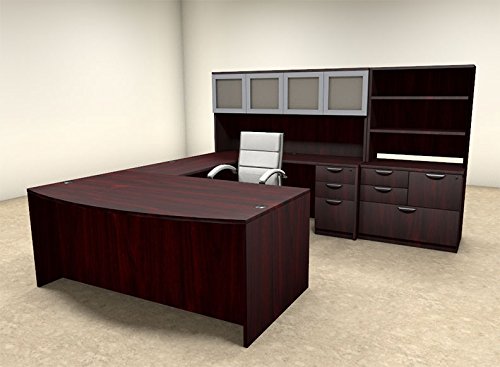
Executive Desk with Credenza and Hutch: The Complete Guide to a Commanding Workspace
A well-chosen executive desk with credenza and hutch transforms an ordinary office into a place of authority, organization, and refined productivity. This comprehensive guide walks you through every detail — from component anatomy and material tiers to ergonomic placement and long-term care — so you can choose with confidence.
Why an executive desk with credenza and hutch matters: This furniture system is more than a place to work — it is the physical foundation of professional presence. The main desk provides a generous work surface, the credenza adds discreet storage behind your seating position, and the hutch brings essential items within arm's reach without cluttering the primary work area. Together, these three components create a workspace that supports focus, organization, and leadership. Whether you are outfitting a home executive office or a corporate suite, understanding how these pieces work together is the key to a worthwhile long-term investment.
Understanding the Three Core Components
An executive desk with credenza and hutch is a coordinated system. Each component serves a distinct purpose, and their combined footprint determines how your office functions day to day. Let's break down what each piece contributes.
The Executive Desk
The main work surface, typically wider and deeper than standard desks — often 60 to 72 inches wide and 30 to 36 inches deep. This is where your monitor, keyboard, and primary tasks live. Premium executive desks often include a center drawer, side pedestals, and a modesty panel for a finished look from the guest side.
The Credenza
A separate storage unit placed behind the desk or along an adjacent wall. Credenzas typically feature doors, drawers, and adjustable shelving for files, office supplies, and personal items. Many executive configurations use the credenza as a secondary surface for a printer, decorative objects, or a beverage station during meetings.
The Hutch
A vertical shelving unit that sits on top of the desk or credenza. Hutches add open shelves, cubbies, and sometimes closed cabinets for books, binders, and display items. A well-designed hutch keeps frequently used references within reach while preserving the main desk surface for active work.
Configuration tip: The most common executive layout places the desk in the center of the room with the credenza behind the seating position. An L-shaped arrangement places the credenza perpendicular to the desk, creating a natural conversation area for meetings. Choose based on room dimensions and how you conduct day-to-day business.
Choosing the Right Configuration
Not every executive office is the same size, and not every workflow demands the same layout. Here are the primary configurations to consider, along with guidance on who each one suits best.
Straight Configuration
The classic setup: the executive desk faces the door, and the credenza sits directly behind the chair. This arrangement projects authority and keeps storage accessible with a simple turn. It works well in rectangular rooms and is the most space-efficient of the three main layouts.
L-Shaped Configuration
The credenza runs perpendicular to the desk, forming an L. This creates a natural separation between focused work (at the desk) and collaborative discussion (across the credenza). If you frequently host one-on-one meetings in your office, an L-shaped height adjustable executive desk setup offers additional flexibility.
U-Shaped Configuration
For the largest offices, a U-shaped layout wraps the credenza and hutch around the seating position. This maximizes storage and surface area but requires a generous footprint — typically a room of at least 12 by 12 feet. U-shaped configurations are common in corporate suites and home offices designed for heavy administrative work.
Space planning reminder: Leave at least 36 inches of clearance behind the chair and 24 inches between the desk and any side walls. This ensures comfortable movement and prevents the office from feeling cramped, regardless of configuration.
Material Tiers and Construction Quality
Executive furniture spans a wide range of construction quality. Understanding the tiers helps you match your investment to your expectations for durability and appearance. The table below outlines the three primary tiers without referencing specific figures.
| Tier | Typical Materials | Best For | Key Characteristics |
|---|---|---|---|
| Entry-Level | Laminate over MDF or particle board; metal hardware | Home offices on a defined spending plan; first executive setups | Good value for its tier; easy assembly; limited grain variation |
| Mid-Range | Engineered wood with wood veneer; solid wood accents | Professional home offices; small business suites | Competitive within its class; realistic grain patterns; sturdier joinery |
| Premium | Solid hardwood (walnut, mahogany, oak); dovetail drawers | Executive suites; long-term investment offices | Heavy-duty construction; premium materials; heirloom potential |
| Luxury | Hand-selected hardwoods; custom finishes; leather inlays | Flagship offices; formal board rooms | Professional-grade craftsmanship; bespoke detailing; signature presence |
When comparing tiers, focus on the quality of the drawer slides, the thickness of the desk top, and the finish durability. A mid-range set with solid wood drawer fronts and metal slides often delivers a better daily experience than an entry-level set with particle board construction, even though both may look similar in a showroom photo. For a deeper dive into wood options, explore our guides on dark wood desks and industrial desk styles.
Ergonomic Placement and Daily Use
An executive desk is a working tool, and its ergonomic setup directly affects how you feel after a long day. The following principles apply regardless of configuration or material tier.
- Desk height: The work surface should sit at roughly elbow height when you are seated. Most executive desks fall between 29 and 30 inches, which suits the majority of users. If you prefer a standing option, consider an electric height adjustable standing desk as the primary work surface, paired with a credenza for storage.
- Monitor distance: Position your primary monitor an arm's length away, with the top of the screen at or slightly below eye level. The hutch should not force you to crane your neck — if it does, lower the hutch shelf or move the monitor forward.
- Credenza access: When seated, you should be able to swivel and reach the credenza's most-used drawers without standing. Place files and supplies you use weekly in the credenza, and reserve the hutch for daily references.
- Chair pairing: Executive desks pair best with a supportive chair that offers adjustable armrests and lumbar support. Explore options like an executive desk chair designed for extended sitting.
- Cable management: A hutch can conceal cables if you route them along the back panel. Use grommets and cable trays to keep the desk surface clear and safe.
Ergonomic reminder: Even the best executive desk cannot compensate for prolonged static posture. Stand up, stretch, and change position every 30 to 45 minutes. If you experience persistent discomfort, consult a qualified ergonomist.
Storage and Organization Strategy
The credenza and hutch are what separate an executive desk from a simple writing table. Used well, they turn a surface into a system. Here is how to divide storage duties:
Credenza Storage
Reserve the credenza for items you need weekly but not hourly — client files, reference binders, spare office supplies, and personal items you prefer not to display. Adjustable shelves inside the credenza let you accommodate both hanging files and boxed equipment. If your workflow involves frequent printing, place the printer on the credenza rather than the main desk to preserve work surface for active tasks.
Hutch Storage
The hutch is for daily reference materials: notebooks, a current project binder, pen cups, and decorative items that reinforce your professional identity. Open shelving encourages tidiness — if an item does not earn a spot on the hutch, it probably belongs in the credenza or a drawer. Avoid overloading the hutch; a cluttered hutch defeats its organizational purpose and can make the desk feel top-heavy.
Desk Drawer Strategy
Keep the center drawer for immediate essentials: pens, sticky notes, a charging cable, and your phone. Side pedestals handle deeper storage for files and bulkier supplies. Label drawers if multiple people share the office, and review contents quarterly to prevent accumulation.
Advantages and Considerations
Strengths
- Complete storage ecosystem in one coordinated set
- Professional appearance that suits client-facing offices
- Separates active work surface from archival storage
- Hutch keeps reference materials within arm's reach
- Available across entry-level to luxury tiers
- Long-term investment potential with premium hardwoods
Considerations
- Requires a larger room footprint than a single desk
- Assembly can be complex for multi-piece configurations
- Hutch height may not suit every user's sightline
- Moving or reconfiguring the set demands planning
- Premium solid wood sets are heavy and may need professional installation
Buying Checklist: What to Verify Before You Commit
Before finalizing your choice, run through this checklist. It will help you avoid common pitfalls and ensure the set fits your room and your workflow.
- Measure twice: Confirm the room dimensions, door widths, and hallway clearance. A premium set that cannot fit through the door is a problem regardless of its quality.
- Check the weight rating: Confirm the desk surface can support your monitor, printer, and accessories. Heavy-duty construction matters if you use multiple displays or a large printer.
- Review drawer hardware: Metal slides with a smooth glide and a positive stop are a hallmark of mid-range and premium sets. Avoid drawers that wobble or stick.
- Confirm finish durability: Ask about the finish — catalyzed lacquer and UV-cured coatings resist scratches and spills better than basic stains.
- Plan cable routing: Verify that the hutch and credenza have grommets or cutouts for cables. If not, plan a cable management solution before assembly.
- Read assembly requirements: Some sets ship flat-packed with detailed instructions; others require professional installation. Budget your time and energy accordingly.
- Check the return policy: Large furniture is difficult to return. Confirm the seller's policy on damaged or incorrect shipments before ordering.
Related reading: If you are comparing layouts, our guides on computer desks with hutches and L-shaped office desks with hutches provide additional perspective on how hutch designs affect daily workflow.
Long-Term Care for Your Executive Desk Set
A premium executive desk with credenza and hutch is a long-term investment. Protect it with consistent care:
- Dust weekly: Use a soft, dry cloth on wood surfaces. Avoid silicone-based polishes, which can leave a residue that attracts dust.
- Control humidity: Solid wood expands and contracts with humidity changes. Keep the office between 40 and 60 percent relative humidity to prevent cracking and warping.
- Use coasters and desk mats: Prevent water rings and scratches by using coasters for beverages and a desk mat under the keyboard and mouse area.
- Clean spills immediately: Blot — do not rub — spills with a dry cloth. For sticky residues, use a slightly damp cloth and dry immediately.
- Inspect hardware annually: Tighten screws on drawer slides and hutch brackets. Replace worn felt pads on drawer fronts to prevent wood-on-wood contact.
- Avoid direct sunlight: Prolonged UV exposure fades finishes and dries wood. Position the desk away from windows or use blinds during peak sun hours.
Frequently Asked Questions
An executive desk with credenza and hutch is a multi-component furniture system designed for leadership offices. Unlike a standard desk, it combines a large main work surface with a separate credenza for storage and a hutch for vertical organization, creating a complete professional workspace that separates active work from archival storage.
Most executive desk sets require a minimum footprint of about 10 by 10 feet to allow comfortable movement and access to all components. L-shaped configurations may need slightly more room, while straight configurations can work in slightly tighter spaces with careful planning.
Premium hardwoods such as walnut, mahogany, and oak are top-tier choices for executive furniture. Mid-range options include engineered wood with wood veneer, while entry-level sets often use laminate or MDF with a wood finish. Each tier offers different durability and aesthetic qualities, so match the material to your expected daily use.
Assembly complexity varies by configuration. Entry-level flat-pack sets can often be assembled with basic tools, while premium solid wood configurations may require professional installation due to weight and joinery complexity. Always check the manufacturer's assembly instructions and weight specifications before starting.
Both placements are valid. A desk-mounted hutch keeps reference materials directly above your work surface, while a credenza-mounted hutch creates a more open desk surface and a secondary display area behind you. Choose based on how often you reach for items on the hutch and whether you prefer an unobstructed main desk.
Ready to Elevate Your Office?
You now have the knowledge to choose an executive desk with credenza and hutch that fits your room, your workflow, and your standards. Explore our curated selection of executive office furniture to find your match.
View Recommended Executive Desks