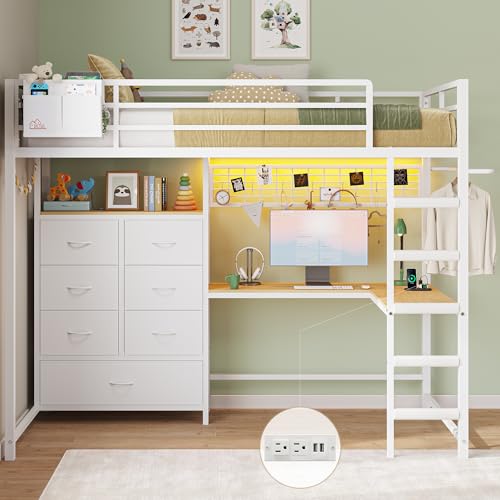
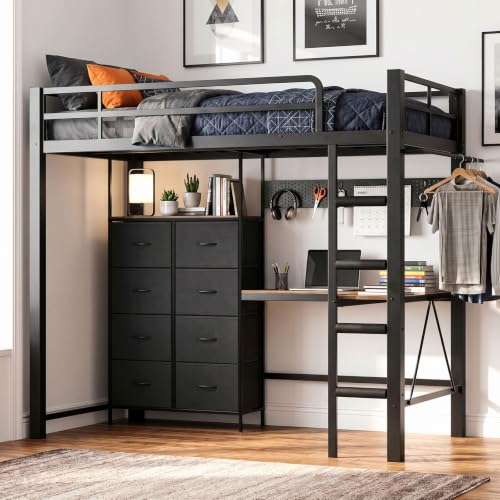
Loft Bed with Desk and Dresser: The Complete Space-Saving Solution
Transform a small bedroom into a multi-functional living space with a loft bed that combines sleeping, studying, and storage in one smart footprint. This guide covers everything you need to choose, plan, and set up the ideal loft bed with desk and dresser for your home.
Why a loft bed with desk and dresser? In rooms where floor space is limited, a loft bed with desk and dresser turns a single vertical footprint into three dedicated zones: sleep above, work and storage below. It is a practical choice for students, teenagers, young adults in studio apartments, and anyone who wants to reclaim floor area without sacrificing function. The combination of an integrated work surface, a dedicated dresser, and an elevated sleeping platform delivers the organization benefits of a full bedroom suite in a compact arrangement.
What Is a Loft Bed with Desk and Dresser?
A loft bed with desk and dresser is a raised sleeping platform supported by a sturdy frame, with the area underneath repurposed for a workspace and clothing storage. Unlike a standard bunk bed, which stacks two sleeping surfaces, a loft bed frees the lower level entirely for functional furniture. The dresser is typically built into the frame as a set of drawers, a chest, or a wardrobe module, while the desk is either attached to the frame or positioned as a freestanding unit beneath the bed.
This configuration is especially popular in compact bedrooms, dorm-style rooms, and shared living arrangements. It consolidates three essential furniture categories — bed, desk, and dresser — into a single coordinated structure. The result is fewer pieces competing for floor space, a cleaner visual line, and a bedroom that supports rest, study, and organization without feeling crowded.
Key Benefits of a Loft Bed with Desk and Dresser
Space Efficiency
By stacking sleeping above and working below, the design recovers floor area that would otherwise be occupied by separate furniture. This is the single most important advantage in small rooms.
Integrated Organization
Built-in dresser drawers keep clothing, linens, and personal items out of sight and within arm's reach, reducing clutter around the workspace.
Defined Work Zone
A dedicated desk beneath the loft creates a natural boundary between study and rest, supporting better focus and healthier work habits.
Coordinated Design
Because the pieces are designed as a unit, the finish, frame, and storage modules match, producing a cohesive look that is easier to plan than mismatched furniture.
Versatility Across Rooms
The same configuration works in teen bedrooms, college dorms, guest rooms, and compact apartments, adapting to different life stages and layouts.
Long-Term Utility
A well-built frame with a solid work surface and durable drawer hardware remains functional through years of daily use, making it a worthwhile investment for growing households.
Types and Configurations
Loft beds with desk and dresser come in several structural formats. The right choice depends on ceiling height, room shape, the intended user's age, and how much storage is needed.
Standard Loft with Built-In Dresser
The most common configuration places a drawer bank directly beneath the bed, with the desk occupying the remaining lower space. This works well in rectangular rooms where the bed runs along a wall. Drawer counts typically range from three to six, and some models include a combination of drawers, open cubbies, and a small wardrobe.
Loft with Desk and Stairs
Instead of a ladder, this configuration uses a staircase for access to the upper platform. The stairs often double as additional storage through built-in drawers or open shelving. For younger users or anyone who prefers a safer, more comfortable climb, stair access is a meaningful upgrade. Consider browsing loft beds with desk and stairs for models that integrate this feature.
Loft with Desk and Shelves
Some designs trade the dresser for open shelving or a combination of shelves and drawers. These suit users who prefer visible, flexible storage for books, bins, and display items. If storage flexibility matters more than concealed clothing space, explore loft beds with desk and shelves as an alternative configuration.
Full-Size and Adult-Oriented Lofts
While many loft beds are sized for twin mattresses, full-size versions offer more sleeping comfort and are increasingly designed for adults. These frames require higher ceilings and sturdier construction. For a fuller sleeping surface without giving up the work-and-storage footprint, review loft beds with desk and storage for adults.
Specialty and Themed Models
Black-finished frames, space-themed designs, and other decorative options are available for users who want the furniture to match a room's aesthetic. A black full-size loft bed with desk is a common choice for a modern, understated look that hides scuffs well.
Loft Bed Configurations Compared
The table below compares common configurations by tier and best-use scenario. Tier descriptors reflect relative market positioning rather than any numeric figure.
| Configuration | Tier | Best For | Storage Profile |
|---|---|---|---|
| Twin loft with built-in dresser | Entry-level | Teen bedrooms and dorms | 3–5 drawers, open cubbies |
| Full-size loft with dresser and desk | Mid-range | Young adults and guest rooms | 4–6 drawers, wardrobe module |
| Loft with stairs and desk | Mid-tier | Families with younger users | Drawer stairs plus dresser |
| Loft with desk and open shelving | Balanced tier | Book-heavy or display-oriented rooms | Shelves, bins, minimal drawers |
| Adult-oriented full loft with storage | High-end tier | Studio apartments and small homes | Full dresser plus wardrobe |
| Reinforced commercial-grade loft | Commercial-grade | Dormitories and shared housing | Heavy-duty drawers, lockable |
Materials and Build Quality
The frame and surface materials determine how stable the loft feels, how long it lasts, and how well it resists daily wear. Because a loft bed carries body weight above a working area, construction quality deserves careful attention.
- Solid wood frames — Durable construction with a natural finish. Solid wood handles load-bearing stress well and can be refinished if scratched. It is a long-term investment in stability.
- Engineered wood and laminate — Common in mid-range models. These offer a uniform finish and good surface durability for desk use, though edges and joints need periodic inspection.
- Metal frames — Heavy-duty steel frames provide high load capacity and a slim profile. Look for reinforced joints and a rust-proof finish on painted surfaces.
- Drawer hardware — Metal glides and dovetail joints signal better drawer durability than stapled particle board runners. Smooth-glide hardware matters for daily dresser use.
For related reading on workspace surface care, see our guidance on how to protect your desk surface from scratches and moisture, which applies directly to the built-in desk area of a loft configuration.
How to Choose the Right Loft Bed with Desk and Dresser
Before ordering, work through the practical constraints of your room and the needs of the person who will use the bed.
- Measure ceiling height. The upper sleeping surface needs enough clearance to sit up comfortably. Account for the mattress thickness when calculating headroom.
- Confirm mattress size. Twin is the most common loft size; full-size models suit adults and older teens but require more room and a taller frame.
- Plan the desk position. Decide whether the desk should face the room, a window, or a wall. Desk depth and legroom beneath the loft frame vary by model.
- Count storage needs. Match drawer count to clothing volume. A dresser with four to six drawers generally covers daily clothing for one person.
- Check access method. Ladders are compact; stairs are safer and often add storage. Choose based on the user's age and mobility.
- Verify safety features. Look for full-length guardrails, a sturdy ladder with wide treads, and a weight rating appropriate for the intended user.
- Consider assembly and room access. Large loft frames may need to be assembled in the room; confirm doorway and stairwell dimensions can accommodate the packed components.
If the room also needs a dedicated reading or study corner beyond the loft desk, a compact desk for small spaces can supplement the integrated work surface without crowding the layout.
Pre-Purchase Checklist
Use this checklist before you commit
- Measured ceiling height and confirmed sitting-up clearance above the mattress
- Selected mattress size (twin or full) and verified frame compatibility
- Chosen access type (ladder or stairs) based on user age and safety needs
- Confirmed drawer count and storage type (dresser, shelving, wardrobe)
- Checked frame material and weight rating for the intended user
- Verified guardrail height and ladder tread width
- Planned desk orientation and confirmed legroom clearance
- Measured doorway and stairwell for delivery and assembly access
Setup and Placement Tips
How you position the loft bed affects both safety and daily usability. A few placement decisions make the configuration work harder for you.
- Anchor the frame. Most loft beds include wall-anchoring hardware. Use it. Securing the frame to a wall stud prevents wobble and improves stability during climbing.
- Keep the desk zone lit. The area beneath the loft receives less ambient light. A dedicated task lamp improves visibility for reading and computer work.
- Leave clearance around the ladder. Maintain a clear landing zone at the base of the ladder or stairs so entry and exit are unobstructed.
- Route cables safely. Use cable clips or a raceway to keep desk cords away from the ladder and walking paths. Our guide on under desk cable management offers methods that translate well to loft desk setups.
- Respect weight limits. Distribute weight evenly and do not exceed the manufacturer's stated capacity for the upper platform or drawers.
- Keep the upper platform clear of tall objects. Avoid placing heavy or tall items on the bed that could shift or fall during sleep.
Who Is This Solution For?
A loft bed with desk and dresser serves several distinct user groups. Identifying which group you belong to helps narrow the configuration choice.
Students and teenagers benefit most from the combined study-and-sleep layout, particularly in rooms shared with siblings or in dorm settings where every square foot counts. The built-in dresser simplifies daily routines and reduces floor clutter.
Young adults in studio apartments use the configuration to create distinct living zones within a single room. A full-size loft with a substantial dresser can replace a conventional bed and chest entirely, freeing the remaining floor for seating or a small table.
Families furnishing a guest room find that a loft bed with desk and dresser maximizes utility in a room that serves multiple purposes. The lower desk can function as a writing nook or a small home office when guests are not present.
Adults downsizing may prefer adult-oriented models with higher weight ratings and more generous storage. These configurations are designed for daily adult use and often include wardrobe modules alongside the dresser.
Common Mistakes to Avoid
- Ignoring ceiling height. A loft that leaves too little headroom above the mattress is uncomfortable and, in some cases, unsafe. Measure first, then shop.
- Skipping wall anchoring. Freestanding loft frames are more prone to sway. Anchoring is a small step with a large stability payoff.
- Overloading the drawers. Dresser drawers have weight limits. Overfilling them strains the glides and the frame joints.
- Choosing a ladder for a young child. Stair access is generally safer for younger users. If a ladder is the only option, confirm it has wide, textured treads and a handrail.
- Neglecting desk ergonomics. The integrated desk is still a workspace. Check that the desk height, chair clearance, and monitor position support comfortable posture. Our monitor placement guide covers the fundamentals.
- Forgetting assembly logistics. Confirm that the packed frame can pass through doorways and up stairwells before delivery day.
Maintenance and Long-Term Care
Routine maintenance keeps the frame stable and the dresser drawers gliding smoothly. A few simple habits extend the life of the furniture considerably.
- Check frame bolts and ladder fasteners every few months and retighten as needed.
- Wipe the desk surface regularly and use a mat or blotter to prevent scratches and ink transfer.
- Vacuum or dust drawer interiors and inspect glides for debris that can cause sticking.
- Inspect guardrails and anchoring hardware for looseness, especially in households with active children.
- For wood surfaces, apply a suitable conditioner periodically to prevent drying and cracking. Our clean wood desk guide covers safe cleaning methods.
- Avoid placing the frame in direct, prolonged sunlight if the finish is sensitive to fading.
Frequently Asked Questions
Is a loft bed with desk and dresser safe for children?
Yes, provided the frame meets current safety standards and the child is old enough to use the ladder or stairs safely. Look for full-length guardrails, a sturdy access method, and wall-anchoring hardware. Stair-access models are generally the safer choice for younger users.
What ceiling height do I need for a loft bed?
As a general rule, you need enough clearance above the mattress for a person to sit up without their head touching the ceiling. Measure the frame height, add the mattress thickness, and allow several extra inches of headroom. Full-size and adult lofts typically require more ceiling height than twin models.
Can adults use a loft bed with desk and dresser?
Yes. Adult-oriented models are built with higher weight ratings and larger sleeping surfaces. They are a practical choice for studio apartments and small homes. Check the frame's stated capacity and confirm the ladder or stairs are comfortable for regular adult use.
How much storage does the dresser provide?
Most configurations include three to six drawers, sometimes combined with open cubbies or a small wardrobe module. The right amount depends on how much clothing and personal storage the user needs. If storage flexibility is a priority, a configuration with open shelving may suit better.
Can the desk be used as a full home office?
The integrated desk is a functional work surface, but its size varies by model. For regular full-day computer work, confirm that the desk depth accommodates a monitor and keyboard comfortably. Some users supplement the loft desk with a dedicated chair and task lighting to improve ergonomics.
Does the loft bed need to be anchored to the wall?
Most manufacturers recommend or require wall anchoring for stability. Anchoring prevents sway and improves safety during climbing. Follow the manufacturer's instructions and secure the frame to wall studs where possible.
What mattress size works with a loft bed?
Twin is the most common size for loft beds. Full-size models are available for adults and older teens. Always confirm the frame's stated mattress size and weight compatibility, and choose a mattress that does not exceed the recommended thickness, since an overly thick mattress can reduce guardrail effectiveness.
Ready to Reclaim Your Floor Space?
A loft bed with desk and dresser turns a cramped room into a functional, organized living space. Review your measurements, choose a configuration that matches your storage and access needs, and prioritize sturdy construction and safety hardware.
Explore Loft Bed OptionsFor related space-saving furniture, you may also find our guides on bunk beds with a desk underneath and full beds with a desk useful when comparing vertical furniture layouts. If you are outfitting the study area beneath the loft, a comfortable desk chair for back support is a worthwhile companion purchase.