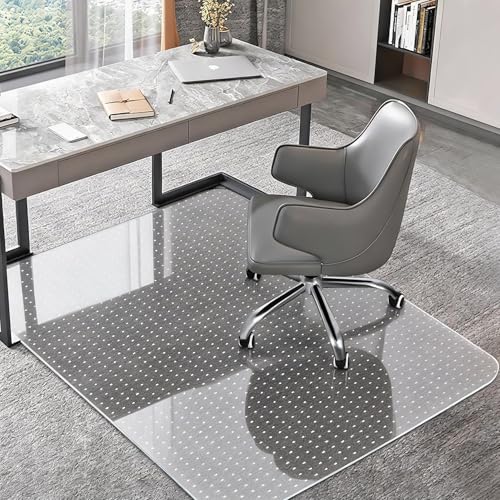
Mat for Under Desk Chair on Carpet: Complete Buyer Guide
Everything you need to evaluate a chair mat for carpet — from material and thickness to cleat grip, size, and rolling performance — so you can stop your chair sinking, protect the carpet pile, and keep movement smooth in your workspace.
Why a chair mat matters on carpet: Standard desk chair casters sink into carpet pile, which makes rolling difficult and leaves compression marks that are hard to remove. A chair mat spreads the chair's weight across a rigid surface, protects the carpet underneath, and lets the casters roll freely. This guide explains the material differences, the cleat and backing options, and the sizing principles that help you choose the right mat for your desk and carpet.
What Is a Chair Mat for Carpet?
A chair mat for carpet is a rigid or semi-rigid sheet that sits between the desk chair and the carpet. It creates a smooth, hard surface for the casters and distributes the chair's weight so the wheels do not sink into the pile. Unlike a hard-floor mat, a carpet mat usually has cleats or a textured underside that grips the carpet and stops the mat from sliding as the chair moves.
The mat also protects the carpet itself. Without a mat, casters compress the pile in the chair's range of motion, and that compression can become permanent. A mat prevents this wear pattern and keeps the carpet looking even. If you are also considering a mat for a hard floor, our guide to an office chair mat for hardwood floor covers the differences.
Who Should Use a Chair Mat on Carpet?
A chair mat is worth considering in several common situations. If any of the following describe your setup, a mat will make a noticeable difference.
- Home office workers on carpet: A mat protects the carpet and keeps rolling smooth during long workdays. Our guide to home office desk setup ideas covers broader layout considerations.
- Users with plush or deep-pile carpet: Deep pile causes casters to sink the most. A thicker mat with deeper cleats is usually necessary.
- Users with heavier chairs: A heavier chair compresses the carpet more. A mat distributes that load and reduces wear.
- Renters: A mat protects the carpet from wear that could otherwise affect a security deposit at move-out.
- Users who roll frequently: If you move between the desk and other parts of the room, a mat keeps the chair rolling smoothly across the carpet.
Comparing Chair Mats for Carpet by Tier
The table below summarizes what you can typically expect at each tier. Use it to set expectations before comparing specific models.
| Tier | Material | Best For | Carpet Types | Typical Features |
|---|---|---|---|---|
| Entry-level / starter tier | Thin vinyl | Light chairs, low-pile carpet | Low-pile only | Shallow cleats, standard size |
| Mid-range / balanced tier | Polycarbonate or thicker vinyl | Daily use, medium-pile carpet | Low to medium pile | Deeper cleats, larger sizes, beveled edge |
| Premium / high-end tier | Thick polycarbonate | Heavy chairs, plush carpet | Medium to plush pile | Deep cleats, ergonomic lip, extended sizes |
| Professional-grade / commercial-grade | Heavy-duty polycarbonate | High-traffic offices, heavy chairs | All carpet types | Reinforced cleats, wide coverage, warranty support |
Tier note: A mid-range polycarbonate mat usually offers the best balance for most home offices. Entry-level vinyl mats are a reasonable starting point for light chairs on low-pile carpet, while premium and commercial-grade tiers target heavy chairs, plush carpet, and high-traffic use. When comparing within a tier, prioritize cleat depth and carpet compatibility over size alone.
Key Features to Evaluate Before Buying
Beyond the tier, specific features determine how well a mat performs on your carpet. These are the details worth checking in the product specifications and reviews.
Material and Thickness
- Vinyl: Entry-level and lower mid-range mats are typically vinyl. They are flexible and reasonably durable, but thin vinyl can dent under heavy chairs and is not suitable for plush carpet.
- Polycarbonate: Mid-range and premium mats use polycarbonate, which is more rigid and resists denting. It is the better choice for heavy chairs and deeper carpet pile.
- Thickness: Thicker mats spread weight more effectively and stay flatter over carpet. For plush carpet, a thicker mat with deeper cleats is usually necessary to prevent sinking.
Cleats and Backing
Cleats are the small spikes or ridges on the underside of the mat that grip the carpet. Smooth-backed mats are designed for hard floors and will slide on carpet. For carpet, look for a mat with cleats or a textured underside, and check that the cleat depth matches your carpet pile. Deep cleats hold better on plush carpet but can be harder to reposition once installed.
Size and Shape
- Coverage: The mat should cover the chair's full range of motion. If the casters roll off the edge, the mat can lift and slide. Measure the distance the chair travels and choose a mat that covers that area with some margin.
- Shape: Rectangular mats suit straight desk layouts; a mat with a lip extends under the desk for a seamless transition. A small room desk ideas guide can help you plan a compact layout.
- Beveled edge: A beveled edge makes it easier for casters to roll onto the mat and reduces tripping risk.
Casters and Chair Compatibility
The type of caster on your chair affects how well a mat performs. Standard twin-wheel casters are the most common and work well on most mats. Rollerblade-style casters roll more easily but can dig into softer mats. If you are also considering a chair upgrade, our guide to ergonomic desk chairs for home office and desk chairs with back support covers the key features to look for.
Layout and Placement Tips
Placement affects how well the mat performs and how long it lasts. A few principles help you get the most from the mat.
Center the Mat on the Chair's Range
Position the mat so the chair sits in the middle of the mat's usable area, with enough margin on all sides to accommodate the chair's full range of motion. If you tend to roll back from the desk, make sure the mat extends far enough behind the chair.
Leave Room for the Desk
If the mat has a lip, slide it under the desk so the transition from carpet to mat is seamless. If the mat is rectangular, leave a small gap between the mat's front edge and the desk so that the mat does not buckle when the desk is adjusted. If you are planning a sit-stand layout, our standing desk height guide covers height considerations.
Keep the Mat Clean
Dust and grit under the mat can scratch the carpet and reduce grip. Vacuum the carpet before placing the mat, and periodically lift the mat to clean underneath. For broader desk care guidance, see our desk care guide.
Caster tip: If your chair has soft casters, they may deform on a rigid mat. Consider a mat with a slightly textured surface or a thicker polycarbonate mat that supports the casters evenly. If the casters feel sticky on the mat, a small amount of silicone spray on the mat surface can help, but test on an inconspicuous area first.
Related Accessories Worth Considering
A chair mat covers the essentials, but a few related accessories can improve the setup further.
- Desk mat: A desk mat with wrist rest protects the desk surface and improves comfort during long sessions.
- Cable management: A cable management box keeps cables tidy under the desk and off the floor.
- Chair upgrade: If the chair itself is uncomfortable, our guide to the best desk chair for a bad back covers the key considerations.
- Desk organization: A monitor stand with storage or a desk with hutch and storage keeps the surface clear and reduces clutter.
- Lighting: A monitor light bar or a desk LED light improves visibility during long sessions.
Frequently Asked Questions
What type of mat works best under a desk chair on carpet?
For carpet, a chair mat with cleats or a textured underside grips the pile and stops the mat from sliding. Rigid polycarbonate and vinyl mats are the most common choice because they spread the chair's weight and prevent the casters from sinking. For plush or deep-pile carpet, a thicker mat with deeper cleats is usually necessary.
Do I need a chair mat if my chair has rollerblade-style casters?
It depends on the casters and the carpet. Rollerblade-style casters roll more easily than standard casters but can still sink into plush carpet and leave compression marks. A chair mat protects the carpet and keeps rolling smooth. If you have a low-pile carpet and a light chair, you may get away without a mat, but the carpet will wear faster over time.
What thickness should a chair mat for carpet be?
Thickness depends on the carpet pile. For low-pile carpet, a thinner rigid mat is usually sufficient. For medium-pile and plush carpet, a thicker mat with deeper cleats is necessary to prevent sinking and to keep the mat flat. The product specification usually states the carpet types the mat is designed for.
How do I keep a chair mat from sliding on carpet?
Choose a mat with cleats or a textured underside designed for carpet. Smooth-backed mats are intended for hard floors and will slide on carpet. Also check that the mat is the correct size for the chair's range of motion — an undersized mat allows the casters to roll off the edge, which can lift the mat and cause sliding.
Can a chair mat damage the carpet underneath?
When used correctly, a chair mat protects the carpet from caster wear and compression. However, a mat with sharp cleats or a heavy load concentrated on a small area can leave marks on certain carpet types. Choose a mat designed for your carpet pile, and periodically lift the mat to check the carpet underneath. If you are concerned about a specific carpet, test the mat in an inconspicuous area first.
Ready to Choose Your Chair Mat for Carpet?
Browse curated chair mats for carpet at the starter tier, mid-range, and premium level. Compare material, cleat depth, and size to find the right fit for your desk and carpet.
Explore Chair Mats for CarpetRelated Reading
If you are still weighing options, these guides can help you compare adjacent solutions:
- Office chair mat for hardwood floor — for hard floor protection.
- Ergonomic desk chair for home office — a deeper look at chair ergonomics.
- Desk chairs for home office back support — options for long sessions.
- What is the best desk chair for a bad back — for users with back concerns.
- Home office desk setup ideas — for broader layout planning.
- Desk mat with wrist rest — for desk surface comfort.
- Cable management box — for keeping cables tidy under the desk.
- Small room desk ideas — for compact layouts.
- Desk care guide — for maintaining your workspace.