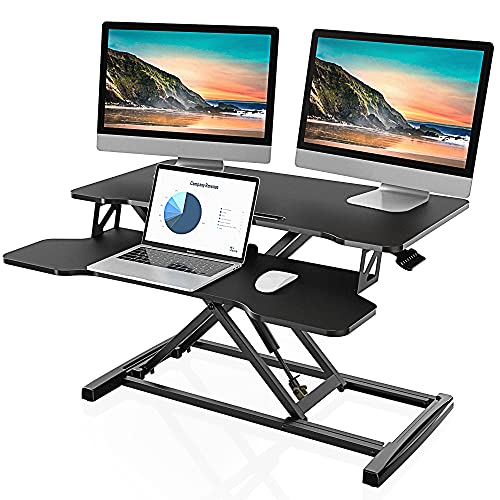
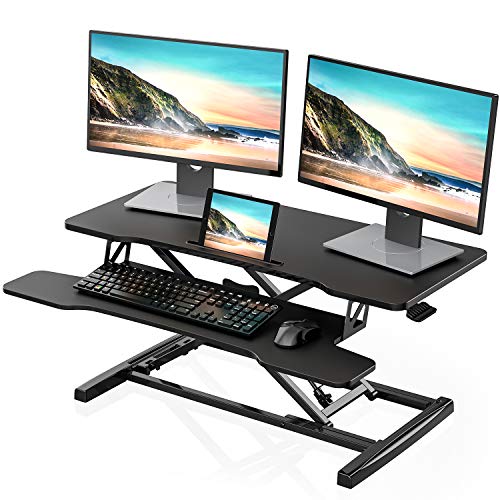
Turn Your Desk Into a Standing Desk
Transform your existing workspace into a healthy, productive standing desk without buying a whole new desk. Discover the best converters, risers, and ergonomic accessories to elevate your workday.
SEE TOP STANDING DESK CONVERTERSWhy convert? Standing desks reduce back pain, boost energy, and improve focus. But you don't need to replace your beloved desk. With a standing desk converter or desk riser, you can instantly turn your existing desk into a sit-stand workstation. This guide covers everything you need to know.
Why Turn Your Desk Into a Standing Desk?
💪 Health & Posture
Alternating between sitting and standing reduces lower back pain, improves circulation, and supports better posture throughout the day.
⚡ Energy & Focus
Standing increases blood flow and oxygen to the brain, helping you stay alert, focused, and productive for longer periods.
💰 Cost-Effective
Converters cost a fraction of a full standing desk. You keep your existing desk and add height-adjustable functionality without the hassle.
🔄 Flexible & Portable
Most converters are lightweight and can be moved between desks or offices. Perfect for renters, shared workspaces, or home offices.
Which Converter Is Right for You?
There are several ways to turn your desk into a standing desk. The best choice depends on your budget, desk space, and monitor setup.
- Full-desk converters – large platforms that lift your entire workspace (monitor, keyboard, mouse) in one go. Ideal for dual-monitor setups.
- Keyboard-only risers – smaller platforms that elevate only the keyboard and mouse, leaving your monitor on the desk. Great for laptop users.
- Monitor arms with pneumatic lift – attach to the desk and allow you to adjust monitor height independently. Pair with a separate keyboard riser.
- Desktop standing desk frames – a Z‑shape or X‑frame that sits on your existing desk and raises the work surface. Very stable.
Pro tip: If you use a laptop, a converter with a built-in laptop tray or a separate laptop stand can keep your screen at eye level. For dual monitors, choose a converter with a wide platform or dedicated monitor mounts. Check our dual-monitor converter guide for more details.
Standing Desk Converter Comparison
| Type | Best For | Weight Capacity | Price Range |
|---|---|---|---|
| Full-desk converter | Dual monitors, large workspaces | Up to 40–60 lbs | $150–$350 |
| Keyboard riser | Laptop users, single monitor | Up to 15–25 lbs | $60–$150 |
| Pneumatic monitor arm | Flexible monitor positioning | Varies (monitor weight) | $80–$200 |
| Z‑frame desktop riser | Heavy-duty, stability | Up to 80 lbs | $200–$500 |
How to Turn Your Desk Into a Standing Desk in 4 Steps
- Measure your current desk: Note the width, depth, and height. Ensure the converter will fit comfortably on your desk surface.
- Choose the right converter: Based on your monitor setup and budget, pick a converter that matches your needs. Small desk converters are great for compact spaces.
- Set up the converter: Place it on your desk, adjust the height to your standing elbow level (≈ 90° angle), and secure your monitor and keyboard.
- Alternate sitting and standing: Start with 20–30 minutes of standing per hour. Use an anti-fatigue mat to reduce leg strain.
✔️ Recommended standing duration: Beginners should stand for 15–20 minutes per hour, gradually increasing to 45–50 minutes. Listen to your body and adjust accordingly.
Perfect Your Standing Desk Ergonomics
To avoid discomfort, follow these ergonomic guidelines when using your newly converted standing desk:
- Monitor height: The top of your screen should be at or slightly below eye level. Use a monitor stand or arm if needed.
- Keyboard position: Your elbows should be at a 90° angle, with wrists straight. A keyboard tray can help.
- Footrest: When standing, keep your feet flat on the floor or use a footrest to shift weight.
- Anti-fatigue mat: A cushioned mat reduces pressure on your feet and encourages subtle movement.
For a deeper dive into ergonomic setups, visit our desk height calculator and sit-stand routine guides.
Must-Have Accessories for Your Standing Desk
🧘 Anti-fatigue mat
Cushion your feet and encourage movement.
💡 Monitor light bar
Reduce eye strain and improve focus.
📦 Cable management
Keep your workspace tidy and safe.
🖥️ Laptop riser
Elevate your laptop to eye level.
Explore more resources: adjustable keyboard tray converters, converters for tall people, and corner desk converters to find the perfect fit for your space.