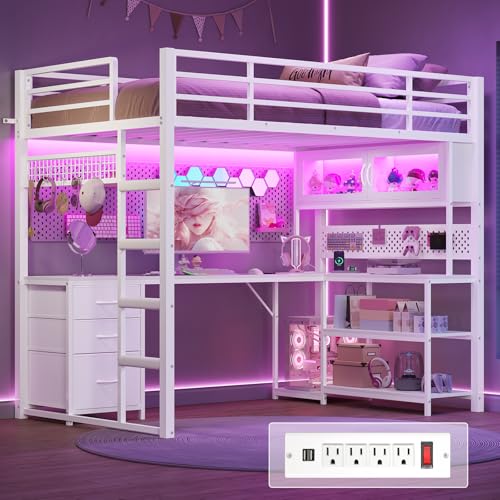
Twin Loft Bed with Desk Metal: The Complete Guide to Choosing a Space-Saving Powerhouse
A metal twin loft bed with desk turns one small room into a bedroom and a study zone. This guide walks you through frame construction, desk configurations, safety standards, and assembly so you can pick the right model with confidence.
Why a metal loft bed with desk deserves a second look: Metal frames are typically lighter, stronger, and easier to assemble than solid wood alternatives. A well-built steel loft bed distributes weight across reinforced joints, resists wobble better than many particle board frames, and gives you a dedicated workspace directly below the sleeping area. For students, teens, and adults in compact rooms, this configuration is one of the most efficient furniture decisions you can make.
What Defines a Great Metal Twin Loft Bed with Desk
Not every loft bed frame is built to the same standard. Before you compare models, it helps to understand the four pillars of quality that separate an entry-level frame from a professional-grade one.
Frame Construction & Steel Gauge
The backbone of any metal loft bed is its steel tubing. Mid-range and premium models use thicker gauge steel with welded corner gussets and cross-bracing that resists lateral sway. Entry-level frames often rely on thinner tubing and bolt-only joints, which can develop creaks over time. Look for models that publish a weight capacity rating and use high-grade steel with a rust-proof finish.
Desk Surface & Layout
The desk area under a twin loft bed typically ranges from 40 to 58 inches wide. Straight desk runs suit laptop work and study sessions, while L-shaped or corner configurations give you room for a monitor plus paperwork. Check whether the desk is integrated into the frame or a separate freestanding piece — integrated desks save space but limit future flexibility.
Safety Features
Full-length guardrails on the sleeping platform, a sturdy ladder with wide non-slip rungs, and anti-tip wall straps are non-negotiable. Better models also include rounded edge caps on the frame and a ladder that can be positioned on either side. If children or teens will use the bed, confirm the guardrail height clears the mattress by several inches.
Clearance & Room Fit
Measure your ceiling height before anything else. A twin loft bed typically places the mattress 50 to 60 inches off the floor, so you need enough headroom to sit up comfortably in bed. Also confirm the desk clearance underneath — you want at least 30 inches of vertical space to sit at the desk without ducking.
Tier Comparison: Entry-Level vs Mid-Range vs Premium Metal Loft Beds
Use this tier framework to set expectations before you shop. Each tier represents a different balance of construction quality, features, and long-term durability — not a specific figure.
| Tier | Frame & Steel Quality | Desk Configuration | Best For |
|---|---|---|---|
| Entry-Level | Thinner steel tubing, bolt-together joints, basic powder coating. Adequate for light daily use. | Compact straight desk, often 40–45 inches wide. Fixed ladder position. | Guest rooms, occasional use, first apartment setups on a tight footprint. |
| Mid-Range | Reinforced steel frame with welded gussets, better anti-sway design, durable finish. Rated for regular daily use. | Wider desk surface (46–52 inches), sometimes with a small shelf or hutch. Reversible ladder. | Students, teens, and home office users who need a reliable daily workstation. |
| Premium / Professional-Grade | Heavy-duty high-grade steel, commercial-grade welds, published adult weight capacity, anti-tip hardware included. | Large L-shaped or corner desk, cable management cutouts, integrated shelving. Often accommodates dual monitors. | Adults, serious remote workers, and anyone who wants a long-term investment piece. |
How Much Desk Space Do You Actually Get?
The desk under a twin loft bed is the whole point of the configuration, so treat its dimensions as seriously as the bed itself. Here is what different layouts typically offer:
- Straight desk run (40–46 inches): Fits a laptop, a lamp, a notebook, and a small organizer. Ideal for focused study or light computer work.
- Extended straight desk (48–58 inches): Comfortably holds a monitor, keyboard, speakers, and still leaves room for writing. The sweet spot for most home office users.
- Corner / L-shaped desk: Maximizes the area beneath the loft by wrapping around two walls. Great for dual-monitor setups and separating work zones from storage.
- Desk with integrated shelving: Adds vertical storage above the desk surface without eating into the footprint — useful for books, binders, and desk accessories.
If you are outfitting the desk for serious work, pair your loft bed with a proper top-rated desk chair for home office use, and plan your cable routing early with an under-desk cable management system. A small USB hub keeps charging cables off the desk surface and reduces clutter in the tight under-loft space.
Safety, Assembly, and Long-Term Care
Before You Assemble
Clear a workspace at least as large as the bed footprint plus two feet on each side. Recruit a second person — metal loft beds are awkward to lift solo even when the frame is light. Sort hardware into labeled cups and read the manual fully before attaching the first rail.
Assembly Sequence
Most metal twin loft beds follow the same order: build the bed platform frame first, then the desk or lower support structure, then join the two, and finally attach the ladder and guardrails. Leave bolts hand-tight until the whole frame is squared, then torque everything down in a cross pattern to prevent racking.
Anti-Tip & Wall Anchoring
Always install the anti-tip strap or wall bracket that ships with the bed. Even a stable frame can shift if someone leans on the ladder or swings onto the platform. Anchor into a wall stud where possible, and re-check the anchor after the first week of use.
Care & Maintenance
Wipe the powder-coated steel with a damp cloth and mild detergent. Avoid abrasive pads that dull the finish. Check bolts every few months — metal frames can loosen slightly with vibration from climbing. A drop of thread-locking compound on the ladder bolts keeps everything tight long term.
Who Should Choose a Metal Twin Loft Bed with Desk?
This configuration shines in specific situations. If any of the following describe you, a metal loft bed with desk is likely a strong fit:
- Students in small bedrooms: One piece of furniture covers sleeping and studying, freeing floor space for movement and storage.
- Teens transitioning to a study-heavy routine: A dedicated desk below the loft creates a psychological separation between rest and work. If you are planning a full room refresh, our guide to teenage bedroom furniture with desks covers complementary pieces.
- Adults in studio apartments: Premium-tier metal frames rated for adult weight make loft beds a legitimate long-term choice, not just a kids' furniture item. See our deeper look at twin loft bed with desk for adults.
- Anyone who needs extra storage: Many metal models pair the desk with drawers or shelves. Compare options in our guide to twin loft bed with desk and storage and the drawer-equipped variant.
Related Loft Bed Configurations Worth Comparing
Metal is one frame material among several. Depending on your room shape and storage needs, these related setups may fit better:
Loft Bed with Shelves
If books and display items matter more than drawer space, a shelving variant adds open storage without blocking the desk. Explore twin loft bed with desk and shelves.
Loft Bed with Dresser
For clothing storage in a small room, a dresser-integrated loft bed consolidates three furniture functions into one footprint. See twin loft bed with desk and dresser.
Low Loft Bed
Lower ceiling? A low loft configuration keeps the desk usable while reducing the climb height. Compare twin low loft bed with desk options.
Stairs Instead of a Ladder
Stairs are easier on the feet and safer for younger users. Consider a twin loft bed with stairs and desk if ladder access feels risky.
Ready to compare models? Browse our curated selection of metal twin loft beds with desks below. Every option is chosen for frame stability, desk usability, and safety features — so you can focus on finding the right fit for your room.
View Recommended ModelsFrequently Asked Questions
Is a metal twin loft bed with desk sturdy enough for daily use?
Yes. High-grade steel frames with reinforced joints and published weight capacities provide excellent stability for daily use. Prioritize models that include anti-tip wall straps, full-length guardrails, and wide ladder rungs — those three features matter more than frame thickness alone.
What desk space does a twin loft bed with desk metal provide?
Most models offer a desk surface between 40 and 58 inches wide and 20 to 24 inches deep. That comfortably fits a monitor, keyboard, lamp, and study materials. Corner and L-shaped desk configurations maximize the usable footprint under the loft.
Can adults use a twin loft bed with desk metal?
Many premium and commercial-grade metal loft beds are rated for adult use with weight capacities exceeding 250 pounds. Always check the manufacturer's published weight limit and confirm your ceiling clearance before purchasing — the frame may be adult-rated, but the room still needs to accommodate the height.
How difficult is assembly for a metal twin loft bed with desk?
Most metal loft beds ship with labeled parts and require two people for safe assembly in about two to four hours. Models with pre-welded frames and snap-in hardware simplify the process. Leaving bolts hand-tight until the frame is squared, then torquing in a cross pattern, prevents racking and wobble.
Does a metal loft bed squeak over time?
Metal frames can develop creaks if bolts loosen from climbing vibration. Re-tighten hardware every few months and apply thread-locking compound to ladder and joint bolts. Models with welded gussets and cross-bracing resist squeaking better than bolt-only frames.