
Twin Loft Bed with Desk and Dresser: The Complete Buyer’s Guide
Everything you need to know about choosing a twin loft bed with desk and dresser — layouts, materials, safety, storage design, and how to turn a compact bedroom into a fully functional study-and-sleep zone.
Start the GuideWhat Is a Twin Loft Bed with Desk and Dresser?
A twin loft bed with desk and dresser is a space-saving furniture system that raises a twin-size sleeping surface off the floor and uses the space underneath for a study area and clothing storage. Instead of three separate pieces — a bed, a desk, and a dresser — you get one integrated unit that fits into a footprint roughly the size of a single twin bed.
This configuration is especially popular in small bedrooms, shared rooms, dorms, and teenage rooms where floor space is limited but the need for a dedicated workspace is high. The raised bed creates a vertical layout: sleep up top, work and store below. Many models also include shelving, guardrails, and a built-in ladder or staircase for access.
If you are still comparing loft configurations, it helps to understand the broader family of products. A standard twin loft bed with desk focuses on the sleep-and-study combination, while this page covers the added dresser component. Related options include a twin loft bed with desk and drawers, a twin loft bed with desk and shelves, and a twin loft bed with desk and storage variant that emphasizes multi-purpose storage.
Why Choose a Twin Loft Bed with Desk and Dresser?
The main benefit is efficiency. By stacking sleep, work, and storage vertically, you reclaim floor area for movement, play, or additional furniture. But the advantages go beyond raw space savings.
- One integrated footprint: A single unit replaces three separate pieces, which simplifies room layout and reduces visual clutter.
- Dedicated study zone: The desk sits directly beneath the bed, giving students and remote workers a defined workspace without consuming extra floor space.
- Built-in clothing storage: The dresser keeps everyday clothes within reach, so you do not need a separate wardrobe in a small room.
- Vertical utilization: The elevated sleeping area frees the lower zone for productivity, which is ideal for rooms with limited square footage.
- Cohesive design: Because the bed, desk, and dresser are designed together, the finish, proportions, and hardware match.
The trade-off is that integrated units are less flexible than separate furniture. You cannot easily rearrange the desk to a different wall, and the dresser size is fixed. For rooms that need maximum flexibility, a standalone twin bed with desk may be a better fit. But when space is tight and you want a coordinated, all-in-one solution, the loft bed with desk and dresser is hard to beat.
Common Layout Types
Not all twin loft beds with desk and dresser are arranged the same way. The layout determines how you move through the room and how usable each zone feels.
1. Desk and Dresser Side by Side
This is the most common configuration. The desk occupies one side of the under-bed area and the dresser occupies the other. It works well when the under-bed width is generous and you want both functions accessible from the same side of the room. The downside is that each zone gets less width, so measure your monitor, chair, and dresser drawers carefully.
2. Desk Facing Out, Dresser Facing Side
In this layout, the desk faces the open room while the dresser is oriented to the side. This is useful in corner placements because it lets you sit facing outward rather than staring at a wall. It also separates the study zone from the clothing zone, which can feel more organized.
3. Dresser Integrated Into the Staircase
Some premium models build drawers into the staircase or ladder structure. This keeps the under-bed area dedicated to the desk while still providing clothing storage. It is an elegant solution, but it usually appears in higher-tier models and limits the dresser capacity.
4. L-Shaped Under-Bed Arrangement
An L-shaped desk wraps around two sides of the under-bed area, with the dresser tucked into the corner or along one end. This maximizes workspace but reduces open floor area beneath the bed. It suits students who need room for books, a laptop, and a monitor at the same time.
If you are comparing similar products, the twin loft bed with dresser and desk naming often refers to the same concept with the dresser emphasized first. Also consider a twin loft bed with drawers and desk if you prefer drawer-based storage over a traditional dresser.
Materials and Build Quality
The material determines durability, weight capacity, and how the unit ages. Twin loft beds with desk and dresser are typically built from wood, engineered wood, or metal — and each has trade-offs.
| Material | Strengths | Considerations | Best For |
|---|---|---|---|
| Solid wood (pine, oak, maple) | Durable construction, repairable, warm appearance | Heavier, may show natural grain variation | Long-term investment, family use |
| Engineered wood (MDF, particle board) | Consistent finish, lighter weight, broad design range | Less forgiving if exposed to moisture; check edge sealing | Mid-range and starter-tier setups |
| Metal frame | High weight capacity, slim profile, easy to clean | Can feel cooler; check for squeak resistance and joint quality | High-traffic rooms, teen and dorm use |
| Metal frame with wood accents | Combines structural strength with a warmer look | Mixed materials need consistent hardware quality | Balanced tier setups |
Look for reinforced corner brackets, a solid guardrail system, and a ladder or staircase that is firmly anchored. High-grade steel hardware and rust-proof finishes matter on metal models. On wood models, check that load-bearing joints are screwed and bolted rather than relying on cam locks alone.
If you are exploring broader furniture sets for a teen room, a teenage bedroom furniture with desks collection often includes loft configurations with integrated storage. For smaller siblings, a twin bunk bed with desk and storage may be a more age-appropriate alternative.
Designing the Under-Bed Desk Area
The desk is where this furniture earns its keep. A poorly planned desk area feels cramped and discourages use; a well-planned one becomes the most productive corner of the room.
Desk width and depth
For a laptop and notebook, a desk width of around 30 to 36 inches is workable. For a monitor, keyboard, and reference materials, aim for 40 inches or more. Depth matters too: a minimum of 18 to 20 inches keeps a monitor at a comfortable distance, while 24 inches gives room for a keyboard and writing space.
Under-bed clearance
Seated comfort depends on clearance between the desk surface and the underside of the bed frame. As a rule of thumb, allow at least 28 to 30 inches of vertical space above the desk so you can sit upright without ducking. Taller users should look for models with higher loft clearance.
Lighting and power
Under-bed desks can be dim because the bed blocks overhead light. Plan for a dedicated task lamp, and check whether the model includes cable routing or grommets. If not, an under-desk cable tray and a compact under-desk cord organizer keep the workspace tidy.
Ergonomics
Because the desk height is fixed by the frame, confirm that the surface height matches your seated posture. Pair it with an adjustable chair, and consider a under-desk footrest for support. If you prefer a standing option during study sessions, a converter that turns any desk into a standing desk can work on a sturdy loft desk, provided the frame is stable.
Dresser and Storage Planning
The dresser component is what separates this configuration from a simple loft bed with a desk. It handles everyday clothing, which means it needs to be accessible without bending awkwardly under the bed.
- Drawer count: Three to four drawers is typical. More drawers mean more capacity but also more depth, which can reduce legroom at the desk.
- Drawer glides: Look for smooth, full-extension glides. Soft-close hardware is a plus in shared rooms.
- Orientation: Side-facing dressers are easier to access in narrow rooms; front-facing dressers work better when there is open floor space.
- Ventilation: Solid backs on dressers can trap moisture. Check for breathable back panels or adequate spacing from the wall.
If you need more clothing capacity than the built-in dresser provides, a separate under-desk storage drawers unit can supplement the desk zone. For general tidiness, an under-desk organization plan helps keep school supplies and daily items from migrating onto the sleeping surface.
Some families pair the loft bed with additional bedroom storage. A twin loft bed with desk and storage variant may include shelves or cubbies, while a twin loft bed with desk and shelves adds open display space for books and decor.
Safety Checklist Before You Buy
Loft beds raise the sleeping surface, so safety deserves careful attention. Use this checklist as a pre-purchase and post-assembly guide.
- Guardrails: The upper bunk should have guardrails on all open sides, with a gap of no more than a few inches between the rail and the mattress.
- Ladder or staircase: Steps should be wide, textured, and firmly attached. A handhold or cutout improves grip.
- Weight capacity: Confirm the stated capacity for both the bed and the desk. Do not exceed it with heavy monitors or stacked storage.
- Wall anchoring: Most loft beds should be anchored to the wall to prevent tipping. Use the provided hardware and follow the manual.
- Ceiling clearance: Leave enough headroom above the mattress for sitting up comfortably, and check that ceiling fans or light fixtures are not within reach.
- Mattress thickness: A mattress that is too thick can reduce guardrail effectiveness. Follow the manufacturer’s recommended thickness range.
- Assembly quality: Re-tighten bolts after the first week of use, then check periodically. Squeaks often signal loose hardware.
Quality Tiers: What to Expect
Rather than focusing on numbers, it helps to understand where a product sits in the market. Twin loft beds with desk and dresser generally fall into three broad tiers.
Starter Tier
Entry-level models with engineered wood or light metal frames. Functional desk and dresser, basic hardware, and simpler guardrails. A solid choice for short-term use or a first loft bed.
Mid-Tier
Better joint construction, smoother drawer glides, reinforced guardrails, and more generous desk dimensions. This is the balanced tier for most families and students.
High-End Tier
Solid wood or heavy-duty metal, integrated staircase storage, premium hardware, and thoughtful cable routing. A long-term investment built for daily use.
Within each tier, compare features rather than labels. A mid-range model with reinforced brackets and full-extension drawers often outperforms a high-end tier model with decorative but thin panels. For more frame-focused comparisons, see the twin loft bed with desk metal guide and the twin loft bed with desk for adults overview.
Setup and Organization Tips
Once assembled, a few thoughtful choices make the unit feel intentional rather than cramped.
- Zone the under-bed area: Keep the desk zone free of clothing and the dresser zone free of school supplies. Clear boundaries prevent clutter creep.
- Use vertical storage: A small riser or wall-mounted shelf above the desk adds usable space without touching the bed frame.
- Manage cables early: Route charging cables along the frame with clips or a under-desk cable management system before the desk fills up.
- Keep the ladder zone clear: Do not place furniture or storage bins directly in front of the ladder or stairs.
- Seasonal rotation: Store off-season clothing in bins above the dresser or in the loft’s upper shelving if available.
For rooms that need even more workspace, a two-person desk home office layout or a two-person desk arrangement can complement a loft bed in a shared room, though it requires careful floor planning. If the bed is for a younger student, a twin over full bunk bed with desk and drawers offers a different balance of sleeping and storage capacity.
Frequently Asked Questions
Is a twin loft bed with desk and dresser suitable for a small bedroom?
Yes — it is one of the most space-efficient options available. It consolidates sleep, study, and clothing storage into a single footprint, leaving floor area free for movement and other furniture.
What is the difference between this and a twin loft bed with desk only?
A desk-only loft bed dedicates the entire under-bed area to workspace. Adding a dresser splits that area between study and clothing storage, which is useful when the room lacks a separate wardrobe. Compare both with a standard twin loft bed with desk before deciding.
How much clearance do I need above the desk?
Aim for at least 28 to 30 inches between the desk surface and the underside of the bed frame. Taller users should look for models with a higher loft clearance or a raised desk position.
Can adults use a twin loft bed with desk and dresser?
Some models are rated for adult use, but check the weight capacity and ceiling clearance carefully. Adults typically need a sturdier frame and a higher loft than models designed for children.
Do I need to anchor the loft bed to the wall?
In most cases, yes. Wall anchoring prevents tipping and is often required by the manufacturer. Use the provided hardware and follow the assembly manual exactly.
How does this compare with a bunk bed with a desk?
A loft bed has one sleeping surface and open space below, while a bunk bed has two sleeping surfaces. If you need to sleep two people, a twin bunk bed with desk and drawers may be more appropriate. If you need one bed plus workspace, the loft configuration is usually better.
What mattress thickness works best?
Follow the manufacturer’s recommendation, typically in the range of 6 to 8 inches for loft beds with guardrails. A mattress that is too thick reduces the protective height of the guardrail.
Recommended Twin Loft Beds with Desk and Dresser
⚠️ AFFILIATE DISCLOSURE: This website contains affiliate links. As an Amazon Associate, we earn from qualifying purchases. If you make a purchase through these links, we may receive a small commission at no additional cost to you. Read our full affiliate policy.

Twin Size Metal Loft Bed with L-Shaped Desk and 8 Storage Drawers,White | Easy to Install, Space Saving, Heavy Duty Metal Bed, Coat Rail, Pegboard, Anti-Wobble Wall Anchor, Black Non-Slip Stair Pads
Check price on Amazon
ADORNEVE Twin Loft Bed with Desk,14 Storage Drawers & Power Outlet, White | Metal Kids Loft Bed Twin Size with LED Lights, Pegboard, Safety Guardrail & Ladder, Space Saving for Teens, Small Rooms
Check price on Amazon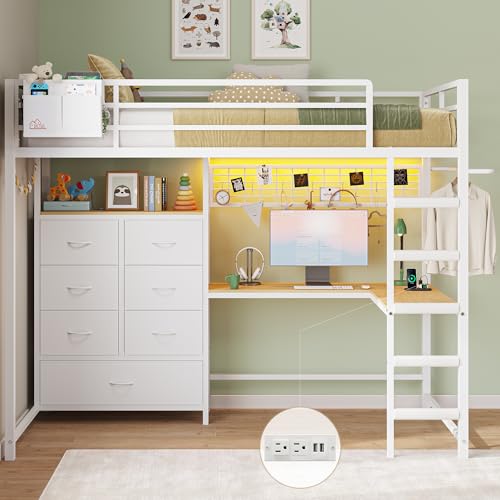
DICTAC Twin Size Loft Bed with L-Shaped Desk and 7 Storage Drawers,Metal Twin Loft Bed for Kids with LED Lights and Charging Station,13.11" H Safety Guardrail and Ladder,No Box Spring Needed, White
Check price on Amazon
DICTAC Twin Loft Bed with 6 Storage Drawers,Coat Rack and Open Shelves Metal Twin Size Loft Bed with Desk,Charging Station and LED Light,loft beds with Large Pegboard,Stairs and Safety Guardrail,White
Check price on Amazon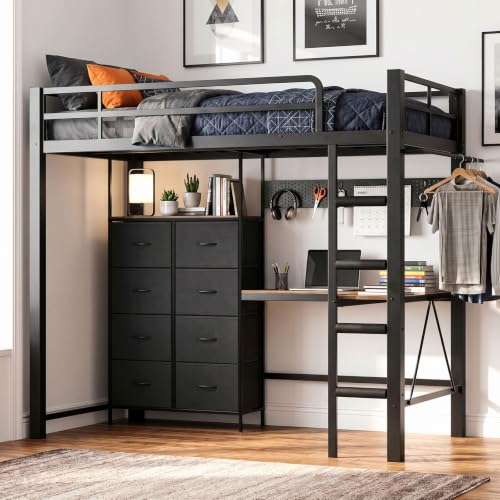
Twin Metal Loft Bed with Desk and 8 Large Fabric Drawers, Heavy Duty, Black | Space Saving, Hanging Coat Rail, Pegboard, Anti-Wobble Wall Anchor, Non-Slip Stair Pads, L-Shaped Desk, Easy to Install
Check price on Amazon
ADORNEVE Twin Loft Bed with Desk, 8 Storage Drawers,LED Lights, White | Metal Kids Loft Bed with Charging Sation, Storage Shelves, 13.1" H Safety Guard & Ladder, No Box Spring Needed
Check price on Amazon