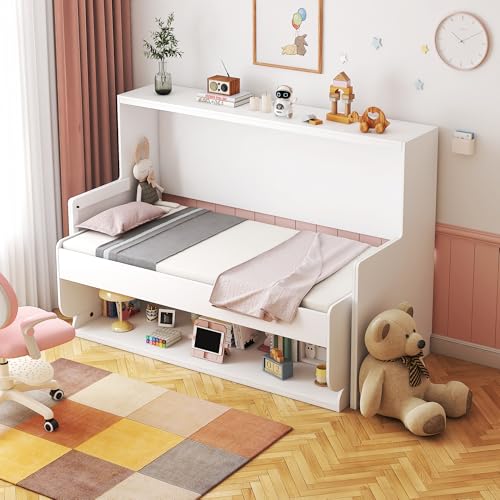
Twin Murphy Bed with Desk: The Ultimate Space-Saving Work & Sleep Solution
A twin Murphy bed with desk transforms a single room into a dual-purpose space. By day, it serves as a focused workspace; by night, it folds down into a comfortable twin bed. This guide covers everything you need to know about choosing, installing, and living with a wall bed desk combo — from mechanism types and materials to layout planning and long-term durability.
Why a twin Murphy bed with desk makes sense: In compact homes, guest rooms, and studio apartments, floor space is precious. A twin Murphy bed with desk eliminates the need for separate furniture pieces by combining sleeping and working zones into one footprint. When the bed is stowed, the room functions as a full home office; when guests arrive, the workspace converts into a bedroom in seconds. This guide explains how these units work, what to look for, and how to integrate one into your home efficiently.
What Is a Twin Murphy Bed with Desk?
A twin Murphy bed with desk is a wall-mounted folding bed system designed for a single sleeper. The bed frame pivots on a mechanism that allows it to be stored vertically against the wall. The reverse side of the bed — or a dedicated panel attached to the frame — integrates a desk surface, shelving, or storage. When the bed is folded up, the desk faces outward and is ready for use. When folded down, the desk surface rotates or tucks away, and the bed extends into the room.
These units are available in several configurations: horizontal desk orientation (desk spans the width of the folded bed), vertical side desk (desk sits beside the bed cabinet), and desk-over-bed designs where the desk remains accessible even when the bed is deployed. The best choice depends on room dimensions and how often the bed is used.
Key Benefits of a Wall Bed Desk Combo
- Dual functionality: One piece of furniture serves as both a workspace and a guest bed, reducing clutter and furniture footprint.
- Space efficiency: Ideal for rooms under 120 square feet where a traditional bed and desk would not fit comfortably together.
- Guest-ready flexibility: Convert a home office into a guest bedroom in under a minute without permanent layout changes.
- Clean aesthetic: When closed, the unit looks like a large cabinet or wall system, keeping the room visually tidy.
- Long-term investment: A well-built unit with a reinforced mechanism can serve a household for many years with proper maintenance.
Types and Configurations
Twin Murphy bed desk combos vary by mechanism, desk placement, and storage features. Understanding these differences helps you match a unit to your room and usage pattern.
1. Vertical Wall Bed with Integrated Desk Panel
The most common design. The bed folds up vertically, and the back panel of the bed frame becomes the desk surface when stowed. This configuration typically includes a small shelf or hutch above the desk area. It suits narrow rooms where the bed extends perpendicular to the wall.
2. Horizontal Wall Bed with Side Desk
In this layout, the bed folds up horizontally, and a separate desk unit is attached to one side of the cabinet. This works well in wider rooms and allows the desk to remain usable even when the bed is down. The side desk often includes drawers or open shelving.
3. Desk-Over-Bed Design
Here, the desk is mounted above the folded bed, creating a loft-like arrangement. The bed folds down beneath the desk surface. This design maximizes vertical space but requires higher ceilings and careful clearance planning.
4. Murphy Bed with Fold-Out Desk Table
Some units feature a desk table that folds out from the bed frame itself. When the bed is stowed, the table extends for use; when the bed is deployed, the table folds flat against the frame. These are compact and suited to very tight spaces.
Mechanism and Hardware: What Matters
The folding mechanism is the most critical component of any Murphy bed. For a twin Murphy bed with desk, the hardware must support the bed's weight plus the desk panel and any stored items. Look for these features:
- Piston or spring lift mechanism: Entry-level and mid-range units typically use spring-loaded pistons; premium and commercial-grade models use dual-piston systems for smoother operation and better weight distribution.
- Steel frame construction: High-grade steel frames with reinforced mounting plates offer the best durability and safety.
- Locking pins or safety latches: Essential for securing the bed in the upright position and preventing accidental deployment.
- Weight capacity: Twin beds generally support 250–400 lbs, but check the specific model. Heavier-duty mechanisms are recommended for daily use.
- Adjustable feet or levelers: Help compensate for uneven floors and ensure the bed folds smoothly.
For a broader look at desk hardware and mechanism quality, see our guide to top desk construction standards.
Materials and Build Quality
The materials used in a twin Murphy bed with desk affect durability, appearance, and long-term performance. Common options include:
- Engineered wood (MDF, particle board): Common in entry-level and mid-range units. Look for high-density boards with durable laminate or veneer finishes.
- Plywood: Stronger and more moisture-resistant than particle board. Often used in mid-tier and premium models.
- Solid wood: Found in luxury and custom units. Offers the best longevity and refinishability but weighs more and requires sturdy wall anchoring.
- Steel and metal frames: Used for the bed mechanism and sometimes the cabinet structure. High-grade steel with rust-proof coating is ideal.
For a deeper comparison of desk surface materials, explore our desk materials guide.
Desk Surface and Ergonomics
The desk portion of a Murphy bed combo is typically smaller than a dedicated office desk. Standard desk surfaces on twin Murphy units range from 30 to 48 inches wide and 18 to 24 inches deep. This is sufficient for a laptop, monitor, keyboard, and a few accessories, but not for large dual-monitor setups or extensive paperwork.
Ergonomic considerations include:
- Desk height: Most integrated desks sit at standard sitting height (28–30 inches). Check that the height suits your body and chair.
- Monitor placement: A small desk may require a monitor arm or wall mount to keep the screen at eye level. See our monitor placement guide for details.
- Lighting: Overhead cabinets or hutches may block ceiling light. Consider a desk lamp or monitor light bar for task lighting.
- Cable management: Integrated desks often lack cable routing. Plan for a cable management solution to keep the workspace clean.
Room Planning and Installation
Before choosing a twin Murphy bed with desk, measure your room carefully. Key dimensions to consider:
- Wall width: The cabinet must fit between walls or furniture with clearance for the bed to fold down.
- Floor clearance: When deployed, a twin Murphy bed extends approximately 80–85 inches into the room. Ensure there is enough open floor space.
- Ceiling height: Vertical wall beds require sufficient height for the cabinet and any overhead shelving. Desk-over-bed designs need extra clearance.
- Wall structure: Most units must be anchored to wall studs. Drywall alone is not sufficient. Consult a professional installer for heavy-duty and commercial-grade models.
Installation typically involves mounting a steel frame or cabinet to the wall, attaching the bed mechanism, and aligning the desk panel. Many manufacturers provide detailed templates and hardware. Professional installation is recommended for safety and to preserve warranty coverage.
Who Should Consider a Twin Murphy Bed with Desk?
This furniture piece is ideal for:
- Studio apartment dwellers who need a dedicated workspace without sacrificing a sleeping area.
- Home office owners who occasionally host overnight guests and want a guest-ready solution.
- Parents of teenagers looking for space-efficient bedroom furniture. See our guide to teenage bedroom furniture with desks for related options.
- Guest room hosts who want a room that serves multiple purposes throughout the year.
- Small home owners in compact houses or apartments where every square foot counts.
Twin Murphy Bed with Desk: Configuration Comparison
| Configuration | Best For | Space Requirement | Desk Usability |
|---|---|---|---|
| Vertical bed with integrated desk panel | Narrow rooms, daily workspace use | Low wall width, moderate floor depth | Desk hidden when bed is deployed |
| Horizontal bed with side desk | Wider rooms, guests and work combined | Wide wall span, moderate floor depth | Desk accessible even with bed down |
| Desk-over-bed design | High ceilings, compact footprint | Tall ceiling, narrow floor area | Desk remains in place above bed |
| Fold-out desk table | Very tight spaces, occasional use | Minimal wall and floor space | Desk folds away with bed |
Care and Maintenance Tips
- Lubricate the mechanism: Apply silicone-based lubricant to pistons and pivot points every 6–12 months.
- Check wall anchors: Periodically inspect mounting bolts and anchors for looseness or wear.
- Clean the desk surface: Use appropriate cleaners for laminate, wood, or veneer finishes. Avoid abrasive pads.
- Keep the bed balanced: Distribute weight evenly on the mattress and avoid storing heavy items on the desk panel when the bed is folded up.
- Use a mattress protector: Protect the mattress from dust and moisture when the bed is stowed.
For general desk surface care, see our guides on protecting desk surfaces and cleaning wood desks.
Common Mistakes to Avoid
- Underestimating floor clearance: Measure the deployed bed length plus walking space before purchasing.
- Skipping wall reinforcement: Never mount a Murphy bed to drywall alone; always use studs or a reinforced backing.
- Choosing a low-quality mechanism: Entry-level hardware may wear out quickly with daily use; mid-range and premium mechanisms are a better long-term investment.
- Ignoring mattress thickness: Some units have specific mattress thickness limits; exceeding them can strain the mechanism or prevent proper folding.
- Forgetting cable and lighting planning: Integrated desks often lack outlets and cable routing. Plan ahead for power and lighting.
Frequently Asked Questions
How does a twin Murphy bed with desk work?
The bed is mounted to the wall with a folding mechanism. When stowed, the bed stands vertically and the back panel becomes a desk. When deployed, the bed folds down and the desk panel tucks away or rotates, converting the space into a sleeping area.
What is the best room for a twin Murphy bed with desk?
It works best in small bedrooms, studio apartments, guest rooms, home offices, and multipurpose rooms where floor space is limited and dual functionality is needed.
Do twin Murphy beds with desks require wall reinforcement?
Yes. Most models must be anchored to wall studs or a reinforced mounting surface. Professional installation is recommended for heavy-duty and premium units to ensure safety and proper operation.
What materials are best for a Murphy bed desk combo?
High-grade engineered wood, plywood, solid wood, and reinforced steel mechanisms offer the best durability. Premium and commercial-grade units typically use heavier-duty hardware and thicker panels for long-term reliability.
Can a twin Murphy bed with desk be used daily?
Yes, provided the unit is built with a durable mechanism rated for frequent use. Mid-range and premium models with high-grade steel frames and dual-piston systems are designed for daily folding and unfolding.