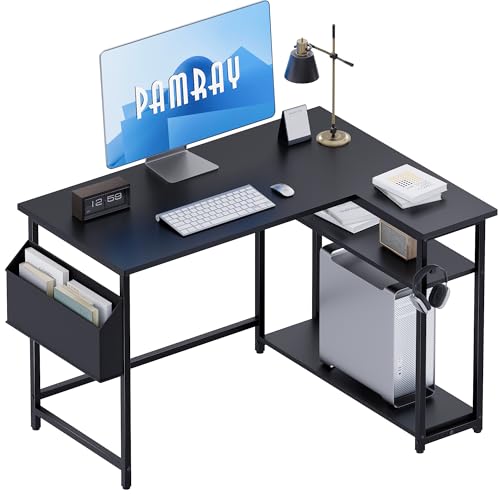
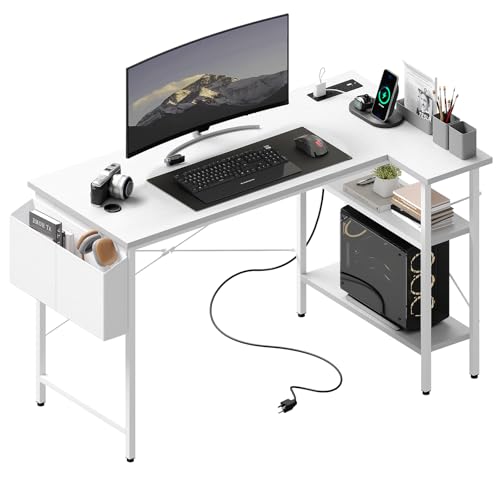
L Shaped Computer Desk for Small Spaces: Smart Layout Guide
Discover how an L shaped desk turns a corner into a productive workspace without crowding the room, and learn how to plan clearances and layout.
EXPLORE L-SHAPED DESKSAll About Desks Insight: An L shaped desk uses the corner of a room instead of its open floor. That shifts the workspace along walls where space is often underused, freeing the center of the room for walking, storage, or a bed.
Why an L Shaped Desk Works in Small Rooms
A straight desk pushes into the room and competes with the door, bed, or wardrobe. An L shaped desk runs along two walls that meet in a corner, so the depth of the workspace sits against the walls rather than projecting into the room. The result is a compact footprint with more usable surface than a straight desk of similar length.
The shape also divides the room naturally. One leg can hold the monitor and keyboard, while the other leg acts as a side surface for paperwork or a secondary screen. For tight bedrooms and studios, that arrangement gives a full workstation without needing extra furniture. If you are still comparing options, our overview of a corner desk for small space explains how an L shape differs from a simple corner unit.
Common Configurations to Compare
Small-space L shaped desks come in several forms. The table below groups the most common configurations by how they use the available floor area.
| Configuration | Best For | Tier |
|---|---|---|
| Compact L desk with fixed legs | Bedrooms where the desk runs along two adjacent walls | Entry-level tier |
| Reversible L desk with adjustable shelf | Rooms where the corner orientation is uncertain | Mid-tier |
| L desk with hutch and drawer storage | Workspaces that need vertical and file storage | Mid-tier |
| Floating L desk mounted to the wall | Rooms where floor clearance is at a minimum | Premium tier |
| L shaped desk with integrated cable management | Professional-grade home offices in small rooms | Top-tier |
What to Measure Before You Choose
Small rooms leave less tolerance for error. Before choosing a model, measure carefully and note the constraints.
- Corner footprint: Measure the length of both walls where the desk will sit.
- Depth of each leg: Confirm the depth does not block doors, drawers, or walkways.
- Chair clearance: Leave enough room to slide the chair in and out without hitting the opposite wall or bed.
- Height clearance: If the desk is near a window, check that the sill does not interfere.
- Door swing: Verify the door does not open into the desk leg.
- Vent and outlet access: Confirm the desk does not cover essential outlets or heating vents.
Pro tip: Place the shorter leg of the L against the wall with the door, and the longer leg along the wall with the window or outlet. That arrangement keeps the entry path clear and gives the monitor a stable backdrop.
Layout Ideas for Small Bedrooms
The L shape is most useful when it doubles as a room divider or study zone. If the bed sits in one corner, the desk can occupy the opposite corner with the short leg along the headboard wall and the long leg along the side wall. This gives a clear view of the room and keeps the workspace visually separated.
In very small rooms, a small room desk ideas guide helps frame the layout so the desk does not feel like an obstacle. If the desk is part of a broader workspace plan, a small home office with desk guide explains how to layer lighting and storage around a compact workstation.
Storage and Cable Management
Two legs mean more surface and more cable paths. Plan routing so the cables do not cross the keyboard zone. A cable management box keeps power strips and adapters out of sight, and a desk with cable management is a natural next step if you are choosing a new desk at the same time.
For storage, consider a hutch on the short leg to keep small items off the main working surface. Our guide on a desk with hutch and storage shows how vertical storage fits a compact footprint. For rooms that need to store office supplies, a small office desk with drawers adds storage without extra floor space.
Ergonomics in a Corner Layout
The chair position and monitor placement matter as much as the desk itself. Sit at the corner where the two legs meet, so both legs are within reach. Place the primary monitor directly ahead of the chair, angled slightly toward the corner. For guidance on posture and screen height, review an ergonomic desk setup guide.
For users with two screens, a small corner computer desk with monitor shelf is a strong choice because the shelf lifts the secondary screen to a comfortable height. If you add a keyboard tray, a small keyboard tray for L shaped desk keeps the surface clear and the wrists supported.
Accessories That Fit Small L Desks
A compact L desk benefits from accessories that stay within its footprint. A monitor arm desk mount frees the surface below the screen, and a monitor light bar adds task lighting without taking floor space. For long evening sessions, a warm accent from a black desk lamp or a warm white bulb reduces eye strain.
If the desk height does not suit you, an adjustable desk chair without wheels lets you fine-tune the seat position without the chair rolling into the desk legs. For longer sessions, a ergonomic desk chair for home office adds back support without adding bulk.
Final Checklist Before You Choose
Run through this list to confirm the L desk fits your room:
- Measure both wall lengths and confirm the desk legs fit within them.
- Check door swing clearance along the shorter leg.
- Confirm the chair can slide in and out at the corner.
- Plan cable routing so wires do not cross the keyboard zone.
- Decide whether a hutch or shelf is needed for storage.
- Match lighting and chair to the corner layout.
With the right L shaped computer desk, a small room gains a full workstation without losing usable floor space. The products below support compact corner layouts and cord management, and each is selected for value within its tier so you can compare options with confidence.