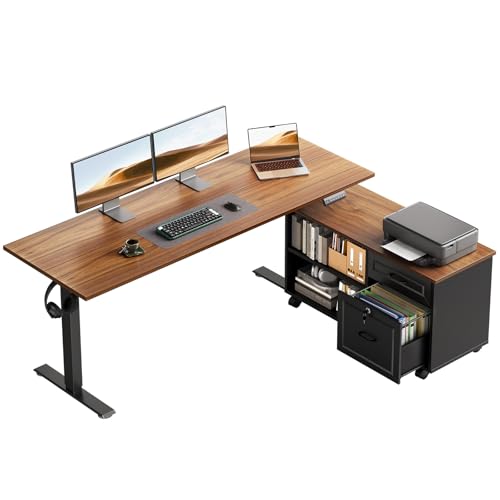
L Shaped Desk with Locking File Cabinet: The Complete Guide
Secure your important documents without sacrificing workspace. Learn how an L shaped desk with locking file cabinet combines expansive work surface, ergonomic layout, and privacy protection for the modern home office.
Explore Buying GuideWhy an L shaped desk with a locking file cabinet matters: An L shaped workstation gives you room to spread out across two connected work zones, while a built-in locking file cabinet keeps sensitive documents, client records, and personal files protected from casual access. For freelancers, remote workers handling confidential material, or families sharing a home office, this combination delivers both productivity and peace of mind. This guide explains what to look for, how locking mechanisms differ, and how to plan a layout that works for your space.
What Defines an L Shaped Desk with Locking File Cabinet
An L shaped desk with locking file cabinet is a corner-oriented workstation where one return (the secondary surface) integrates a file drawer or pedestal secured by a key lock, combination lock, or digital lock. Unlike a plain L shaped desk with file cabinet, the locking element is the defining feature: it turns open storage into a protected compartment suitable for contracts, tax records, medical documents, and confidential business files.
The locking cabinet is typically positioned under the return or at the end of the main work surface, so it stays within reach while seated. Many models also include additional open shelves, grommets for cable routing, and reversible returns that let you choose whether the storage sits on your left or right side. If you prefer a lighter storage footprint, a standard L shaped desk with file cabinet may suffice, but the locking version adds a clear security advantage.
Common Configurations
- Single locking file drawer: One letter or legal-size drawer with a key lock, usually integrated into a pedestal.
- Locking pedestal with multiple drawers: A file drawer plus utility drawers, with the lock securing the file compartment only.
- Full-pedestal lock: The entire drawer stack locks as one unit, offering broader protection.
- Locking cabinet with open shelving above: Combines secure storage below with accessible shelves for books, binders, or decor.
Locking Mechanism Types Compared
The lock is the heart of this desk category, and the mechanism you choose affects daily convenience, security level, and long-term durability. Below is a comparison of the most common lock types found on L shaped desks with locking file cabinets.
| Lock Type | Best For | Key Considerations |
|---|---|---|
| Key lock (cam lock) | Entry-level and mid-range desks; home offices | Simple, reliable, requires key management; replaceable core on better models |
| Combination lock | Shared workspaces; users who dislike carrying keys | No key to lose; code resets vary by model |
| Digital / electronic lock | Premium and professional-grade desks | Fast access, audit features on high-end tiers, battery dependency |
| Central locking system | Multi-drawer pedestals | One lock secures all drawers; convenient for full-stack protection |
For most home offices, a key lock on a sturdy file drawer is the practical choice. If multiple people share the desk, a combination lock removes the key-handoff problem. Digital locks appear mainly in the high-end tier and flagship tier, where they pair with heavier-gauge steel and reinforced drawer glides.
Materials and Build Quality to Expect
Build quality determines whether the locking drawer glides smoothly for years or jams after repeated use. The desk surface and the cabinet body are usually made from different materials, so evaluate them separately.
Desktop Surface
- Laminate and engineered wood: Common in entry-level and mid-range models; easy to clean and resistant to everyday scratches.
- Solid wood and butcher block: Found in premium and luxury tiers; adds warmth and can be refinished over time.
- High-grade steel and metal: Typical in industrial-style and commercial-grade workstations; very durable but heavier.
File Cabinet Body
- Steel: The strongest option for the locking compartment; look for rust-proof finish and full-extension glides.
- Engineered wood with metal reinforcement: Lighter and well-suited to home offices; check that the lock plate is metal, not plastic.
- Solid wood: Aesthetic match to wood desktops; ensure the lock hardware is quality-grade, as wood can swell with humidity.
Ergonomics and Layout Planning
An L shaped desk is only ergonomic if the layout supports your body and workflow. With a locking file cabinet built in, you also need to plan where the secured storage sits so it does not interfere with legroom or monitor placement.
Positioning the Locking Cabinet
- Under the return: Keeps the main work surface clear and places files within arm's reach when you swivel.
- At the far end of the return: Ideal if you access files less frequently; preserves legroom for the primary seated position.
- Reversible setups: Choose a model with a reversible return so the locking cabinet can sit on your dominant or non-dominant side based on preference.
Monitor and Work Zone Placement
Place your primary monitor at the corner or centered on the longer leg, depending on how you divide tasks. The return becomes a secondary zone for a laptop, reference documents, or a writing area. Keep the locking drawer on the side where you naturally reach, but avoid placing it directly under your knee space. For more layout ideas, see L shaped desk with drawers.
If you also want overhead storage, a L shaped desk with file cabinet and hutch adds shelves above the work surface, though hutches can reduce the sense of openness in smaller rooms.
Security and Privacy Features
A locking file cabinet provides baseline protection against casual access, but the level of security varies. Consider what you are protecting and who else uses the space.
- Casual privacy: A key lock or combination lock on a home office desk prevents family members, visitors, or cleaning staff from opening the file drawer.
- Document protection: Locking drawers keep contracts, tax paperwork, and identification documents out of sight and secured.
- Shared workspace: In co-working or multi-user home offices, individual locking compartments let each person secure their own materials.
- Limits to understand: Standard furniture locks are not high-security safes; they deter casual access rather than determined intrusion.
If you need storage beyond files, the broader category of L shaped desk with locking drawers covers utility drawers secured with the same lock systems.
Buying Guide: How to Choose the Right Model
Use this checklist to narrow your options before you buy. The goal is a workstation that fits your room, your workflow, and the security level you actually need.
1. Measure Your Space First
L shaped desks vary widely in footprint. Measure both wall lengths where the desk will sit, then confirm the desk's overall depth and the return length. Leave clearance for the chair to swivel and for the locking drawer to open fully. A L shaped desk with drawers for small space may be a better fit if your room is tight.
2. Decide on Lock Type and Drawer Count
One locking file drawer is enough for most home offices. If you handle larger volumes of paperwork, a multi-drawer pedestal with a central lock is more efficient. Match the lock type to how many people will use the desk.
3. Check the Drawer Capacity and Glides
Letter-size and legal-size filing are the two standard formats. Confirm which the drawer supports, and look for full-extension glides if you need to reach the back of the drawer easily. Heavier paper loads demand sturdier glides.
4. Match the Surface to Your Room
Laminate suits busy households and easy cleaning. Solid wood suits dedicated home offices where the desk is a long-term furniture piece. Metal suits industrial and commercial-grade aesthetics. If wood is your preference, explore L shaped wood desk with drawers for natural finishes.
5. Consider Additional Features
- Reversible return: Lets you place the storage on either side.
- Cable management grommets: Keeps wires tidy across both surfaces.
- Keyboard tray: Frees up desk depth; see L shaped desk with keyboard tray and drawers.
- Monitor shelf or riser: Adds vertical storage without a full hutch.
- Power outlet: Built-in charging points reduce cable clutter.
6. Match the Tier to Your Usage
Entry-level models suit occasional home use and light filing. Mid-range models typically offer smoother glides and better lock hardware. Premium and professional-grade models focus on heavier steel, reinforced joints, and longer warranties. Commercial-grade workstations are designed for daily multi-user environments.
| Tier | Best For | Typical Strengths |
|---|---|---|
| Entry-level | Light home use, students, occasional filing | Basic key lock, laminate surface, standard glides |
| Mid-range | Daily remote work, moderate document volume | Improved lock hardware, smoother glides, sturdier frame |
| Premium | Dedicated home offices, frequent file access | Heavy-duty glides, solid wood or high-grade steel, refined finishing |
| Professional-grade | Multi-user offices, confidential records | Central locking, reinforced construction, commercial warranty |
If your priority is adjusting between sitting and standing, pair this guide with L shaped desk that moves up and down to see how height-adjustable models integrate locking storage.
Setup and Maintenance Tips
- Anchor or brace the desk: L shaped desks are wide and can tip if weight is unevenly distributed; use wall anchoring where recommended.
- Lubricate the lock sparingly: A graphite-based lubricant for key locks keeps the mechanism smooth without attracting dust.
- Keep the key or code accessible: Store a spare key securely outside the desk, or register your combination with a trusted household member.
- Respect drawer weight limits: Overloading a file drawer strains glides and can misalign the lock.
- Clean the surface according to material: Laminate tolerates mild cleaners; solid wood needs appropriate polish and humidity control.
Frequently Asked Questions
Final Thoughts
An L shaped desk with locking file cabinet is a practical upgrade for anyone who wants a generous workspace and a protected place for important paperwork. Focus your decision on three things: the lock type that fits how many people use the desk, drawer glides that handle your filing volume, and a layout that keeps the cabinet out of your legroom. Get those right, and the desk will serve as both a productive workstation and a reliable storage solution for years.