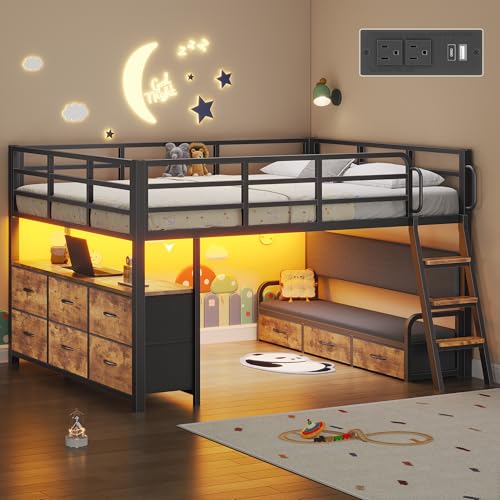
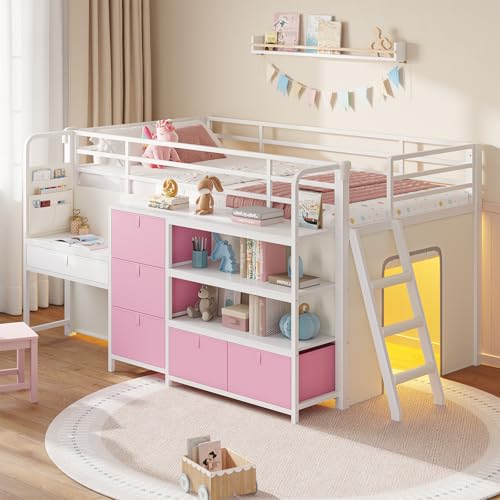
Twin Low Loft Bed with Desk and Storage: The Complete Space-Saving Guide
Everything you need to know about choosing, arranging, and living with a twin low loft bed with desk and storage — the compact furniture solution that turns one small bedroom into a bedroom, study, and organized storage zone all at once.
Why this guide matters: If you are shopping for a child, teen, or guest room and your floor plan is tight, a twin low loft bed with desk and storage is one of the most efficient pieces of furniture you can buy. It stacks sleep, study, and organization into a single footprint while keeping the sleeping platform at a comfortable, lower height. This guide walks you through how these beds work, what separates a well-built model from an average one, how to lay out the desk zone, and what to check before you commit.
What Exactly Is a Twin Low Loft Bed with Desk and Storage?
A twin low loft bed with desk and storage is a single-piece furniture system built around a twin-size mattress. Instead of placing the mattress on a standard frame, the sleeping platform is raised — but only moderately — to create a usable zone underneath. That under-bed zone typically houses a built-in desk surface on one side and a combination of shelves, cubbies, or drawers on the other.
The "low loft" label is the key differentiator. A full-height loft bed might put the mattress five or more feet off the floor, requiring a long ladder and careful ceiling measurement. A low loft bed keeps the mattress closer to the ground, usually with roughly 30 to 40 inches of clearance beneath the frame. That is enough headroom for a seated child or teen to use a desk comfortably, while the lower sleeping height improves safety and makes the bed easier to climb into.
Because the desk and storage are integrated into the frame rather than added as separate pieces, these beds eliminate the need for a standalone desk, a bookshelf, and a dresser. In a room where every square foot counts, that consolidation is the entire point. If you want to compare related configurations, our guide to a twin loft bed with desk and storage covers the taller alternative, while the twin loft bed with desk page focuses on desk-only layouts.
Core Benefits of the Low Loft Configuration
Space Multiplication
One footprint delivers three functions: sleeping, studying, and storage. That frees up wall and floor space for movement, play, or additional furniture.
Lower, Safer Height
A low platform reduces fall risk compared with a full loft. It is easier for younger children to climb in and out, and it keeps the room feeling open rather than cramped.
Built-In Study Zone
The integrated desk creates a dedicated homework or creative space directly beneath the bed, separating sleep from study without needing a second room.
Decluttered Floor
Shelves and drawers absorb books, clothing, and supplies that would otherwise pile up on the floor or on a separate dresser.
Cohesive Design
A single coordinated unit looks intentional and tidy, avoiding the mismatched-furniture look that comes from combining a bed, desk, and shelving bought separately.
Easy to Reorganize
Because the desk and storage are part of the frame, reconfiguring the room later is simpler — there are fewer pieces to move or replace as needs change.
Anatomy of a Well-Designed Unit
Not every low loft bed is built to the same standard. Understanding the main components helps you evaluate models on the shelf and online with a critical eye.
The Frame and Sleeping Platform
The frame carries the entire load, so construction quality matters most here. Solid wood and high-grade steel are the durable choices; engineered wood can be perfectly serviceable when it is reinforced at the joints. Look for a frame with cross-bracing or a slatted base that distributes weight evenly, and check that the guardrails are tall enough to keep a sleeping child secure.
The Desk Surface
The desk is usually a fixed shelf integrated into the under-bed structure, though some models offer an adjustable or slide-out surface. A deeper desk surface — around 20 inches or more — is more comfortable for a laptop, notebook, and lamp than a shallow ledge. Check whether the desk sits flush with the frame or cantilevers outward; flush mounting is more stable for writing and typing.
Storage Configuration
Storage typically appears as open shelving, cubbies, drawers, or a combination. Open shelves are easy to access and good for books and display items; drawers hide clutter and protect clothing from dust. Some units include a small wardrobe section or a pull-out drawer beneath the desk. Match the storage type to what the room actually needs — a teen may want drawers for clothing, while a younger child may need open bins for toys.
The Ladder or Stairs
Most low loft beds use a short ladder attached to one end. A ladder with wide, flat rungs and a secure attachment point is safer than a narrow rung design. Some premium units substitute a small step stool or built-in stairs, which are easier for younger children and double as extra storage.
Low Loft vs. Standard Loft vs. Bunk: Which Fits Your Room?
| Configuration | Sleeping Height | Under-Bed Use | Best For | Tier Guidance |
|---|---|---|---|---|
| Twin low loft bed with desk and storage | Moderate lift, easier access | Desk plus shelves or drawers | Small bedrooms, children and teens, homework zones | Entry-level to mid-range covers most needs; premium models add sturdier frames and finer finishes |
| Standard twin loft bed with desk | Higher platform | Full desk and storage beneath | Older teens, rooms with high ceilings | Mid-range to high-end tier for stability at height |
| Twin bunk bed with desk and storage | Two stacked sleepers | Desk and storage beside or beneath | Shared bedrooms for siblings | Essential tier to premium depending on frame and storage volume |
| Standard twin bed with separate desk | Floor level | No integrated space | Rooms with generous floor area | Any tier; requires more floor space overall |
The low loft option wins whenever headroom is limited or the user is younger. If the room is shared by two children, a twin bunk bed with desk and storage may be the better fit, and a twin size loft bed with desk and storage guide can help you compare the taller single-sleeper alternative.
Layout Ideas That Make the Most of the Under-Bed Zone
Once the bed is in place, how you arrange the desk and storage determines whether the unit feels spacious or cramped. These layouts work well in typical bedrooms.
- Study-first layout: Place the desk along the longest open side of the frame with a shelf directly above for books. Add a clip-on task lamp and a small drawer unit on the opposite end for supplies. This keeps the study zone visually separate from the sleeping area above.
- Storage-wall layout: Push the bed against a wall so the shelf and drawer sections run along the wall, leaving the open floor in the middle of the room clear. This works especially well in narrow rooms where a central walkway is needed.
- Reading nook layout: Use one end of the under-bed zone for a small chair or floor cushion and the other for the desk. A low bookcase beside the desk creates a cozy corner that still leaves room to work.
- Shared-room layout: Position two low loft beds along opposite walls, each with its own desk and storage. This gives each occupant a private study zone without needing a larger shared desk.
If the desk is used for long study sessions, pair it with a supportive seat. Our guides to a top-rated desk chair for home office use and top-rated desk chair for back pain relief cover what to look for in posture support. For rooms where the bed also serves as a workspace for taller users, a tall office chair for standing desk setup can be paired with a raised surface.
Safety Checklist Before You Buy
Verify these points on every model you consider
- Guardrails: At least one side should have a full-length guardrail; check the height above the mattress.
- Weight rating: Confirm the frame's maximum load and compare it with the intended user.
- Ladder attachment: The ladder should lock or bolt securely to the frame, not rest loosely against it.
- Corner and edge finishing: Rounded edges and a smooth finish reduce bumps and scrapes.
- Assembly hardware: Reinforced brackets and locking bolts are a sign of durable construction.
- Clearance measurement: Measure ceiling height, the user's seated height, and the under-bed clearance before ordering.
- Wall anchoring: Many units include anti-tip straps or wall brackets; use them.
Safety guidance for lofted furniture is well established: keep the sleeping platform clear of hanging decor, avoid placing the bed directly under a ceiling fan, and check the ladder periodically for loosened hardware. If the room also houses a standing workstation, our turn any desk into a standing desk guide explains how to avoid unstable surface additions near a lofted frame.
Who Should Choose This Bed — and Who Should Not
Ideal for: children and teens in compact bedrooms, guest rooms that double as a study, studio apartments where a single piece of furniture must serve multiple functions, and any room where the floor plan cannot accommodate a separate desk and dresser.
Less ideal for: adults who need generous under-bed clearance to stand, very young children who cannot yet climb a ladder safely, and rooms with ceilings so low that a raised platform feels confining. In those cases, a standard bed with a separate compact desk may be more comfortable. If the occupant is an adult, our twin loft bed with desk for adults guide discusses weight ratings and clearance expectations.
How to Evaluate Quality Without Getting Lost in Specs
Marketing copy tends to blur the difference between models, so focus on a few concrete signals:
- Frame material: Solid wood and high-grade steel are the durable standards; engineered wood is acceptable when joints are reinforced. Look for terms like "solid build" and "heavy-duty" backed by specific material descriptions.
- Joint construction: Bolted, bracketed joints with metal reinforcement outperform simple screw-and-glue assemblies over time.
- Finish: A rust-proof finish on metal and a sealed, smooth finish on wood make cleaning easier and resist wear.
- Desk depth and position: A deeper desk mounted flush with the frame is more usable than a shallow ledge that tilts or flexes.
- Storage flexibility: Removable bins and adjustable shelves adapt as the user grows; fixed cubbies are sturdier but less flexible.
- Assembly clarity: Clear instructions and labeled hardware indicate a manufacturer that expects the product to last.
Within a given class, a mid-range model usually offers noticeably smoother hardware and sturdier joints than an entry-level model, while premium and commercial-grade units focus on heavier frames and finer finishes. Those distinctions matter more than any single spec sheet number.
Keeping the Unit in Good Condition
A twin low loft bed with desk and storage sees constant use, so a light maintenance routine extends its life. Dust the desk surface weekly and wipe it with a slightly damp cloth; avoid soaking wood surfaces. Tighten ladder bolts and frame connectors every few months, especially in the first year when hardware settles. Check the guardrail attachment points at the same time. For drawers, a dry lubricant on the runners prevents sticking. If the desk surface takes heavy daily use, a protective mat reduces scratches, and our protect desk surface guide covers the options.
Related Configurations Worth Comparing
If the low loft layout is not a perfect fit, several close variations address specific needs. A twin loft bed with desk and drawers trades open shelving for enclosed storage, which suits clothing-heavy rooms. A twin loft bed with desk and shelves maximizes visible book and display space. For a taller footprint with more under-bed room, the twin loft bed with desk and twin loft bed with stairs and desk options provide more standing clearance and easier access. Rooms that also need a separate sleeping surface can consider a twin bed with desk arrangement, while a twin over twin bunk bed with desk handles two sleepers in the same footprint.
Frequently Asked Questions
What is a twin low loft bed with desk and storage?
It is a compact furniture unit that elevates a twin mattress on a low platform, creating usable space underneath for a built-in desk and shelving or drawers. It is designed to maximize floor space in small bedrooms while keeping the sleeping height lower than a full loft.
Is a low loft bed safe for children?
Yes, a low loft bed is generally safer than a full-height loft because the mattress sits closer to the floor. Look for guardrails, a secure ladder, and a frame that meets current safety standards, and always follow the manufacturer's weight and age recommendations.
How much headroom does a low loft bed need?
Most low loft beds provide roughly 30 to 40 inches of clearance beneath the bed, which is enough for a seated child or teen at a desk. Measure your ceiling height and the user's seated height before choosing a model.
Can adults use a twin low loft bed with desk and storage?
Some models support adult weight limits, but a twin low loft bed is primarily designed for children and teens. Adults should check the frame's weight rating and the under-bed clearance before purchasing.
What is the difference between a low loft bed and a bunk bed?
A bunk bed stacks two sleeping surfaces vertically, while a low loft bed raises a single mattress to create functional space underneath. A twin low loft bed with desk and storage combines sleeping, studying, and storage in one compact footprint.
Should the desk face the wall or the room?
Facing the wall reduces visual distractions and is ideal for focused study; facing the room feels more open and works well in shared spaces. Most integrated desks are fixed, so choose the bed's orientation in the room with this in mind.
Ready to Shortlist Your Options?
Browse curated twin low loft beds with integrated desk and storage, compare features side by side, and check availability for the model that fits your room's footprint and the user's needs.
Explore Twin Low Loft BedsFinal Thoughts
A twin low loft bed with desk and storage is more than a clever space trick — it is a practical commitment to a calmer, more organized room. The lower sleeping height keeps it approachable for younger users, the integrated desk creates a dedicated place to focus, and the built-in shelving and drawers absorb the clutter that would otherwise spread across the floor. Focus your evaluation on frame construction, desk depth, storage fit, and safety hardware, and the unit will serve the room well for years.
If you are still comparing alternatives, the twin loft bed with desk and dresser layout prioritizes clothing storage, while the twin size loft bed with desk guide explains how mattress size affects the available desk area. Whichever configuration you choose, measure twice, anchor the frame, and set up the desk zone before the first night of sleep.