
Adjustable Height Desk Chair for Standing Desk: The Complete Guide
Discover how an adjustable height desk chair transforms your sit-stand workspace. Learn about ergonomic seating, active posture support, and the features that keep you comfortable and productive at every desk height.
Why an Adjustable Height Desk Chair Matters: Standing desks have revolutionized the modern workspace, but the transition between sitting and standing demands seating that adapts to your body at every height. A standard office chair often falls short when your desk is raised, leaving your legs dangling and your posture compromised. An adjustable height desk chair bridges this gap, offering extended seat height ranges, integrated footrests, and active seating mechanisms that support seamless sit-stand transitions. This guide walks you through everything you need to know to choose the right chair for your standing desk setup.
What Is an Adjustable Height Desk Chair for a Standing Desk?
An adjustable height desk chair for a standing desk is a specialized seating solution engineered to support the body at elevated work surfaces. Unlike traditional office chairs with limited seat height ranges, these chairs extend high enough to keep your thighs parallel to the floor when your standing desk is raised, or they feature active seating designs that encourage dynamic posture throughout the day.
These chairs come in several forms: ergonomic drafting stools with extended height ranges, active seating stools that promote core engagement, and perching chairs that support a half-standing posture. Many models include integrated footrests, adjustable backrests, and tilt mechanisms that accommodate the natural shift between seated and standing work. If you are still exploring your standing desk options, our guide to the adjustable height standing desk can help you understand the desk side of the equation.
Key Characteristics of Standing Desk Chairs
- Extended height range: Seat height typically reaches 28 to 36 inches, accommodating taller standing desk surfaces
- Integrated footrest: Provides stable support for your feet when seated at elevated desk heights
- Active seating mechanism: Some models feature wobble bases or tilting seats that engage core muscles
- Ergonomic backrest: Supports the lumbar spine during seated periods without restricting movement
- Durable construction: Built with high-grade steel, reinforced bases, and premium materials to withstand frequent adjustments
Why Your Standing Desk Needs a Matching Chair
A standing desk alone does not guarantee better posture. The real benefit comes from alternating between sitting and standing throughout the day, and that transition requires seating that adapts to your desk height. When you sit at a raised standing desk without proper support, your legs dangle, your circulation suffers, and your lower back absorbs unnecessary strain.
An adjustable height desk chair solves this by keeping your feet supported and your hips positioned correctly at any desk height. For those who already own a standing desk converter, pairing it with the right chair ensures that both your seated and standing postures remain ergonomic. If you are considering a converter, our guide to the standing desk converter with dual monitor mount explores options that work well with adjustable seating.
Pro Tip: The ideal sit-stand rhythm is to alternate every 30 to 45 minutes. An adjustable height desk chair makes these transitions effortless because you can lower the seat, sit comfortably, and raise it again without disrupting your workflow. For a complete ergonomic setup, consider how a under desk chair mat for hardwood floors protects your flooring and improves chair mobility during frequent transitions.
Adjustable Height Desk Chair Tiers: Finding Your Match
Not all standing desk chairs are created equal. To help you navigate the market, we classify these chairs into three tiers based on construction quality, feature set, and intended use. This classification system focuses on relative market positioning rather than specific figures, so it remains useful regardless of when you are reading this guide.
Essential Tier
Basic adjustable height stools with a simple pneumatic lift and a footrest ring. These chairs offer reliable height adjustment and solid build quality for occasional sit-stand use. Best suited for light-duty home offices where the primary need is a comfortable perch at standing height.
Balanced Tier
Chairs with enhanced ergonomic features such as adjustable backrests, tilt mechanisms, and more refined footrest designs. These models often include active seating elements like wobble bases or contoured seats that encourage movement. A solid choice for daily sit-stand routines and extended work sessions.
Top-Tier
Professional-grade and commercial-grade seating with advanced ergonomic engineering. These chairs feature precision height adjustment, high-grade materials, and sophisticated active seating mechanisms designed for all-day comfort. Ideal for dedicated home offices and professional workspaces where ergonomic performance is a priority.
Key Features to Look For in an Adjustable Height Desk Chair
Choosing the right chair requires understanding which features directly impact your comfort, posture, and productivity. The following breakdown covers the most important considerations for standing desk seating.
Seat Height Range
This is the most critical specification. The chair must adjust high enough to keep your thighs parallel to the floor when your desk is at standing height, and low enough for traditional seated work. Look for chairs with a seat height range that overlaps with both your seated and standing desk heights. A office desk height calculator can help you determine the ideal ranges for your body.
Footrest Design
An integrated footrest is essential for standing desk chairs. When seated at an elevated desk, your feet need a stable surface to prevent leg fatigue and maintain proper circulation. Adjustable footrest rings are preferable because they accommodate different leg lengths and seating positions.
Backrest and Lumbar Support
While some active seating stools are backless by design, chairs intended for extended seated work benefit from a contoured backrest with lumbar support. The backrest should support the natural curve of your spine without forcing you into a rigid posture.
Active Seating Mechanism
Many standing desk chairs incorporate active seating elements such as wobble bases, tilting seats, or flexible materials that respond to your movements. These mechanisms engage your core muscles, improve circulation, and reduce the stiffness that comes from prolonged static sitting.
Build Quality and Materials
Frequent height adjustments demand durable construction. Prioritize chairs with high-grade steel frames, reinforced bases, and premium materials that resist wear. A rust-proof finish and heavy-duty casters or glides extend the chair's lifespan in a busy workspace.
Mobility and Floor Protection
If you frequently move between tasks, consider a chair with smooth-rolling casters. To protect your flooring and improve mobility, pair your chair with a mat designed for under-desk use. For setups in smaller spaces, a comfortable desk chair for small spaces may offer a better balance of mobility and footprint.
Comparing Chair Types for Standing Desks
Different standing desk tasks call for different seating styles. This comparison table outlines the most common chair types and their best-use scenarios, helping you match your seating choice to your workflow.
| Chair Type | Best For | Key Advantage | Consideration |
|---|---|---|---|
| Drafting Stool | Extended seated work at elevated desks | Tall height range with footrest ring | May lack advanced lumbar support |
| Active Seating Stool | Core engagement during sit-stand transitions | Encourages movement and circulation | Minimal back support by design |
| Perching Chair | Half-standing posture at raised desks | Reduces pressure on the lower back | Requires adjustment period for new users |
| Ergonomic Saddle Stool | Long sessions with frequent position shifts | Promotes neutral spine alignment | Specialized fit may not suit everyone |
| Adjustable Office Chair | All-day sit-stand routines with back support | Full ergonomic adjustability | Needs extended height range for standing desk use |
Ergonomic Principles for Standing Desk Seating
Proper ergonomics is the foundation of comfortable sit-stand work. Regardless of which chair you choose, the following principles apply to every adjustable height desk chair setup.
Maintain a 90-Degree Hip Angle
When seated, your hips should be at roughly a 90-degree angle, with your thighs parallel to the floor. If your chair is at standing height and your feet do not reach the floor, the footrest must bridge the gap. This prevents pressure on the undersides of your thighs and supports healthy circulation.
Keep Your Feet Supported
Dangling legs are the enemy of comfortable seated work. An adjustable footrest ring or a stable footrest platform ensures your feet remain flat and supported, reducing fatigue and improving posture stability throughout the day.
Support the Lumbar Curve
Your lower back should feel supported without being forced into an unnatural position. Look for chairs with adjustable lumbar support or a contoured backrest that follows the natural S-curve of your spine. For additional insight into desk ergonomics, our standing desk setup guide covers monitor placement, keyboard height, and overall workspace arrangement.
Encourage Movement
No chair should lock you into a single position for hours. Active seating mechanisms, tilt functions, and swivel bases all encourage subtle movements that keep your muscles engaged and your circulation flowing. Pairing an active chair with a stand-up desk converter for laptop and monitor creates a dynamic workspace that adapts to your body's needs.
Practical Buying Considerations
Beyond the features themselves, several practical factors influence which adjustable height desk chair works best for your specific situation.
- Desk height compatibility: Measure your standing desk's height range before selecting a chair. The chair's seat height range must align with both your seated and standing desk positions.
- Body dimensions: Consider your height, leg length, and weight capacity requirements. A chair that fits your body proportions will provide better support and comfort than one chosen solely on features.
- Workspace footprint: If your home office is compact, a desk and chair for small space combination can maximize your usable area without sacrificing ergonomic function.
- Flooring type: Hardwood, tile, and carpet each require different caster types or floor protection. A chair mat for hardwood floors protects your flooring and improves chair mobility.
- Frequency of adjustment: If you plan to switch between sitting and standing many times a day, prioritize chairs with smooth, responsive height adjustment mechanisms.
- Long-term durability: A chair is a long-term investment. High-grade materials and solid build quality ensure that your chair continues to perform after years of daily use.
Setting Up Your Standing Desk and Chair Together
The way you configure your chair and desk together determines how comfortable your workspace feels day after day. Follow these steps to dial in your setup.
Step 1: Set Your Standing Height First
Stand at your desk with your elbows at a 90-degree angle and your forearms parallel to the floor. Adjust your desk height until your hands rest comfortably on your keyboard and mouse. This is your ideal standing height. If you use a converter, our guide to the stand-up desk converter for narrow desk covers space-efficient options.
Step 2: Match Your Chair to Your Standing Height
Raise your chair seat until your thighs are parallel to the floor when seated at your standing desk height. If your feet do not reach the floor, adjust the footrest ring until they rest comfortably. This seated position should feel stable and relaxed.
Step 3: Fine-Tune Your Seated Position
Lower your desk to your seated working height, then adjust your chair so your feet are flat on the floor or footrest, your knees are at a 90-degree angle, and your lower back is supported. For a complete ergonomic breakdown, our standing desk setup guide provides detailed recommendations for monitor, keyboard, and accessory placement.
Step 4: Establish a Sit-Stand Rhythm
Alternate between sitting and standing every 30 to 45 minutes. Use a timer or a habit-tracking method to remind yourself to transition. An adjustable height desk chair makes these transitions seamless, so you can shift positions without losing focus or disrupting your workflow.
Caring for Your Adjustable Height Desk Chair
A well-maintained chair lasts longer and performs better. Follow these simple care practices to keep your adjustable height desk chair in top condition.
- Clean the upholstery regularly: Wipe down fabric or leather surfaces with a mild cleaner to prevent dust buildup and premature wear.
- Inspect the height mechanism: Periodically check the pneumatic or mechanical lift for smooth operation. If the chair sinks or fails to hold its height, the gas cylinder may need replacement.
- Tighten hardware: Check screws, bolts, and connecting joints every few months. Loose hardware affects stability and can lead to premature failure.
- Lubricate moving parts: Apply a small amount of lubricant to the height adjustment mechanism and any moving joints to maintain smooth operation.
- Protect your flooring: Use a chair mat on hardwood or delicate flooring to prevent scratches and improve caster movement. A chair mat designed for hardwood floors is a worthwhile addition to any standing desk setup.
Explore Related Standing Desk Resources
Building a complete sit-stand workspace involves more than just choosing a chair. The following guides and resources can help you refine every aspect of your setup.
- Adjustable height desk chair for home office — Explore seating options tailored to home office environments.
- Adjustable height standing desk — Understand the desk side of the equation before pairing it with a chair.
- Adjustable height standing desk with wheels — For workspaces that require mobility and flexibility.
- Standing desk converter with dual monitor mount — A space-efficient way to add standing capability to an existing desk.
- Under desk chair mat for hardwood floors — Protect your flooring and improve chair mobility.
- Office desk height calculator — Determine the ideal heights for your body and workspace.
- Standing desk setup guide — A comprehensive resource for arranging your entire workspace.
- Comfortable desk chair for small spaces — Seating solutions for compact home offices.
- Desk and chair for small space — Space-saving combinations that do not sacrifice ergonomics.
- Stand-up desk converter for tall people — Extended height options for taller users.
Ready to Upgrade Your Sit-Stand Workspace?
Browse our curated selection of adjustable height desk chairs designed specifically for standing desk setups. Find the perfect balance of comfort, ergonomic support, and build quality for your home office.
View Recommended ChairsFrequently Asked Questions
Recommended Adjustable Height Desk Chairs for Standing Desks
⚠️ AFFILIATE DISCLOSURE: This website contains affiliate links. As an Amazon Associate, we earn from qualifying purchases. If you make a purchase through these links, we may receive a small commission at no additional cost to you. Read our full affiliate policy.

Primy Drafting Chair Tall Office Chair with Flip-up Armrests Executive Ergonomic Computer Standing Desk Chair with Lumbar Support and Adjustable Footrest Ring (Black)
Check price on Amazon
ORRSAKER Drafting Chair, Tall Office Chair with Flip-up Arms, Mesh Ergonomic Computer Standing Desk Chair with Adjustable Height Foot Ring and Lumbar Support, 300 LBS Capacity, Black
Check price on Amazon
IWMH Standing Desk Stool, Adjustable Standing Desk Chair, Sit Stand Stool | Height Adjustable Sit Stand Desk Stool, Ergonomic 360° Swivel Leaning Stools with Footrest for Office Home(Black)
Check price on Amazon
Synorla Ergonomic Tall Drafting Chair-Mesh Desk Chair with Flip-Up Arms | Adjustable Height,Lumbar Support,Adjustable Footrest Ring,Standing Desk,Breathable Backrest
Check price on Amazon
shipborne Drafting Chair, Tall Office Chair, Standing Desk Chair, Black,1PK | Adjustable Footrest Ring, Flip-Up Armrests, Breathable Mesh High Desk Chair for Counter Height Desk
Check price on Amazon
Tall Drafting Chair with Foot Ring, Ergonomic Task Chair with Wide-Angle Folding Armrests, Air-Lumbar Support, Height-Adjustable Swivel Office Chair for Standing Workstations, Black
Check price on Amazon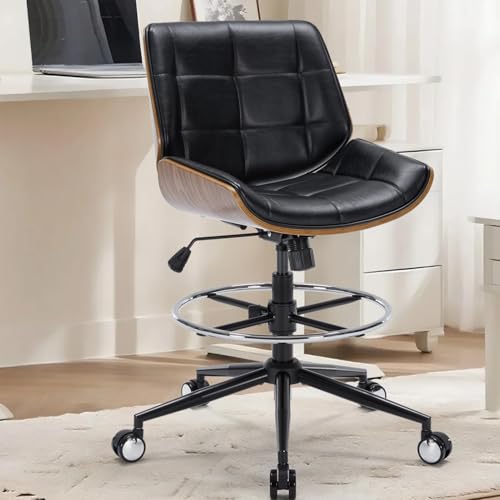
Drafting Office Chair Ergonomic Executive Computer Standing Desk Chair with Adjustable Height and Footrest Ring, Drafting Chair for Counter Height Desk and Drawing (Black)
Check price on Amazon
Primy Tall Drafting Desk Chair - Armless, Adjustable Height, Mesh Back, Rolling, Standing Desk Chair for Art Room, Office or Home (Black)
Check price on AmazonDisclaimer
All About Desks provides educational content only. Not a substitute for professional ergonomist or interior designer services. Always consult a qualified professional for major structural or electrical work involving your desk. Some content may use AI. We are not responsible for product defects, injuries, or outcomes related to desk use. By using this site, you accept these terms. If you do not agree, please leave this website and discontinue its use. Read full disclaimer.