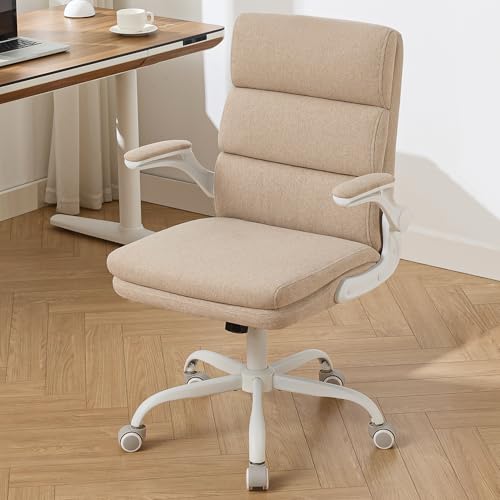
Comfortable Desk Chair for Small Spaces
Discover how to choose a compact ergonomic chair that delivers full-day comfort without crowding your room. Expert guidance on fit, adjustability, and space-saving design for tight home offices.
Explore Buying GuideWhy small spaces need special attention: A standard office chair can dominate a compact room, leaving little room to move and making the desk feel cramped. The right chair for a small space balances ergonomic support with a footprint that fits your floor plan. This guide explains the features that matter most, how to measure your space, and which chair categories suit different needs — so you can sit comfortably without sacrificing room to breathe.
Key Features of a Comfortable Small-Space Chair
Comfort in a small space is not about cutting corners — it is about choosing features that work harder within a tighter footprint. The following characteristics separate a chair that feels supportive all day from one that merely fits the room.
Compact Footprint
A narrower seat width and a reduced wheelbase let the chair slide under a small desk and leave walking room. Look for models designed specifically for tight floor plans.
Lumbar Support
Adjustable or contoured lumbar support protects your lower back during long sessions. Even compact chairs should offer this — it is the single most important comfort feature.
Breathable Backrest
Mesh or ventilated backrests keep you cool in small rooms where air circulation is limited. They also tend to have a slimmer profile than padded backs.
Fold-Up Armrests
Flip-up or rotating armrests let the chair tuck fully under the desk when not in use, freeing floor space. They also reduce shoulder strain while seated.
Adjustable Seat Height
Gas-lift height adjustment aligns the chair with your desk surface. In small spaces, a chair that fits both you and a compact desk is essential for healthy posture.
Controlled Mobility
Locking casters or smooth glides keep the chair from rolling into walls or furniture. In tight rooms, controlled movement protects both the chair and your flooring.
Chair Categories by Fit and Function
Not every small-space chair is built the same way. The table below groups the main categories by their intended use and market tier, so you can match a chair to your room and your working style without relying on guesswork.
| Category | Tier | Best For | Key Traits |
|---|---|---|---|
| Compact Ergonomic Task Chair | mid-range | Daily home-office work in tight rooms | Adjustable lumbar, flip-up arms, narrow base |
| Armless Space-Saver Chair | entry-level | Very small desks and occasional use | Slides fully under desk, lightweight, minimal footprint |
| Premium Compact Mesh Chair | premium | Long work sessions in small home offices | Full adjustability, breathable mesh, refined build |
| Folding or Storable Chair | entry-level | Multi-use rooms and guest workspaces | Folds flat or stacks, stows in a closet, simple comfort |
| Mid-Back Executive Compact Chair | mid-range | Home offices that double as study areas | Padded support, swivel base, moderate footprint |
Tip: Tier labels describe relative market position, not quality alone. An entry-level compact chair can be perfectly comfortable for short daily sessions, while a premium model justifies its place with finer adjustment and longer-session support.
How to Choose: A Step-by-Step Buying Guide
Before comparing models, measure your room and desk. A chair that fits your body and your floor plan will feel comfortable from the first sit — and stay comfortable through a full workday.
1. Measure Your Space
- Floor clearance: Measure the area between your desk and the nearest wall or furniture. Leave at least 60 cm of depth for the chair to roll back.
- Desk clearance: Check the height under your desk. A chair seat should slide underneath with armrests folded, if possible.
- Door and closet access: If the room is very small, confirm the chair can be moved in and out without dismantling it.
2. Match the Chair to Your Body
- Seat height: Your feet should rest flat on the floor with knees at roughly 90 degrees. Adjustable gas lift covers most body types.
- Seat depth: Leave two to three fingers of space between the back of your knees and the seat edge.
- Backrest height: Mid-back chairs suit most small-space desks; high-back chairs offer more support but take up more visual and physical room.
3. Prioritize Adjustability
Small spaces often serve more than one person or more than one task. A chair with adjustable seat height, lumbar depth, and armrest position adapts to different users and postures. If you also use a sit-stand setup, pair the chair with a height-adjustable chair for standing desks so you can alternate between sitting and standing without changing furniture.
4. Consider the Desk Pairing
The chair and desk work as a system. A compact chair pairs well with a small computer desk with a monitor stand or a small office desk with a keyboard tray, because both keep the work surface efficient without demanding extra floor space. If your room is a bedroom, a small bedroom desk setup guide can help you arrange the chair so it does not block traffic paths.
5. Protect Your Flooring
In a small room, a rolling chair can scuff flooring quickly. An under-desk chair mat for hardwood floors keeps casters moving smoothly and protects the surface. For rooms with carpet or mixed flooring, a mat also defines the workspace and keeps the chair from drifting into other zones.
Small-Space Comfort Strategies
Comfort is not only about the chair. How you arrange the chair within the room affects how supported you feel and how much space you retain for everything else.
- Angle the desk into a corner: A corner placement gives the chair more room to roll back without hitting walls.
- Use a flip-up armrest chair: Fold the arms up when you leave the desk so the chair tucks completely underneath.
- Choose a low-profile backrest: A mid-back chair keeps sightlines open and makes a small room feel larger.
- Add a footrest: A small footrest improves circulation and lets you recline slightly without sliding the chair backward.
- Keep cables clear: A tidy under-desk area prevents the chair from catching on cords when you move.
Pro tip: If your desk is height-adjustable, set the desk height first, then adjust the chair so your forearms rest level with the work surface. This sequence prevents the common mistake of over-raising the chair and losing foot contact with the floor.
Ergonomic Setup for a Compact Workspace
Even the most comfortable chair needs a supporting setup. In a small space, every element must earn its place. Use these checkpoints to confirm your chair and desk work together:
- Monitor at eye level: The top of the screen should sit near eye height, so you do not lean forward and lose back support.
- Elbows at 90 degrees: Adjust armrests or desk height so your elbows rest at roughly a right angle.
- Feet flat on the floor: Use a footrest if the chair height leaves your feet dangling.
- Lower back in contact: Set the lumbar support so it fills the curve of your lower back, not the mid-back.
- Regular movement: Even a perfect chair benefits from standing breaks. Pair the chair with a standing desk converter with dual monitor mount if you want to alternate postures without a second desk.
What to Avoid in a Small-Space Chair
Some features that work well in a large office create problems in a compact room. Watch for these pitfalls:
- Oversized wheelbases: A wide base catches on furniture and reduces walking space.
- Fixed armrests: They prevent the chair from tucking under the desk and can crowd the user against a wall.
- High-back executive models in tiny rooms: They dominate the visual field and limit where the chair can be placed.
- Chairs without height adjustment: A fixed seat height rarely matches both the user and a compact desk.
- Heavy chairs without locking casters: They are harder to move in tight quarters and can roll into walls.
Ready to Build a Comfortable Small-Space Workspace?
Explore our related guides on compact desks, ergonomic chairs, and space-saving setups to complete your home office.
Desk and Chair for Small Space GuideFrequently Asked Questions
What makes a desk chair comfortable for small spaces?
A comfortable desk chair for small spaces combines a compact footprint with ergonomic support. Look for adjustable seat height, lumbar support, a breathable backrest, and armrests that flip up or tuck away. A small wheelbase or stationary glides also helps the chair fit under a compact desk without crowding the room.
Can I use a standard ergonomic chair in a small room?
Yes, but a standard ergonomic chair may take up too much floor space in a small room. Compact models with a narrower seat, reduced wheelbase, and foldable armrests offer the same ergonomic benefits while fitting better. Measure your available floor area and desk clearance before choosing.
Is an armless chair better for a small desk space?
Armless chairs save width and slide more easily under a desk, which is helpful in tight spaces. However, armrests reduce shoulder and neck strain during long sessions. The best compromise is a chair with flip-up or adjustable armrests that tuck away when not needed.
How do I keep a desk chair from crowding a small room?
Choose a chair with a compact wheelbase, a low-profile backrest, and armrests that fold or rotate. Place the desk against a wall or in a corner, and consider a chair with casters that lock or glides that slide smoothly. An under-desk chair mat can also protect flooring and keep movement controlled.