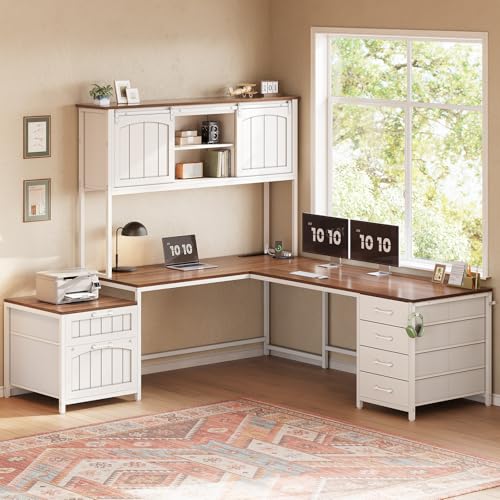
Why a Desk with File Drawer and Hutch is a Smart Investment
A desk with file drawer and hutch isn't just furniture – it's a command center. For professionals who juggle paperwork, tech, and personal items, this configuration offers an integrated storage ecosystem. The file drawer eliminates the need for a separate filing cabinet, saving floor space and keeping important documents organized. The hutch elevates your monitor to eye level (reducing neck strain) and provides shelves for frequently used reference materials, speakers, or even plants.
For small spaces, a hutch desk with file drawer can replace several pieces of furniture. Instead of a desk, a filing cabinet, and a bookshelf, you get one unified unit. This is especially valuable in compact home offices or shared rooms. Many models also include a keyboard tray or CPU holder, further optimizing your workflow.
Key Considerations Before Buying
- Size & Layout: Measure your available floor space and ceiling height. Hutch height varies – ensure it fits under your ceiling or window.
- File Drawer Capacity: Look for full-extension glides that hold letter/legal files without tipping.
- Weight Capacity: The hutch should support monitor weight. Check the manufacturer's specs.
- Assembly & Quality: Solid wood and metal frames offer longevity; laminate is budget-friendly but may not last as long.
- Cable Management: Desks with built-in grommets or rear openings keep cords tidy – essential for a clean setup.
✅ Advantages
- ✔ All-in-one storage (files + shelves)
- ✔ Space-saving – no extra cabinets
- ✔ Ergonomic monitor height
- ✔ Keeps desktop clutter-free
- ✔ Professional look for home offices
⚠️ Drawbacks
- ✘ Can be heavy and hard to move
- ✘ Hutch may block windows or wall art
- ✘ Limited surface depth in some models
- ✘ Assembly can be complex
Ideal Desk Sizes & Configurations
The most common size for a desk with file drawer and hutch is 48" to 60" wide and 24" to 30" deep. This provides enough room for a dual-monitor setup plus a laptop or paperwork. The file drawer is usually on one side, leaving a wide knee space. Some designs place the file drawer in the center, which can be less comfortable if you need legroom.
If you have a corner or L-shaped desk, consider a hutch that attaches to one side – this maintains an open feel while adding storage. For reversible models, you can switch the hutch side to fit your room layout.
Materials & Finishes
Solid wood (oak, walnut, or cherry) offers durability and a premium look but comes at a higher price point (typically $800–$2,500). Wood veneer over MDF or plywood is a good mid-range option, offering a real wood surface at a lower cost. Laminate is the most affordable (under $500) and resists scratches, but may not look as luxurious. Choose a finish that complements your office decor – dark espresso, natural oak, or white/light gray are popular choices.
Assembly & Maintenance Tips
Most desks with hutches ship in flat boxes and require assembly. Follow the instructions carefully, and consider using a power drill (with a clutch) to avoid stripping screws. Secure the hutch to the desktop with the provided brackets – this prevents tipping. For maintenance, dust regularly and clean spills immediately. Use furniture polish or a damp cloth for wood surfaces.
If you're handy, you can even build a custom hutch to match your existing desk. But for most people, buying a pre-designed unit saves time and ensures stability.
🔍 Who Is This Desk For?
- ✔ Home office workers
- ✔ Small business owners
- ✔ Students with many books
- ✔ Freelancers & creatives
- ✔ Anyone who wants a tidy, efficient workspace
If you need to store files, display a monitor, and keep your surface clear, this desk is for you.