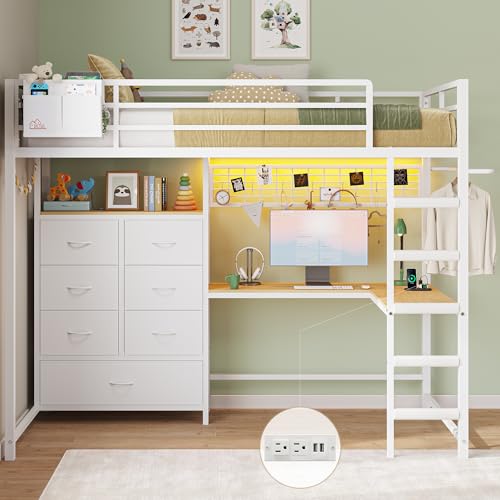
Twin Bunk Bed with Desk and Drawers: The Complete Guide
Everything you need to know about combining sleep, study, and storage in one space-saving unit — layout options, storage types, safety, and how to choose the right model for your room.
Why this guide matters: A twin bunk bed with desk and drawers is one of the most efficient furniture decisions you can make for a compact bedroom. This guide walks you through how these units work, what to look for in construction and safety, and how to match a model to your daily routine — so you can buy with confidence.
What Is a Twin Bunk Bed with Desk and Drawers?
A twin bunk bed with desk and drawers is a multi-functional furniture unit that stacks a twin-size sleeping surface above a lower level built around a workspace and storage. Rather than buying a bed, a desk, and a dresser separately, the unit integrates all three functions into a single footprint.
The lower level typically contains a desk surface with knee clearance, a set of built-in drawers for clothing or supplies, and open shelving or cubbies. The upper bunk holds a standard twin mattress behind full-length guardrails. Access is provided by an integrated ladder, and many models include additional under-desk storage or a rollout drawer.
These designs are popular for shared children's bedrooms, teen rooms, guest rooms, and small apartments where floor space is limited. They also pair naturally with other compact bedroom solutions — for example, a twin loft bed with desk and drawers offers a similar concept with a more open under-bed area, while a twin over full bunk bed with desk and drawers adds a larger lower sleeping surface for guests or siblings of different ages.
Why Choose This Layout?
The main appeal is space efficiency. By stacking the sleeping area, the floor area that would normally be occupied by a separate bed is freed for study and circulation. The benefits go beyond square footage, though:
- Single purchase, single assembly: One unit replaces three separate pieces of furniture, simplifying both buying and setup.
- Cohesive design: Matching finishes and integrated storage look more intentional than mismatched freestanding pieces.
- Defined zones: The desk sits directly beneath the bunk, creating a dedicated study nook that stays visually separate from the sleeping area.
- Everyday practicality: Drawers within arm's reach of the desk keep school supplies, chargers, and clothing organized.
- Adaptability: Many units work for children, teens, and adults, so the furniture can grow with the room's needs.
For rooms that are too narrow for a full bunk plus separate desk, a twin size bunk bed with desk configuration keeps the essential functions without overwhelming the floor plan. If the room has an alcove or a lofted ceiling, a twin loft bed with desk may use vertical space even more effectively.
Common Configurations
Not every "bunk bed with desk" is laid out the same way. The three main configurations are:
1. Desk Under the Upper Bunk
The desk is positioned directly beneath the upper sleeping surface, with the lower level functioning as a study and storage zone. This is the most space-efficient layout and the most common interpretation of a twin bunk bed with desk and drawers. It works best when the room has enough ceiling height for comfortable headroom above the desk chair.
2. Desk Alongside a Lower Bed
Some units place a twin bed on the lower level with the desk built along the side or foot of the bed, while a second twin bunk sits above. This layout suits siblings sharing a room, since both levels have sleeping space and one level adds a workspace. If you need two sleeping surfaces plus a desk, explore a twin over twin bunk bed with desk configuration.
3. Loft-Style with Open Lower Area
In a loft-style design, the upper twin bed is raised higher, and the lower area is left open for the desk and drawers rather than enclosed by a second bed. This is essentially a twin loft bed with desk and storage arrangement and tends to feel airier in small rooms.
If the room also needs extra sleeping capacity for visitors, a twin over full bunk bed with desk and drawers adds a full-size lower bed, while a twin over full bunk bed with stairs and desk replaces the ladder with stairs — a helpful choice for younger children or anyone who prefers a more stable climb.
Drawer and Storage Options
The "drawers" part of the name covers a wide range of storage designs. Understanding the differences helps you avoid a unit that looks right but stores poorly.
| Storage Type | Best For | What to Check |
|---|---|---|
| Built-in under-desk drawers | Clothing, school supplies, chargers | Drawer glide quality; full-extension vs. partial |
| Under-bed rollout drawer | Bedding, off-season clothing | Clearance for the rollout; wheel quality |
| Open cubbies and shelves | Books, bins, display items | Shelf depth and weight rating |
| Stair drawers | Extra clothing and linen storage | Tread width and drawer access |
Drawer glides matter more than many buyers expect. Entry-level units often use basic side-mounted glides, while mid-range and premium models use metal ball-bearing slides that stay smooth over years of daily use. Also confirm whether the drawers have stops to prevent them from pulling out completely.
For desk-level organization, pair the built-in storage with a few purposeful accessories. A tidy cable setup is especially important when electronics live beneath a bunk; see our guide to under desk cable management for routing options. A small organizer keeps pens and notes contained, and under desk storage drawers can supplement the unit's built-in capacity if needed.
Desk surface tip
Because the desk on these units is often fixed in place, protect the work surface before heavy use. A desk mat or blotter reduces scratches from laptops, lamps, and writing instruments, and it makes the workspace look finished without permanent changes.
Frame Materials and Build Quality
Construction quality determines how stable the bunk feels, how long the drawers glide smoothly, and how well the unit handles daily use. The main frame categories are:
Solid Wood
Solid wood frames — pine, oak, maple, and similar — offer the most traditional feel and can be refinished if the surface wears. They tend to be the top-tier choice for longevity, though quality depends on joinery. Look for reinforced corner blocks, mortise-and-tenon or sturdy bolt assemblies, and a finish that resists moisture.
Metal Frames
Steel-framed units are popular in the mid-range segment. They are typically lighter to move, resist warping, and often handle higher weight capacities. High-grade steel with a rust-proof finish is a good sign. Metal frames pair well with slatted bases and tend to be straightforward to assemble.
Engineered Wood
MDF and particle board with laminate or veneer finishes make up many entry-level to mid-tier units. They are uniform and can look quite polished, but they depend heavily on hardware quality — especially for the drawer slides and the bunk's fasteners. Check that the manufacturer specifies reinforced fastening points and a moisture-resistant finish around the desk surface.
Whatever the material, stability is the test that matters. A well-built unit should feel solid when you press on the upper rail, and the ladder should not flex noticeably underfoot. If you are weighing a metal build against wood, our overview of twin loft bed with desk metal designs covers the trade-offs in more detail.
Safety Essentials
Bunk beds carry specific safety requirements because the upper sleeping surface is elevated. These are non-negotiable checks:
- Guardrails: The upper bunk should have full-length guardrails on both sides, with a gap no larger than the standard limit so a child cannot slip through.
- Ladder or stairs: A sturdy ladder with wide, flat treads and a secure attachment point. Stairs are preferable for young children; see the twin over full bunk bed with stairs and desk style for an example of stair access integrated with a desk.
- Wall anchoring: Always install the anti-tip hardware provided. This is the single most important safety step for any bunk or loft unit.
- Weight limits: Respect the stated capacity for both the upper bunk and the desk. Do not exceed them, even temporarily.
- Mattress fit: Use a twin mattress that fits the frame without gaps at the edges; an oversized or undersized mattress compromises the guardrail's effectiveness.
- Assembly: Follow the instructions precisely and re-tighten fasteners after the first few weeks of use.
For households with younger children, also consider the ceiling height above the upper bunk, the placement of the ladder relative to furniture, and whether a nightlight is needed near the ladder for nighttime use.
Buying Checklist
Before you commit to a specific model, run through this checklist. It covers the details that are easy to overlook in product photos.
- Measure the room, not just the wall: Confirm the unit's footprint, the swing of the drawers, and the clearance needed to climb the ladder or stairs.
- Check ceiling height: There should be comfortable sitting headroom at the desk and safe clearance above the upper bunk.
- Verify desk dimensions: Measure the usable desk width and depth, and confirm knee clearance for the intended user.
- Confirm mattress size: The unit should specify the exact twin mattress dimensions it accepts.
- Review the weight ratings: Check both the upper bunk and the desk capacity against the intended users.
- Inspect drawer hardware: Metal ball-bearing slides are more durable than basic plastic or side-mounted glides.
- Look for safety certifications: Confirm the frame meets current bunk bed safety standards and includes anti-tip hardware.
- Plan the cable route: If the desk will host a computer or lamp, decide in advance how power will reach it — our under desk cord organizer guide can help you plan a clean route.
- Consider the ladder side: Make sure the ladder can be placed on the side that suits your room's traffic flow.
- Check the finish: A moisture-resistant, easy-clean finish is valuable on a desk surface that will see daily use.
Tier guidance without the guesswork
Entry-level units typically use simpler glides and lighter frames; mid-range models usually add sturdier hardware and better guardrails; premium and commercial-grade units focus on solid joinery, reinforced fastening, and higher weight ratings. Match the tier to how intensively the unit will be used — a daily-use teen room benefits from the mid-range or premium tier, while a guest room can comfortably use the essential tier.
Who This Unit Suits Best
The twin bunk bed with desk and drawers is a strong fit for several specific situations:
- Shared children's rooms: Two sleeping surfaces plus a desk and storage in one footprint. A twin loft bed with desk and storage layout can also work well when one child needs a larger study area.
- Teen bedrooms: The desk becomes a homework and hobby station, and the drawers handle clothing and supplies. Many teens prefer the more open feel of a twin loft bed with desk for adults style as they grow.
- Guest rooms and small apartments: The unit provides a usable workspace day to day and a comfortable bed for visitors.
- Dorm-style or studio layouts: When every square foot counts, stacking sleep above study is the most efficient arrangement.
If the room's priority is storage rather than sleeping capacity, a twin loft bed with desk and dresser adds a dedicated dresser alongside the desk. And if the room needs to serve two people with separate study areas, a two person desk home office arrangement may complement the bunk better than a single built-in desk.
For rooms where the bunk is one part of a larger furniture set, it can help to coordinate with the rest of the bedroom suite — for example, teenage bedroom furniture with desks often includes matching storage pieces. And when the desk under the bunk is intended for long study sessions, pair it with a supportive seat; our guide to top rated desk chairs for home office covers the key ergonomic features.
Frequently Asked Questions
What is a twin bunk bed with desk and drawers?
A combined furniture unit that stacks one twin sleeping surface above a lower level containing a desk and built-in drawers. It consolidates sleep, study, and storage into a single footprint, which makes it popular for shared bedrooms, teen rooms, and small apartments.
How much floor space does a twin bunk bed with desk and drawers save?
By stacking the bed above the desk area, these units free up the floor area that a separate desk and dresser would otherwise occupy. In most rooms this results in a noticeably more open layout, with the freed space usable for a chair, circulation, or additional storage.
Is a twin bunk bed with desk and drawers safe for children?
Yes, when properly assembled and anchored. Choose models with full-length guardrails on the upper bunk, a sturdy ladder with wide treads, and a frame that meets current safety standards. Always attach the bed to the wall with the included anti-tip hardware and follow the manufacturer's weight limits.
What desk height should I expect on these units?
Desk surfaces on these units usually sit at a standard desk height suitable for seated work. For younger children, confirm the desk height allows their feet to rest flat on the floor or a footrest; for teens and adults, check that there is enough knee clearance beneath the desk.
Can a twin bunk bed with desk and drawers be used by adults?
Many models support adult users, but capacity varies. Review the frame's weight rating, the guardrail height, and the desk's knee clearance. Adult-friendly designs tend to use reinforced metal frames or solid wood construction with higher weight capacities.
Where should the ladder go?
Place the ladder on the side that offers the safest, most natural access — away from doors that swing inward and away from other tall furniture. Check that the ladder is fully secured to the frame and that the floor beneath it is level.
How do I keep the desk area organized under a bunk?
Start with cable management, since power cords and chargers tend to accumulate beneath a bunk. Use a cable tray or sleeve to route cords along the frame, keep the desktop clear with a small organizer, and reserve the built-in drawers for items used daily so the desk stays usable.
Ready to compare models?
Review the recommended twin bunk beds with desk and drawers in the product section below, then check dimensions, safety features, and storage layout against the checklist above before you decide.
Explore Recommended Models