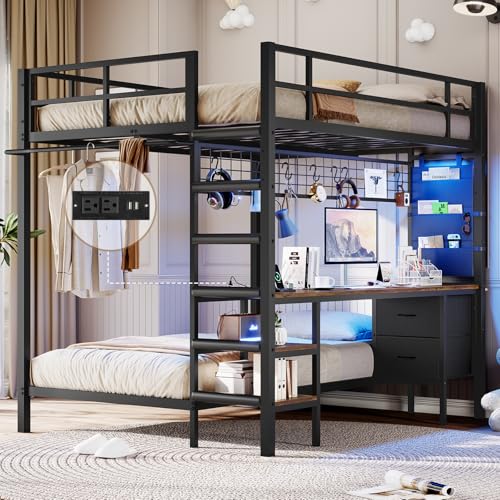
Twin Over Full Bunk Bed with Desk and Drawers: The Complete Buyer's Guide
Discover how a twin over full bunk bed with desk and drawers combines sleeping space, study space, and storage in one footprint. This guide explains layout planning, mattress fit, safety requirements, and the features that matter most before you choose a model.
Why this configuration stands out: A twin over full bunk bed with desk and drawers is one of the most space-efficient furniture choices for shared bedrooms, teen rooms, and guest rooms that also need a study zone. The upper twin bed serves one sleeper, the lower full bed provides extra width, and the integrated desk and drawers replace separate furniture pieces. For readers comparing bedroom furniture and workspace options, this guide walks through the practical decisions step by step.
What Is a Twin Over Full Bunk Bed with Desk and Drawers?
A twin over full bunk bed with desk and drawers is a multi-function bedroom furniture system. The top bunk uses a standard twin mattress, while the bottom bunk uses a standard full mattress. The frame includes an attached desk surface and drawer storage, typically positioned under the lofted section or along the side of the lower bed. The result is a compact footprint that supports sleeping, studying, and organization at the same time.
This design differs from a standard twin over twin bunk bed with desk because the lower level is wider, making it more comfortable for older children, teenagers, or overnight guests. It also differs from a simpler twin bunk bed with desk and drawers, where both sleeping surfaces are the same size. The full-size lower bunk adds flexibility without increasing the room footprint as much as two separate beds would.
Families often compare this layout with other space-saving options such as a twin loft bed with desk and drawers or a twin over full bunk bed with stairs and desk. The right choice depends on how many sleepers the room must accommodate and how much storage the household needs.
Key Benefits of This Bunk Bed Configuration
Three Functions, One Footprint
Sleeping, studying, and storage share the same floor area, which frees up space for movement and play.
Full-Size Lower Bed
The wider lower bunk suits teens and guests better than a twin, improving comfort without adding a second bed.
Built-In Study Zone
An integrated desk creates a dedicated homework and hobby area that stays separate from the sleeping surfaces.
Drawer Storage
Drawers keep clothing, school supplies, and bedding organized and out of sight, reducing clutter in small rooms.
Shared Room Ready
The layout works well for siblings sharing a room, giving each sleeper a defined space and a common study area.
Long-Term Flexibility
The full lower bed remains useful as children grow, and the desk adapts from homework to hobby use.
How to Plan the Layout Before Buying
Measure the room carefully before committing to a twin over full bunk bed with desk and drawers. Because the lower bed is wider than a twin, the unit needs more clearance than a standard bunk bed. Follow these planning steps:
- Measure the available wall length and depth. Confirm the frame dimensions plus a safe walking zone around the bed.
- Check door swing and closet access. A wide unit can block doors or make drawers difficult to open if placed incorrectly.
- Plan the desk chair pull-out area. The desk needs enough open floor space for a chair to slide back comfortably.
- Verify ceiling height. The upper bunk needs safe headroom for the sleeper, and the ceiling must not interfere with guardrails.
- Map the lighting. The area under the loft can feel dim, so plan a task lamp or wall-mounted light near the desk.
- Confirm drawer clearance. Drawers need room to open fully, especially in narrow rooms.
If the room is very tight, consider a twin over full L-shaped bunk bed with desk configuration, which can fit into a corner more efficiently. For rooms with extra vertical space, a stair-access version may improve daily safety and comfort.
Mattress Fit and Sizing Considerations
Mattress sizing is one of the most important details to confirm before purchase. The upper bunk accepts a standard twin mattress, and the lower bunk accepts a standard full mattress. Always check the manufacturer's maximum mattress thickness for the top bunk, because an overly thick mattress can reduce the effective height of the guardrails.
- Upper bunk: standard twin mattress, with thickness within the manufacturer's stated limit.
- Lower bunk: standard full mattress, with a firm enough support base for daily use.
- Guardrails: confirm that the guardrail height remains effective after the mattress is added.
- Foundation: use the slat or foundation system specified by the manufacturer rather than substituting an incompatible base.
If you are also setting up a study area elsewhere in the room, our guide to teenage bedroom furniture with desks explains how to coordinate a desk with the rest of the bedroom layout.
Desk Area: Comfort and Study Ergonomics
The integrated desk is the feature that separates this configuration from a standard bunk bed. A comfortable study area depends on desk height, clearance, and lighting. The desk surface should allow a neutral wrist position when typing or writing, and there should be enough headroom beneath the upper bunk to sit upright without ducking.
Consider these ergonomic points:
- Desk height: the surface should support relaxed shoulders and a neutral wrist angle.
- Headroom: confirm that the space beneath the upper bunk allows comfortable seated posture.
- Task lighting: add a dedicated lamp because the under-bunk area receives limited natural light.
- Chair fit: choose a chair that fits the desk height and the available floor space.
- Cable and device planning: plan where chargers and devices will sit to avoid clutter on the desk surface.
Readers who want a deeper ergonomic reference can explore our broader desk guidance, including top desks and traditional desk comparisons, to understand how desk height and depth affect comfort.
Drawer Storage: What to Expect
Drawer storage is one of the main reasons families choose this configuration. Drawers keep clothing, bedding, school supplies, and small accessories organized without adding a separate dresser. The exact drawer count varies by model, so review the specification carefully.
- Drawer count: models may include two, three, or more drawers depending on the design.
- Drawer glide quality: smoother glides improve daily use, especially in a child's room.
- Drawer depth: deeper drawers hold bulkier items such as sweaters or bedding.
- Safety stops: confirm that drawers include stops to prevent accidental removal.
- Clearance: ensure the drawers can open fully without hitting walls or other furniture.
If additional storage is needed, compare this layout with a twin bunk bed with desk and storage or a twin loft bed with desk and storage to see which storage arrangement fits the room best.
Safety Features to Verify
Bunk Bed Safety Checklist
- Guardrails on the upper bunk with no gaps that could trap a limb.
- Sturdy ladder or stairs with secure attachment points.
- Weight capacity clearly stated for both bunks.
- Corner posts and frame joints that feel solid with no wobble.
- No sharp edges or exposed hardware near sleeping and desk areas.
- Assembly instructions followed exactly, including wall anchoring if recommended.
- Mattress thickness within the manufacturer's stated limit.
Safety is especially important in shared rooms and children's bedrooms. If the room will be used by younger children, review the manufacturer's age recommendations and supervise the transition to the upper bunk. Families comparing layouts may also find a twin low loft bed with desk and storage easier for younger sleepers because the upper level is lower.
Twin Over Full vs. Other Bunk Bed Layouts
The table below compares common bunk bed configurations using neutral tier descriptors rather than numeric figures. Use it to understand the relative positioning of each layout in the market.
| Layout | Tier | Best For | Trade-Off |
|---|---|---|---|
| Twin over full with desk and drawers | Balanced tier | Shared rooms, teens, study zone | Needs more floor width than twin-over-twin |
| Twin over twin with desk | Essential tier | Smaller rooms, younger children | Less sleeping width on the lower bunk |
| Twin loft bed with desk and drawers | Space-saving tier | One sleeper with a large study area | Only one sleeping surface |
| Twin over full with stairs and desk | High-end tier | Families prioritizing easy access | Larger footprint and more assembly |
| Twin over queen with desk | Premium tier | Guest-ready rooms with more sleeping width | Requires substantial room dimensions |
For rooms where the lower bed should be as large as possible, a twin over queen bunk bed with desk is worth reviewing. For smaller shared rooms, a twin over full bunk bed with desk and drawers is often the best balance of sleeping width, storage, and study space.
Materials and Build Quality
Bunk bed frames must support daily use, so construction quality matters. Look for solid frame joints, reinforced connection points, and stable ladder or stair attachment. Metal frames with high-grade steel and durable powder coatings can offer a strong structure, while wood and engineered wood frames can provide a warmer look for bedroom decor. In either case, check that the manufacturer specifies the weight capacity and assembly requirements clearly.
If you plan to use the desk for long study sessions, pair the integrated desk with a supportive chair and a task lamp. Readers exploring broader workspace ideas can browse our top desk overview and up desk guidance to understand how desk orientation affects comfort.
Who Should Consider This Bunk Bed?
A twin over full bunk bed with desk and drawers is a strong fit for several household situations:
- Siblings sharing a room: each child gets a defined sleeping space, and the desk serves as a shared study zone.
- Teen bedrooms: the full lower bed offers more room for older children, while the desk supports homework and hobbies.
- Guest rooms: the lower full bed accommodates adult guests, and the desk doubles as a writing or laptop station.
- Small apartments: one unit replaces a bed, dresser, and desk, which keeps the room functional.
- Transitional rooms: the layout adapts as children grow and study needs change.
If the room is intended for one person who wants a large study surface, a twin loft bed with desk may be a better fit. For households that need two full sleeping surfaces, explore twin size bunk bed with desk options before deciding.
Assembly and Maintenance Tips
Proper assembly and routine maintenance protect both the furniture and the people using it. Follow the manufacturer's instructions exactly, and tighten hardware periodically, especially in the first few months after assembly. Keep the ladder or stairs clear, and check that guardrails remain secure. For the desk surface, use a protective mat if writing or crafting frequently, and keep liquids away from wood and electrical components.
In shared rooms, establish a simple routine for organizing the desk and drawers. A consistent weekly reset keeps the study area usable and reduces clutter around the sleeping areas.
Frequently Asked Questions
What is a twin over full bunk bed with desk and drawers?
It is a multi-function bedroom furniture piece with a twin bed on top, a full bed below, plus an integrated desk and drawer storage. The design combines sleeping, studying, and storage in one footprint, which is ideal for shared rooms, teen bedrooms, and compact spaces.
Who is a twin over full bunk bed with desk and drawers best for?
It suits siblings sharing a room, teenagers who need a study zone, and households that want to maximize floor space. The full-size lower bed offers more sleeping room for older children or guests, while the desk supports homework and hobbies.
How much floor space does this bunk bed layout need?
Because a full-size bed is wider than a twin, the lower level requires more clearance than a standard twin-over-twin bunk. Measure the room carefully, including door swing, closet access, and the desk chair pull-out zone, before choosing a model.
What mattress sizes fit a twin over full bunk bed?
The upper bunk uses a standard twin mattress, and the lower bunk uses a standard full mattress. Always check the manufacturer's maximum mattress thickness for the top bunk, since an overly thick mattress can reduce guardrail effectiveness.
Is a desk under a bunk bed comfortable for studying?
Yes, when the desk height and clearance are appropriate. Look for models with a desk height that supports neutral wrist posture and enough headroom beneath the upper bunk. Task lighting is essential because the area under a bunk can feel dim.
Final takeaway: A twin over full bunk bed with desk and drawers is a practical, space-efficient choice for shared bedrooms, teen rooms, and guest spaces that also need a study zone. Prioritize accurate room measurements, mattress fit, safety features, and drawer clearance before choosing a model. For related bedroom and workspace layouts, compare options such as a twin over full bunk bed with stairs and desk, a twin loft bed with desk and drawers, or a twin over twin bunk bed with desk to find the configuration that fits your room and household best.