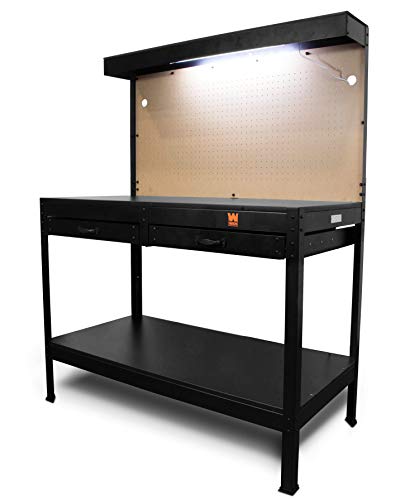
Workshop Desk: Built for Real Work
Heavy-duty workstations for garages, woodshops, and maker spaces. Durable surfaces, rugged frames, and smart storage to keep your projects moving.
SHOP WORKSHOP DESKS💪 A workshop desk is more than a table — it’s the command center for your craft. Whether you’re restoring furniture, tinkering with electronics, or building your next invention, the right workbench gives you stability, organization, and the confidence to take on any project. This guide covers everything from surface materials to frame strength, so you can choose a workshop desk that truly works for you.
What Makes a Great Workshop Desk?
Durable Surface
Solid wood, laminated plywood, or steel tops resist scratches, stains, and heavy impact. Choose a surface that matches your work style.
Heavy-Duty Frame
Steel or thick hardwood legs with cross-bracing support hundreds of pounds without wobbling. Stability is non-negotiable.
Integrated Storage
Drawers, pegboards, shelves, and tool rails keep your workspace organized. Everything within arm’s reach.
Power & Lighting
Built-in outlets, USB ports, and task lighting make it easy to work on intricate projects without distractions.
Workshop Desk Materials: Choose Your Surface
Solid hardwood (like maple or oak) offers a classic workbench feel and can be refinished over decades. It’s ideal for woodworking and hand-tool work. Baltic birch plywood is a favorite among makers for its strength, smoothness, and affordability — it takes screws and clamps well. For heavy mechanical work, steel tops (or stainless steel) resist oil, heat, and dents. Some workshop desks feature laminate surfaces that are easy to clean and resist chemicals, perfect for electronics or painting projects.
When selecting a surface, think about the kind of projects you do most. If you’re a woodworker, a thick hardwood or plywood top lets you drive in holdfasts and bench dogs. If you assemble engines or weld, a steel top with a grounding strap is safer. For general DIY, a high-pressure laminate on a plywood core balances durability and cost.
Don’t forget about desk material care — proper maintenance keeps your workshop desk looking and performing well for years. Regular cleaning and occasional oiling (for wood) or waxing (for steel) preserves the surface.
Frame & Stability: The Backbone of Your Workshop
A workshop desk must withstand heavy loads, hammering, and repetitive motion. Look for tubular steel frames with a powder-coated finish for rust resistance. Leg thickness (at least 2mm wall thickness) and cross-bracing prevent lateral racking. Adjustable leveling feet are a must for uneven garage floors. Some desks offer shelf beams that add rigidity and create extra storage space underneath.
For maximum versatility, consider a height-adjustable frame so you can work sitting or standing. While not as common in workshops, an adjustable desk can be a game-changer for tasks that require precision at different heights.
Weight capacity is critical. A heavy-duty workshop desk should support at least 300–500 lbs of distributed weight. Check the manufacturer’s specs and read reviews from other users who put their workbenches to the test.
Storage & Organization: Tame the Chaos
An organized workshop desk boosts productivity. Under-drawers keep small parts, tools, and fasteners sorted. Pegboards or tool rails mounted on the back or sides give you instant access to frequently used tools. Some workshop desks feature built-in shelves for bins, paint cans, or power tools. Consider adding cable management if you use power tools or electronics on your desk — keeping cords tidy reduces accidents and saves time.
If you work in a garage workspace, you might also benefit from a rolling tool cart or a side cabinet that can be moved around as needed. Modular systems let you expand your storage as your tool collection grows.
Ready to build your dream workshop?
Browse our top-rated workshop desks — built for durability and designed for makers.
Workshop Desk vs. Regular Desk: What’s the Difference?
A standard office desk prioritizes aesthetics and ergonomics for typing and writing. A workshop desk prioritizes durability, load capacity, and workholding. Workshop desks often have thicker tops, heavier frames, and surfaces that resist impacts and spills. They also include features like built-in vices, dog holes, or T-track for clamping. While you can use a regular desk for light hobby work, a dedicated workshop desk will outlast it and provide a much more satisfying experience.
If you’re setting up a DIY desk or a modern industrial desk for light workshop use, choose materials that can handle occasional heavy use. However, for serious work, invest in a purpose-built workshop desk.
Ergonomics in the Workshop
Even in a workshop, comfort matters. The ideal desk height for standing work is around 36–38 inches (depending on your height). For seated work, 28–30 inches is standard. Many workshop desks come at a fixed height, but if you switch between sitting and standing, consider a height-adjustable model. Anti-fatigue mats are highly recommended for long periods of standing.
Good lighting reduces eye strain and prevents mistakes. A clamp lamp or articulating arm light can be attached directly to your workshop desk, providing bright, focused illumination exactly where you need it.
Workshop Desk Accessories to Enhance Productivity
Beyond the desk itself, a few accessories can transform your workflow. A vise or bench clamp holds your workpieces securely. A power strip with surge protection ensures your tools are always ready. Tool organizers (like magnetic strips or drill holsters) keep your most-used items within reach. For detailed work, a monitor stand or riser can lift a computer screen or tablet to eye level, freeing up valuable surface space.
If you use a laptop for referencing plans or tutorials, consider a docking station to keep cables tidy and connect to a larger monitor. And don’t overlook the importance of a comfortable workshop stool or chair — you’ll be spending hours at your desk, so choose one that supports your posture.