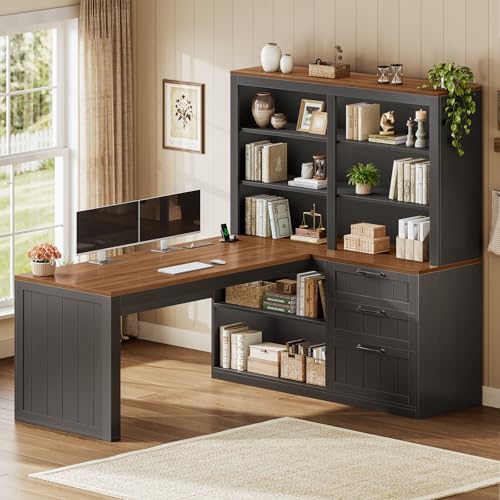
L Shaped Computer Desk with Bookshelf: The Complete Workspace Solution
Discover how an L shaped computer desk with bookshelf combines expansive work surface with vertical storage — ideal for home offices, gaming setups, and study corners. Learn what to look for before you decide.
Explore Recommended ModelsWhy consider an L shaped computer desk with bookshelf? This hybrid furniture piece merges a generous corner work surface with built-in shelving, giving you room for dual monitors, a laptop, reference materials, and decorative items — without consuming extra floor space. It is a smart solution for rooms where every square foot matters, and it keeps books, binders, and accessories within arm's reach rather than scattered across the room.
Key Benefits of an L Shaped Desk with Bookshelf
Expansive Corner Work Surface
The L configuration wraps around a corner, giving you more usable desk area than a straight desk of similar footprint. You can dedicate one wing to your computer and the other to paperwork or creative work.
Vertical Storage Integration
Built-in bookshelves turn unused wall height into functional storage. Keep reference books, manuals, and office supplies organized without adding a separate bookcase.
Space-Efficient Design
By combining desk and shelving into one unit, you avoid the clutter of mismatched furniture. This is especially valuable in small home offices and bedrooms.
Improved Workflow
Having books, binders, and frequently used items on shelves directly above or beside your work surface reduces the need to get up, keeping you focused and productive throughout the day.
Flexible Layout Options
Many models offer reversible configurations, letting you place the bookshelf on the left or right wing depending on your room layout and natural light direction.
Enhanced Aesthetic Cohesion
A matched desk-and-shelf unit creates a unified look that is more visually appealing than separate pieces. It anchors the room and makes the workspace feel intentional.
What to Look for in an L Shaped Computer Desk with Bookshelf
Before choosing a model, evaluate these critical factors to ensure the desk meets your daily needs and fits your room:
Surface Material and Durability
The desktop material affects both appearance and longevity. Engineered wood with a laminate or veneer finish offers a smooth, easy-to-clean surface at an entry-level tier. Mid-range models often use thicker particle board or MDF with reinforced edges. High-end tier desks may feature solid wood or bamboo surfaces with natural grain patterns. If you want a natural look, consider models that pair with a wood desktop for warmth and durability.
Shelf Capacity and Configuration
Bookshelf sections vary from two open tiers to five or more adjustable shelves. Check the weight capacity per shelf — especially if you plan to store heavy reference books or binders. Adjustable shelves give you flexibility for taller items, while fixed shelves typically offer greater structural stability. Some models include a mix of open shelving and closed cubbies for concealed storage.
Frame Construction and Stability
A desk with an integrated bookshelf carries more weight and is taller than a standard desk, so frame rigidity matters. Look for reinforced steel frames or solid wood legs with cross-bracing. Models described as heavy-duty or commercial-grade typically use thicker gauge steel and dual support beams. If you plan to place a heavy monitor or printer on the desk, prioritize stability over lightweight construction.
Cable Management and Power Access
An L shaped desk often hosts multiple devices — monitors, printers, speakers, and chargers. Built-in cable management features such as grommets, under-desk trays, or raceways keep wires tidy. Some models include built-in power outlets or USB ports, which are convenient for charging devices without reaching for a wall socket. If cable clutter is a concern, look for a model with dedicated cable management features.
Dimensions and Room Fit
Measure your available corner space carefully. L shaped desks vary widely in width, depth, and overall footprint. Consider how the desk will interact with doors, windows, and traffic flow. A reversible design lets you orient the longer wing to suit your room. For tighter spaces, a compact L shaped model may be the better fit.
Comparing Desk Tiers at a Glance
Use this tier-based comparison to understand how features differ across market segments. The descriptors below are relative and help you match a model to your needs.
| Tier | Typical Materials | Shelf Configuration | Best For |
|---|---|---|---|
| Entry-Level | Laminate over particle board, basic steel frame | 2–3 fixed open shelves | Students, light home office use, first workspace |
| Mid-Range | Thicker MDF with veneer, reinforced steel legs | 3–4 shelves, some adjustable | Daily home office work, moderate storage needs |
| Premium | Solid wood or bamboo top, heavy-duty frame | 4–5 adjustable shelves, mixed open/closed | Professional-grade setups, heavy equipment, long-term use |
| Luxury | Hardwood, custom finishes, commercial-grade hardware | Customizable shelving with integrated lighting | Executive offices, design-focused spaces, maximum durability |
Setup Tips for Your L Shaped Desk with Bookshelf
- Position monitors at eye level. Use a monitor stand or adjustable arm to raise your screen and reduce neck strain.
- Keep frequently used books on the middle shelf. Items you reach for daily should be within easy arm's reach, while archival materials can go on higher shelves.
- Use the corner for your primary workstation. The deepest part of an L shaped desk is usually the corner, making it ideal for your main monitor or laptop.
- Add a desk organizer for small items. A small desk organizer keeps pens, clips, and notes tidy without cluttering the shelf space.
- Route cables along the shelf frame. Use adhesive clips or a cable sleeve to keep power and data cables from draping across your work surface.
- Anchor the unit to the wall if recommended. Tall bookshelf desks can tip if heavily loaded and bumped; follow the manufacturer's safety guidance.
Frequently Asked Questions
Can an L shaped computer desk with bookshelf support dual monitors?
Yes. Most mid-range and premium models offer a wide enough corner surface and sufficient weight capacity for two monitors. Check the desktop weight rating and consider a dual monitor arm clamped to the rear edge for a cleaner setup. For more layout ideas, see our guide to multi-monitor configurations.
Is an L shaped desk with bookshelf suitable for a small room?
It can be, provided you measure carefully and choose a compact model. The L shape uses corner space efficiently, and the integrated bookshelf eliminates the need for a separate bookcase. For very tight rooms, a small corner computer desk may be a better alternative.
How do I keep the bookshelf section organized?
Group items by frequency of use: daily references on the middle shelves, occasional items higher up. Use bookends for stability and small bins for loose supplies. A desk file organizer can also help keep documents structured and accessible.
Can I assemble an L shaped desk with bookshelf by myself?
Assembly difficulty varies by model. Entry-level models with cam-lock and screw construction are usually manageable for one person with basic tools. Larger premium or luxury units may recommend two people due to weight and panel size. Allow two to three hours and follow the instructions carefully.