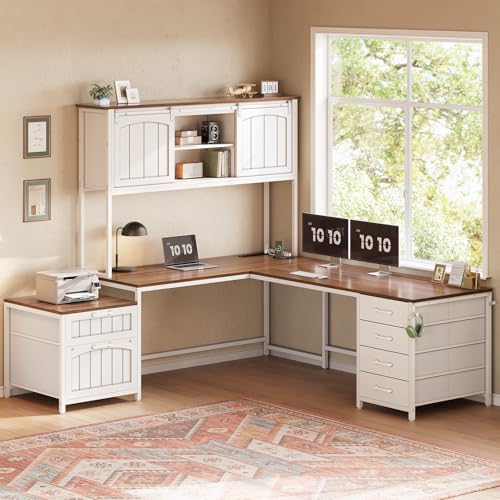
L Shaped Desk with Storage and Hutch: The Complete Buying Guide
Everything you need to know before choosing a corner desk that combines a spacious L-shaped work surface with a hutch and built-in storage — for a productive, organized home office.
An L shaped desk with storage and hutch is one of the most practical investments for a home office. The L-shaped configuration wraps around a corner to maximize usable surface area, while the hutch adds vertical shelving and the storage component keeps paperwork, supplies, and peripherals out of sight. Together, these three features create a workspace that is both expansive and organized — a combination that standard rectangular desks rarely achieve.
This guide walks you through the design variations, materials, and practical considerations that matter when you are evaluating models in this category. By the end, you will understand which configuration suits your room, your workflow, and your long-term needs.
Why an L Shaped Desk with Storage and Hutch Works
The primary advantage of this desk style is spatial efficiency. Instead of scattering storage across multiple cabinets or wall shelves, the hutch and drawers consolidate everything within arm's reach. The L shape lets you dedicate one arm to your primary monitor and keyboard while using the return for a secondary screen, printer, or writing area.
From an ergonomic standpoint, the corner placement encourages you to rotate your body slightly as you move between tasks, which can reduce the stiffness that comes from sitting in a single fixed position all day. The hutch also lifts frequently used items — reference books, folders, small devices — to eye level, freeing the main surface for active work.
Key Configurations to Compare
Not all L shaped desks with storage and hutch are built the same. The differences usually come down to three variables: hutch placement, storage type, and desk material.
Hutch Placement
- Left return hutch: The hutch sits on the shorter arm that extends to the left. This suits rooms where the main wall is on your right side.
- Right return hutch: The mirror image — ideal when your primary wall or window is on the left.
- Reversible hutch: Can be assembled on either side. The most versatile option if you may relocate the desk later.
If you are unsure which side you need, measure your room and sketch the desk footprint on paper. The hutch should never intrude on the path to your chair or block a doorway. For more specific guidance, see this comparison of L shaped desks with a hutch on the left side and right-side hutch models.
Storage Types
- Drawer pedestals: Typically two or three drawers, sometimes with a filing drawer at the bottom. Good for letter and legal folders.
- Open shelves: Built into the hutch or the return leg. Best for display items, books, and frequently accessed supplies.
- Combination units: A hutch with cubbies plus a drawer pedestal. This is the most common setup in the mid-range and premium tiers.
Models with drawers and a hutch offer the most balanced storage profile because they separate concealed storage (drawers) from open display (hutch shelves). If filing is a priority, look for a file cabinet and hutch combination.
Material and Build Quality
Entry-level models often use engineered wood with a laminate finish. Mid-range options typically step up to thicker particle board with reinforced edges or MDF with a veneer. Premium and commercial-grade desks frequently use solid wood or high-grade steel frames with wood veneer tops. The hutch construction should match the desk — a flimsy hutch on a sturdy desk is a common weak point in lower-tier products.
| Tier | Typical Build | Best For |
|---|---|---|
| Entry-level | Laminate over particle board, basic hutch with open shelves | Students, light home-office use |
| Mid-range | Reinforced MDF or veneer, hutch with cubbies plus drawer pedestal | Full-time remote workers |
| Premium | Solid wood or heavy-duty steel frame, solid wood hutch | Executives, creative professionals |
| Commercial-grade | Steel frame with laminate or wood top, modular storage | High-traffic offices, shared spaces |
Features That Make a Difference
Beyond the basic shape and storage, several features separate a good desk from a great one. Pay attention to these when comparing models:
- Cable management: Grommets, under-desk trays, or built-in channels keep wires from tangling. A hutch with a rear cutout for cables is a sign of thoughtful design.
- Keyboard tray: A pull-out tray frees surface space and can improve typing posture. Models with a keyboard tray are worth considering if you use a full-size keyboard.
- Weight capacity: The desk should support your monitor setup, printer, and any equipment without flexing. Check the specification for both the main surface and the hutch shelves.
- Reversible assembly: If you are not certain about your room layout, a reversible model saves you from buying a new desk later.
- Finishing details: Edge banding, pre-drilled holes, and included hardware all indicate build quality. Reviews that mention wobbly hutches or misaligned drawers are a red flag.
For a broader look at storage-focused L shaped desks, explore the L shaped desk with storage collection, which covers models without a hutch if you prefer an open, airy setup.
How to Choose the Right Size
Measure your available corner space before you browse. The two arms of an L shaped desk typically range from 50 to 70 inches on the long side and 30 to 50 inches on the return. Leave at least 30 inches of clearance for your chair and 36 inches for walkways.
If your room is small, look for a model with a short return rather than a full second workspace. Some designs pair a full-length main desk with a narrow return that holds the hutch and drawers — this gives you the storage benefit without dominating the room. For compact spaces, consider an L shaped desk with drawers designed for small spaces.
Materials and Finish Considerations
The material affects durability, appearance, and maintenance. Wood-finish desks — whether solid wood, veneer, or laminate — blend well with most home-office decor. White and light finishes make small rooms feel larger. Dark wood and metal combinations suit industrial or executive styles.
If you prefer a natural look, explore L shaped wood desks with a hutch. For a brighter, modern aesthetic, a white L shaped desk with hutch reflects light and pairs easily with colorful accessories.
Consider the surface finish as well. Laminate is easy to wipe clean but can chip at the edges. Veneer offers a more authentic wood grain but requires gentle care. Solid wood is the most durable over time but needs occasional conditioning.
Assembly and Setup
Most L shaped desks with hutches ship flat-packed and require two people for assembly. The hutch is usually the heaviest single component, so plan to attach it to the desk before flipping the unit upright. Set aside two to three hours for a typical mid-range model.
Before assembly, confirm that all hardware is present and that the pre-drilled holes align. If you are not comfortable with tools, many retailers offer assembly services — worth considering for premium models with complex hutch attachments.
Once assembled, anchor the hutch to the desk if the manufacturer provides brackets. A tall hutch can tip if the desk is bumped, especially in households with children or pets.
Common Mistakes to Avoid
- Ignoring the hutch depth: A deep hutch reduces usable desk depth. Measure the combined depth to ensure your monitor still sits at a comfortable viewing distance.
- Skipping cable planning: Decide where your power outlets and router will sit before you assemble. Retrofitting cable management is far more tedious.
- Overlooking the return side: The return arm is often where the hutch and drawers live. Make sure the return side matches your dominant hand and room layout.
- Choosing style over stability: A visually striking desk with a wobbly hutch undermines productivity. Prioritize structural reviews over aesthetics.
Frequently Asked Questions
Final Checklist Before You Decide
- Measure your corner space and confirm the desk footprint fits with clearance for your chair.
- Decide whether you need a left, right, or reversible hutch.
- Choose between drawers, open shelves, or a combination based on what you store.
- Check the material tier against your expected daily use.
- Confirm cable management options and weight capacity.
- Read reviews that specifically mention hutch stability and drawer alignment.
Ready to compare models? Browse the curated selection below to find an L shaped desk with storage and hutch that matches your room and workflow.