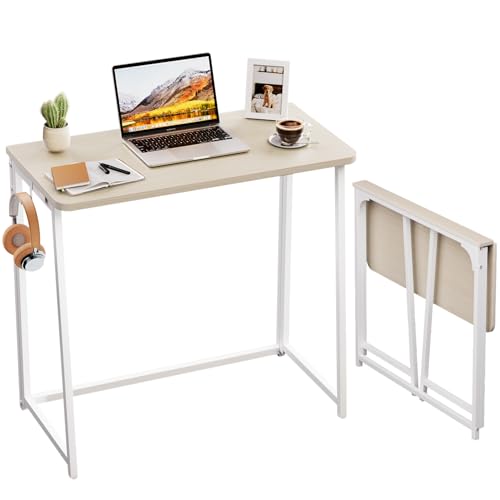
Folding Desks: Smart Space-Saving Workspace Solutions
Discover how folding desks transform small rooms, studio apartments, and multi-purpose spaces into productive workstations. Expert guidance on foldable desk types, materials, stability, and setup strategies for flexible living.
EXPLORE THE BUYING GUIDEWhy folding desks matter: Not everyone has a dedicated room for a home office. Folding desks solve the space equation by giving you a full workspace when you need it and reclaiming that square footage when you do not. Whether you live in a compact apartment, share a room, or simply want a flexible workspace that adapts to your day, a folding desk delivers function without permanent footprint.
What Exactly Is a Folding Desk?
A folding desk is a workspace that collapses, folds flat, or tucks away when not in active use. Unlike a traditional desk that occupies permanent floor or wall space, a folding desk uses hinged joints, folding frames, or wall-mounted brackets to transition between a full workstation and a compact stored position. The core appeal is flexibility: you get a functional surface for focused work, then reclaim that area for living, sleeping, or entertaining.
Folding desks come in several distinct formats. Some are freestanding units with legs that fold inward like a card table. Others are wall-mounted panels that drop down to create a surface and fold back up flush against the wall. A third category includes convertible designs that integrate storage or shelving into the folding mechanism. Each format serves a different spatial constraint and workflow preference.
The modern folding desk market has evolved far beyond flimsy camp tables. Today you can find models with reinforced steel hinges, solid wood surfaces, cable management channels, and weight capacities that support full desktop computer setups. The key is understanding which tier of construction matches your daily demands.
Main Types of Folding Desks
Freestanding Foldable Desks
Legs fold inward or collapse under the surface. These are the most portable option, requiring no wall mounting. Best for renters, temporary setups, and rooms where drilling into walls is not permitted. Entry-level models suit laptops and light writing; mid-range versions handle monitors and desktop accessories.
Wall-Mounted Fold-Down Desks
Mount permanently to a wall stud and fold down when needed. These save the most floor space and often include integrated shelving or pegboard backing. Require secure anchoring and careful measurement. Ideal for home offices, craft rooms, and kitchen workspaces where floor area is precious.
Convertible & Storage Folding Desks
Combine a folding surface with drawers, cubbies, or cabinet storage. Some models fold into a self-contained cabinet that hides the workspace entirely. These are the most furniture-like options, blending workspace function with living-room aesthetics. Best for studio apartments and multi-use rooms.
Materials, Construction & Durability
The longevity of a folding desk depends almost entirely on two components: the hinge mechanism and the surface material. A folding desk endures repeated open-close cycles, so the hinge is the critical failure point. High-grade steel hinges with locking pins or gas-assisted mechanisms last significantly longer than basic piano hinges or plastic joints.
Surface materials follow the same hierarchy you would expect from traditional desks. Solid wood and bamboo offer the best durability and repairability. High-grade engineered wood with laminate or veneer coating provides a stable, moisture-resistant surface at a lower weight. MDF and particle board are common in entry-level folding desks but can degrade at the hinge attachment points under repeated stress. For a deeper dive into surface options, explore our guide to wood desktops and material comparisons.
Frame construction matters just as much. Aluminum frames are lightweight and rust-resistant, making them ideal for portable folding desks. Steel frames provide maximum stability for permanent or semi-permanent setups. Look for reinforced cross-bracing and locking mechanisms that prevent wobble during typing or writing.
Folding Desk Tier Comparison
The table below compares folding desk categories by construction tier, intended use, and key characteristics. Use it to match your needs with the right class of desk.
| Tier | Best For | Frame & Hinge | Surface Material | Weight Capacity |
|---|---|---|---|---|
| Entry-level | Occasional laptop work, writing, temporary setups | Basic steel or aluminum, simple folding hinges | MDF or thin laminate | Light to moderate |
| Mid-range | Daily home office, single monitor, study desk | Reinforced steel, locking hinges | Engineered wood with durable laminate | Moderate to heavy |
| Premium | Full desktop setups, dual monitors, professional use | High-grade steel, gas-assisted or heavy-duty locking hinges | Solid wood, bamboo, or premium veneer | Heavy-duty |
| Luxury / Commercial-grade | Permanent home office, design-focused spaces | Architectural-grade hardware, integrated cable management | Solid hardwood, custom finishes | Maximum residential capacity |
Advantages and Trade-offs of Folding Desks
✅ Advantages
- Reclaims floor space when not in use
- Ideal for studio apartments and shared rooms
- Portable options move between rooms easily
- Wall-mounted versions create a dedicated workspace without permanent furniture
- Modern designs blend with living-room aesthetics
- Encourages a clear-desk reset at the end of the workday
⚠️ Trade-offs
- Requires setup and takedown routine for freestanding models
- Wall-mounted units need secure anchoring and stud finding
- Hinge mechanisms are the primary wear point over time
- Entry-level models may flex under heavy equipment
- Limited built-in cable management on some designs
- Folded depth must be measured against your storage space
How to Choose the Right Folding Desk
1. Measure Your Space and Storage Clearance
Start with the wall or floor area where the desk will live when open, then measure the folded footprint. A wall-mounted fold-down desk might extend 20 to 24 inches from the wall when open but sit nearly flush when closed. Freestanding models fold to a depth of 4 to 8 inches. Confirm that the folded position fits your closet, behind a door, or against a wall without blocking traffic.
2. Match the Desk to Your Equipment
A laptop and notebook demand far less from a folding desk than a dual-monitor desktop setup. If you use a single monitor, look for a mid-range model with a reinforced hinge and a surface depth of at least 20 inches. For dual monitors or a full desktop tower, choose a premium folding desk with a steel frame and a weight capacity rated well above your equipment load. Consider a computer desk with monitor shelf if you need vertical separation without sacrificing surface area.
3. Evaluate the Hinge and Locking Mechanism
This is the single most important specification. Ask whether the hinge locks firmly in the open position and whether replacement parts are available. Gas-assisted hinges make opening and closing smoother on heavier surfaces. Locking pins or cam-lock mechanisms prevent accidental collapse. Avoid designs where the surface rests only on friction or a simple hook.
4. Consider the Surface Material
Solid wood and bamboo surfaces resist scratches and can be refinished. Laminate surfaces resist moisture and stains but cannot be repaired if chipped. If the desk will be used for writing, drawing, or craft work, a smooth solid-wood surface provides the best tactile experience. For a broader comparison, see our wood desktops guide.
5. Plan for Cable and Accessory Management
A folding desk that folds flat cannot keep cables permanently routed. Use detachable cable clips, a portable desk file organizer, and a small desk organizer that can be lifted off the surface when you fold the desk away. Wall-mounted models can include a pegboard or shelf above the desk for permanent storage. For more storage ideas, explore small desk storage solutions.
6. Decide Between Freestanding and Wall-Mounted
Freestanding folding desks suit renters and rooms where wall drilling is not allowed. They are also easier to relocate. Wall-mounted fold-down desks save more floor space and often look more integrated, but they require secure anchoring and limit where the desk can be placed. If you need a dedicated workspace in a small bedroom, a wall-mounted design paired with small bedroom desk ideas can maximize every inch.
Setup and Ergonomics for Folding Desks
A folding desk is only as good as the working posture it supports. Because folding desks often sit at a fixed height, measure your seated elbow height and compare it to the desk surface. If the surface is too high or too low, use an adjustable height desk chair for home office to bridge the gap. For standing use, a standing desk converter with dual monitor mount can turn a fixed-height folding desk into an alternating sit-stand workstation.
Monitor placement is critical on a compact surface. The top of the screen should sit at or slightly below eye level, roughly an arm's length away. If the folding desk surface is shallow, a desk monitor stand or a small monitor shelf raises the display without pushing it too close to your face. Keep the keyboard and mouse at elbow height, and use a desk mat to define the work zone and protect the surface.
For anyone who alternates between sitting and standing, a folding desk can pair with a standing desk converter or a dedicated adjustable height standing desk for more permanent setups. If you are still exploring height options, our office desk height calculator helps you find the right surface height for your body.
Space-Saving Strategies That Work With Folding Desks
Folding desks perform best when they are part of a deliberate space plan. Here are proven strategies:
- Vertical storage: Use wall-mounted shelves or a pegboard above the desk so that when the surface folds away, your supplies remain organized and off the floor.
- Multi-purpose furniture: Pair a folding desk with a desk with storage drawers and shelves or a computer desk with printer shelf if you need permanent storage alongside a flexible work surface.
- Corner placement: A small corner computer desk or corner computer desk with keyboard tray and storage can use dead corner space that would otherwise go unused.
- Bedroom integration: In a small bedroom, a folding desk can share the room with a bed without dominating the layout. Explore small bedroom desk ideas for layout inspiration.
- Closet conversion: A folding desk inside a closet or alcove creates a dedicated office that disappears when the doors close.
If you are furnishing a compact apartment, combine a folding desk with a comfortable desk chair for small spaces and a small desk organizer to keep the entire setup lean and mobile.
Common Mistakes to Avoid
- Overloading an entry-level model: Placing a heavy monitor or desktop tower on a folding desk designed for a laptop stresses the hinge and shortens the desk's life. Match the tier to your equipment.
- Ignoring the folded depth: A desk that folds flat but still protrudes 10 inches from the wall may not solve your space problem. Measure the closed position before purchasing.
- Mounting a wall desk without studs: Wall-mounted folding desks must anchor into wall studs or proper masonry anchors. Drywall alone will not hold the repeated load of opening and leaning on the desk.
- Skipping the stability test: Always test for wobble before committing to daily use. A desk that shifts during typing will undermine focus and may damage equipment.
- Forgetting cable management: Cables that stay plugged in defeat the purpose of a fold-away desk. Use detachable clips and a portable organizer so the surface can truly clear.
- Choosing aesthetics over hinge quality: A beautiful surface on a weak hinge is a short-lived desk. Prioritize the mechanism first, then the finish.
Frequently Asked Questions About Folding Desks
Final Thoughts
A folding desk is more than a space-saving trick. It is a practical answer to the modern reality of compact living and flexible work. Whether you need a full-time home office that disappears at dinner time, a student workspace in a shared bedroom, or a craft station that folds away in a studio apartment, the right folding desk delivers function without permanent footprint. Prioritize the hinge, match the tier to your equipment, and plan the surrounding storage and ergonomics. Do that, and your folding desk will serve you reliably for years of open-and-close cycles.