Work From Home Desk and Chair Set: The Complete Buyer's Guide
Choosing a coordinated desk and chair set is one of the most consequential decisions for your home office. This guide walks you through ergonomic alignment, material choices, space planning, and tier-by-tier comparisons so you can commit with confidence.
Explore Recommended SetsWhy a matched set matters: When desk height and chair geometry are designed to work together, you reduce the risk of wrist strain, neck tension, and lower-back fatigue. A pre-coordinated set removes the guesswork of mixing separate components and ensures your monitor, keyboard, and seating position align from day one.
What Defines a Good Work From Home Desk and Chair Set
A work from home desk and chair set is more than two pieces of furniture sold together. The best sets are engineered as a system: the desk surface height, chair seat height, armrest clearance, and monitor viewing angle are all calibrated to keep you in a neutral posture throughout the workday. Before comparing individual models, it helps to understand the four pillars that separate a functional set from a frustrating one.
Ergonomic Alignment
The chair seat should allow your feet to rest flat on the floor with thighs roughly parallel to the ground. The desk surface should sit at or slightly below elbow height when your shoulders are relaxed. In a well-designed set, these two measurements are complementary. If you are piecing together separate items, consult a desk height calculator or measure your seated elbow height directly. Sets that include adjustable-height desks offer the most flexibility because they accommodate multiple users and posture changes through the day. You can read more about height-adjustable options in our guide to a work desk that goes up and down.
Surface Area and Layout
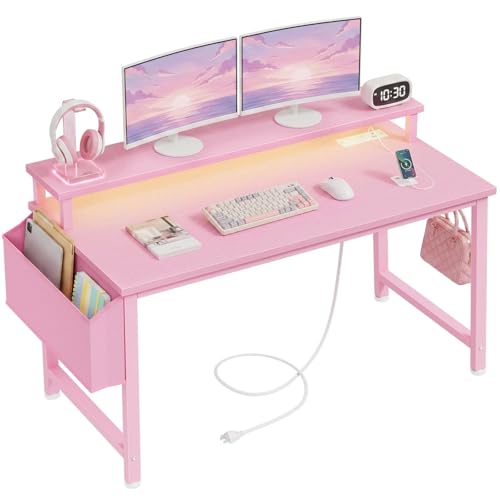
Most home office workers need at least 48 inches of desk width to accommodate a monitor, keyboard, and a notepad without feeling cramped. If you run a dual-monitor configuration, aim for 55 inches or more. Our article on a work from home desk for 2 monitors breaks down the clearance required for monitor arms and speakers. For compact rooms, a work from home desk setup for small space can still deliver full functionality if the depth and cable routing are well planned.
Chair Ergonomics
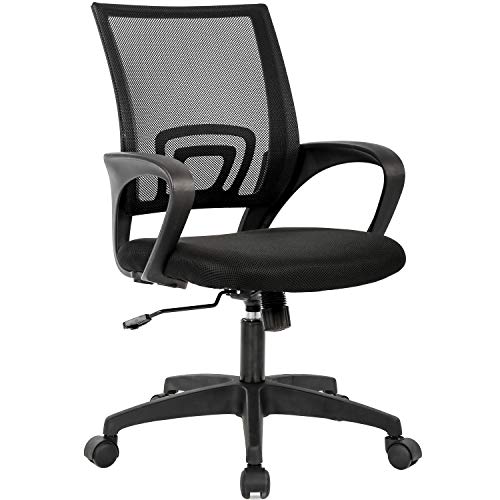
The chair in a matched set should offer adjustable seat height, a lumbar support that contacts the curve of your lower back, and armrests that can be positioned so your elbows rest at roughly 90 degrees. Breathable mesh backs suit warm rooms and long sessions, while upholstered seats provide more cushioning for shorter sitting intervals. Our overview of high-back desk chairs explains how back height affects shoulder support, and our upholstered desk chair guide covers fabric durability and maintenance.
Build Quality and Materials
Desk frames in entry-level sets are typically steel tube with a powder-coated finish; mid-range and premium sets often use thicker gauge steel, reinforced crossbars, and heavier desktop substrates such as MDF with laminate or solid wood veneer. Chair bases range from nylon to reinforced nylon to polished aluminum. A stable, wobble-free desk and a chair with a smooth-rolling, five-point base are the minimum for daily use. If you prefer natural surfaces, our guide to a wooden desk covers grain, finish, and care considerations.
Desk and Chair Set Tiers: What to Expect at Each Level
Rather than anchoring decisions to numeric figures, it is more useful to understand what each market tier delivers in terms of construction, adjustability, and longevity. The table below uses a universal tier system that applies across the category.
| Tier | Typical Construction | Adjustability | Best For |
|---|---|---|---|
| Starter Tier | Steel tube frame, laminated particle board top, nylon chair base | Fixed desk height; chair seat height only | Occasional use, students, temporary setups |
| Essential Tier | Reinforced steel frame, MDF with laminate, reinforced nylon base | Fixed or manual height desk; chair with tilt and lumbar pad | Part-time remote work, light daily use |
| Mid-Range Tier | Heavy-duty steel frame, thicker desktop, aluminum chair base | Electric height adjustment on desk; multi-adjustable chair | Full-time remote workers, shared home offices |
| Premium Tier | Commercial-grade steel, solid wood or high-pressure laminate, polished aluminum | Dual-motor sit-stand desk; ergonomic chair with 4D armrests | Professionals, long daily sessions, multi-user homes |
| Luxury Tier | Architectural-grade materials, integrated cable management, designer finishes | Programmable height presets; fully customizable chair | Executive home offices, design-forward spaces |
As you move up the tiers, the most noticeable improvements are in stability at standing height, smoothness of chair casters, and the quality of the surface finish. A mid-range set is generally the sweet spot for full-time remote workers because it balances durability with the adjustability needed to alternate between sitting and standing. Premium and luxury tiers add refinement, longer warranty coverage, and materials that resist wear over many years of daily use.
Sizing and Space Planning for Your Home Office
Before committing to a set, measure your room and map the footprint. A standard desk-and-chair set needs roughly 60 inches of wall width and 48 inches of depth clearance, including the space the chair needs to roll back and for you to stand up. In a bedroom or shared living area, a compact set with a 40- to 48-inch desk can work if you pair it with a chair that tucks fully under the surface.
Corner and L-shaped configurations maximize usable surface without consuming additional floor area. Our guide to a work from home desk for small spaces covers fold-down and wall-adjacent options, while our overview of a small desk and chair set for bedroom details how to fit a complete workstation into tight quarters. If you are setting up a dedicated room, a working desk for home with integrated storage keeps supplies within reach without adding separate shelving.
Clearance Checklist
- At least 30 inches of clearance behind the chair for rolling and standing
- Desk surface depth of 24 inches or more for monitor and keyboard comfort
- Monitor top edge at or slightly below eye level when seated
- Room for a footrest if the desk height cannot be lowered to your seated elbow height
- Accessible power outlet or surge protector within cable reach
Features That Matter Most in a Desk and Chair Set
Cable Management and Power
Look for desks with grommets, under-desk cable trays, or integrated raceways. Sets that include built-in USB ports or power outlets reduce the tangle of adapters and chargers. Our article on a desk with USB port and power outlet explains how integrated power affects cable routing and device charging.
Keyboard Trays and Surface Accessories
A keyboard tray can lower your typing surface to a more ergonomic height while freeing the main desktop for documents or a second display. If you choose a set without a tray, consider an aftermarket mount; our guide to an under desk keyboard tray mount covers installation and compatibility. Pairing your set with a wrist rest further reduces strain during long typing sessions.
Chair Adjustability Details
Seat-depth adjustment matters for users with longer or shorter femurs. A seat pan that is too deep can press against the back of the knee, while one that is too shallow reduces thigh support. Armrest height and width adjustment help you avoid shoulder hunching. For users with larger frames, our guide to big and tall desk chairs covers reinforced bases and wider seat pans. Kneeling chairs are an alternative for some users; see our kneeling desk chair overview for the trade-offs.
Storage and Organization
Sets that include drawers or side storage keep paperwork and peripherals out of sight. A computer desk with a drawer for keyboard or a model with a sliding keyboard tray combines storage with ergonomic typing height. If your set does not include drawers, a monitor stand for desk with drawer adds both screen elevation and small-item storage.
Alternative Configurations Worth Considering
Not every home office suits a traditional rectangular desk with a task chair. If your room is narrow or multi-purpose, consider these configurations:
- Corner sets: A small corner computer desk with storage fits into unused corners and often includes shelves for supplies.
- L-shaped sets: An L-shaped computer desk with drawers and shelves provides a dedicated typing zone and a separate area for paperwork.
- Standing desk combos: A height-adjustable desk with drawers paired with an ergonomic chair lets you alternate posture through the day.
- Space-saving sets: A space-saving folding desk can be paired with a lightweight chair that tucks away when the workday ends.
- Complete workstation: A workstation desk with integrated shelving and cable management reduces the need for separate furniture.
For households with children or students, a student desk and chair set for home scales the ergonomic principles down to smaller bodies. Adults who need a dedicated writing surface may prefer a writing desk with a simple, uncluttered top. And if you share the space with a partner, a working from home desk with a wide surface accommodates two work zones without overcrowding.
Ready to Compare Sets?
Our curated selection below highlights matched desk and chair combinations across tiers, with a focus on ergonomic alignment, stability, and long-term durability.
View Recommended SetsFrequently Asked Questions
What should I look for in a work from home desk and chair set?
Prioritize adjustable desk height, a chair with lumbar support and adjustable seat depth, a stable frame, and a surface wide enough for your monitor and peripherals. Matching sets simplify ergonomic alignment because the desk and chair are designed to work together.
Is a matching desk and chair set better than buying separately?
Matching sets are pre-coordinated for height and style, reducing guesswork and ensuring the chair tucks cleanly under the desk. Buying separately offers more customization, but sets are a practical starting point for most home offices.
How much space do I need for a home office desk and chair set?
Plan for at least 48 inches of desk width and 36 inches of clearance behind the chair for movement. Compact sets work in smaller rooms, while L-shaped configurations suit dedicated offices.
Do I need an ergonomic chair with a desk set?
Yes, ergonomic features like lumbar support, adjustable armrests, and seat height adjustment are important for long work sessions. Many mid-range and premium sets include ergonomic chairs.