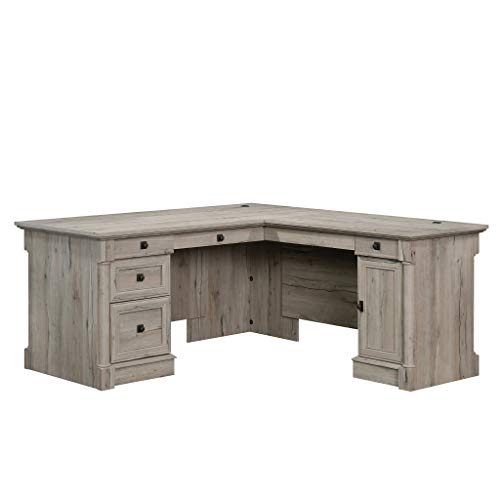
L Shaped Desk with Drawers and Keyboard Tray
Your complete guide to choosing the ultimate corner workspace — combining expansive surface area, organized storage, and ergonomic keyboard placement for a productive home office.
Explore Recommended ModelsWhy an L shaped desk with drawers and keyboard tray? This configuration solves three workspace challenges at once: it maximizes corner space with a generous dual-wing surface, keeps office supplies organized in dedicated drawers, and positions your keyboard at an ergonomically correct height. Whether you are setting up a home office, a gaming station, or a study corner, this desk style blends function and form.
Key Benefits of an L Shaped Desk with Drawers and Keyboard Tray
Expansive Work Surface
The L configuration provides two connected surfaces that accommodate dual monitors, a laptop, paperwork, and accessories without feeling cramped. The corner design uses otherwise wasted room space efficiently.
Integrated Storage Drawers
Built-in drawers keep stationery, cables, notebooks, and personal items within arm's reach. File drawers in mid-range and premium models add document organization for home office workflows.
Ergonomic Keyboard Tray
A pull-out keyboard tray positions your keyboard below the desk surface, encouraging neutral wrist posture and reducing shoulder strain. Many models offer adjustable height and tilt for personalized comfort.
Corner Space Efficiency
By wrapping around a corner, the desk frees up central floor space for chair movement and walking paths. This makes it an excellent choice for small home offices and bedrooms.
Cable Management Ready
Most quality L shaped desks include grommets, cable trays, or routing channels. Combined with a keyboard tray, you can achieve a clean, distraction-free surface.
Versatile Configuration
Reversible models let you switch the return wing from left to right, adapting to your room layout. Some designs allow the keyboard tray to be mounted on either wing.
What to Look For When Choosing Your Desk
Before selecting an L shaped desk with drawers and keyboard tray, evaluate these critical factors to ensure the model fits your space, workflow, and body.
| Feature | What to Check | Best For |
|---|---|---|
| Desktop Dimensions | Main wing length (48–70 inches) and return depth (20–24 inches) | Small spaces: 48-inch; dual monitors: 60-inch+ |
| Drawer Configuration | Number of drawers, file drawer inclusion, soft-close slides | Document storage: file drawer; supplies: multi-drawer |
| Keyboard Tray Type | Pull-out vs. fixed, tilt adjustment, width (min. 26 inches) | Ergonomic typing: adjustable tilt and height |
| Material & Frame | Engineered wood with laminate, solid wood, steel frame gauge | Long-term durability: high-grade steel + laminate |
| Reversibility | Can the return wing be mounted on either side? | Flexible room layouts and future moves |
| Cable Management | Grommets, under-desk trays, routing channels | Clean setups with multiple devices |
Ergonomic Setup: Getting the Most from Your Keyboard Tray
A keyboard tray is only beneficial when positioned correctly. Follow these guidelines to optimize your L shaped desk for comfort and health:
- Elbow angle: Keep elbows at roughly 90 degrees with forearms parallel to the floor when typing.
- Wrist position: Wrists should remain straight and neutral — avoid extension or flexion.
- Monitor distance: Place your primary monitor an arm's length away at eye level, using the L wing for secondary screens.
- Tray height: The keyboard tray should sit 1–2 inches below the main desk surface for most users.
- Chair height: Adjust your chair so feet rest flat on the floor or a footrest, then fine-tune the tray.
For a precise starting point, use an office desk height calculator to match desk and tray height to your body measurements. Pair your setup with an adjustable height desk chair for home office use to maintain alignment throughout the day.
Organizing Drawers for Maximum Productivity
Drawers are only useful when organized. Apply these strategies to keep your L shaped desk clutter-free:
Top Drawer: Daily Essentials
Store pens, sticky notes, charging cables, and a small notebook. Use a desk file organizer insert to separate small items and prevent clutter buildup.
Middle Drawer: Documents
Keep active paperwork, bills, and reference materials in hanging file folders. Label folders by project or category for quick retrieval.
Bottom/File Drawer: Archives
Store completed projects, tax documents, and manuals. A locking file drawer adds security for sensitive materials.
Return Wing Drawers: Tech & Accessories
Use the return-side drawers for external drives, adapters, and spare peripherals. Keep frequently used items in the drawer closest to your dominant hand.
Material and Build Quality Guide
The longevity of your L shaped desk depends on its construction. Here is how the main material tiers compare:
| Tier | Typical Construction | Best For |
|---|---|---|
| Entry-level | Particle board with laminate, basic steel legs | Light use, students, temporary setups |
| Mid-range | MDF or engineered wood, reinforced steel frame, soft-close drawers | Daily home office work, moderate storage needs |
| Premium | Solid wood or high-grade veneer, heavy-duty steel, precision drawer slides | Professional home offices, long-term investment |
| Luxury / Commercial-grade | Hardwood construction, commercial hardware, full-extension metal drawers | Executive offices, heavy daily use, multi-user environments |
If you prefer a natural wood surface, consider pairing a solid wood desktop with a compatible L shaped frame. This approach lets you customize the drawer and keyboard tray configuration to your exact needs.
Space Planning for Small Home Offices
An L shaped desk can actually save space when positioned correctly. Follow these planning tips:
- Place the corner of the L in the room's corner to minimize wasted space.
- Leave at least 36 inches of clearance behind the chair for movement.
- Use the return wing for a printer or reference books to keep the main surface clear.
- Choose a L shaped desk for small office space with a compact 48-inch main wing if floor area is limited.
- Mount shelves or a hutch on the wall above the return wing for vertical storage.
- Select a comfortable desk chair for small spaces that tucks under the desk when not in use.
L Shaped Desk vs. Other Corner Desk Options
Understanding how this configuration compares to alternatives helps you make an informed decision:
| Desk Type | Advantages | Considerations |
|---|---|---|
| L Shaped with Drawers & Keyboard Tray | Maximum surface, integrated storage, ergonomic typing position | Requires corner space; larger footprint than straight desks |
| Straight Desk with Keyboard Tray | Simple placement, compact footprint, easy cable routing | Less surface area; separate storage furniture needed |
| Corner Desk without Drawers | Space-efficient corner use, clean aesthetic | Storage must be added separately; may lack keyboard tray |
| Standing Desk Converter on L Desk | Adds sit-stand flexibility to existing surface | Requires stable L desk; keyboard tray may conflict with converter base |
If you later want to add standing capability, a standing desk converter with dual monitor mount can sit on the main wing while the keyboard tray remains available for seated work.
Related Desk Configurations to Explore
Depending on your storage and layout priorities, these related configurations may also suit your needs:
Frequently Asked Questions
Ready to Upgrade Your Corner Workspace?
Explore our curated selection of L shaped desks with drawers and keyboard trays — each evaluated for storage capacity, ergonomic features, and build quality.
View Recommended Models